St. Francis of Assisi Church in Ongata Rongai is one of those quiet places that doesn’t demand attention but lingers in the mind long after you’ve left. Tucked away on the edge of a small town just outside Nairobi, it blends into the landscape—unassuming yet well-kept, its soft earth-toned walls matching the red soil and rolling green hills around it. There are no grand domes or ornate facades here. Instead, its simplicity is what makes it stand out.
The church’s story is woven into the fabric of Ongata Rongai itself. The town began taking shape in the mid-20th century as a rural settlement, drawing people in search of land and opportunity. The Catholic community here grew slowly, and by the 1970s, the need for a local place of worship became clear. St. Francis of Assisi Church was built in 1978, and since then, it has served not just as a house of prayer but as a gathering point for the people who call this place home. The choice of St. Francis as its patron saint wasn’t accidental—his legacy as the protector of animals and nature fits a region where human life and the wild exist side by side. His ideals of harmony and stewardship feel relevant here, where the land is both a provider and a presence.
The architecture of the church is straightforward and practical. Built from local stone and wood, the building feels warm and grounded. Inside, the space is modest: wooden pews, a simple altar, and a few stained-glass windows depicting saints. The most striking feature is the carved cross above the altar, crafted by local artisans. Unlike traditional Catholic crucifixes, its lines hint at African artistic traditions, making it a subtle but powerful symbol of cultural fusion.
For the community, the church is more than just a place of worship. It’s where life’s milestones—baptisms, weddings, funerals—are marked and shared. Sundays bring the usual services, but the real sense of togetherness comes during major Catholic holidays like Christmas and Easter. On those days, the church fills with song, flowers, and the glow of candles, drawing not just parishioners but people from all walks of life in Ongata Rongai, regardless of their faith. For many, it’s a symbol of stability, a place of comfort.
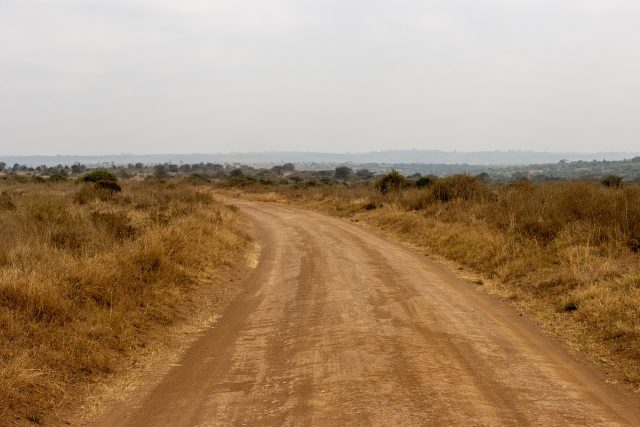
The surroundings add to the church’s character. Ongata Rongai is a typical Kenyan town where modernity and tradition coexist. Small farms dot the landscape, growing maize, beans, and vegetables, while cows and goats wander the streets. The church feels like a natural part of daily life. A walk through the nearby hills offers sweeping views of the savanna and the Ngong Hills, a reminder of the wild beauty that frames this corner of Kenya.
For visitors coming from Nairobi, the church can feel like a revelation. The capital is a city of noise and motion, but here, time slows down. You can sit on a bench outside, listen to the birds, and watch the light change over the hills. The way faith, nature, and everyday life intersect here is grounding. The church doesn’t try to impress—it simply exists, offering a space to pause and reflect.
Over the decades, St. Francis of Assisi Church has witnessed Ongata Rongai’s transformation from a small settlement into a Nairobi suburb. Yet through all the changes, it has remained a constant, a quiet anchor. It’s a place where the past and present meet, where the people who came here years ago and those who arrive today can find something familiar.
What makes this place special isn’t its architecture or even its history, but the atmosphere it holds. There’s a quiet strength here. Maybe it’s because St. Francis of Assisi Church isn’t just a building—it’s the heart of a community. For some, it’s a place of prayer; for others, a refuge from the rush of life; for many, a reminder that beauty and meaning can be found in unassuming corners of the world. It doesn’t ask for much, but it gives back in ways that are hard to describe.