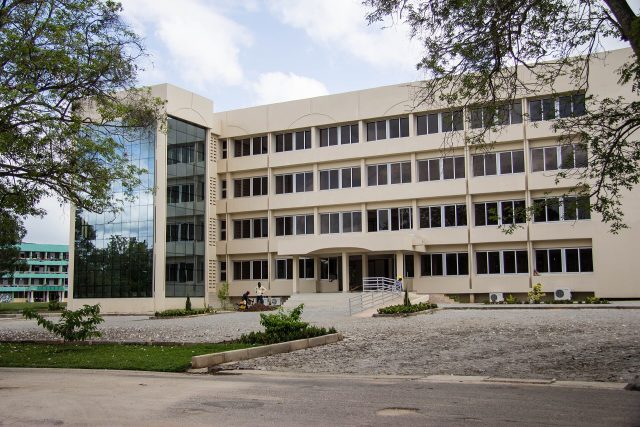
St. Andrew’s Church in Winneba sits quietly on a low hill in the town, its white walls standing out against the red earth and greenery. It doesn’t demand attention like grand cathedrals or ornate shrines, but there’s something about it that lingers in the memory. The building is modest, yet it carries a quiet presence, as if it has always belonged here—rooted in the life of the town.
The church was constructed in the late 19th century, when Winneba was a port on the Gold Coast and a key hub in regional trade. British missionaries were active in spreading Christianity, and St. Andrew’s became one of the earliest Catholic churches in the area. It served as a center for education and healthcare, offering support to a community where cultures and traditions intersected. The church witnessed the shifts of that era, standing as a silent observer to the changes sweeping through the town.
Architecturally, the church reflects the tastes of its time. Built in the neo-Gothic style popular in Victorian Britain, it features pointed arched windows, high ceilings, and sturdy wooden doors. The design is simple but deliberate. Inside, the space feels open and bright, the walls adorned with subtle murals. The wooden pews are arranged to face the altar, and the modest bell tower offers a view of the town and the distant ocean.
Today, St. Andrew’s remains an active part of Winneba’s life. On Sundays, the church fills with locals, many of whom are descendants of the first congregants. Services are held in English and local languages, and the choir’s hymns blend African rhythms with European melodies. During the week, the church often hosts gatherings—children’s classes, charity events, and small concerts. The atmosphere is warm, much like the town itself.
Winneba isn’t a place that draws crowds of tourists. There are no guided tours or souvenir stands here, just the quiet hum of daily life. Visitors can sit on a bench in the small garden surrounding the church, listening to the rustle of palm leaves and the distant sound of waves. The church moves at its own pace, untouched by the rush of the outside world.
St. Andrew’s is a living piece of Winneba’s story. It speaks to Ghana’s layered past—the colonial influences, the blending of cultures, the resilience of local traditions. The walls hold echoes of the past, yet the church remains firmly rooted in the present. For those who visit Winneba, it offers a glimpse into the real Ghana, far from the polished images of travel brochures.
If you find yourself in Winneba, the church is worth a visit—not just for its architecture, but for the sense of place it embodies. You might arrive during a service, or you might simply sit in the shade of the trees, watching as locals come and go. The doors are open to anyone who wants to step inside, whether for prayer, reflection, or quiet observation. It’s in these unassuming corners that the true character of a place often reveals itself.