Winneba Beach stretches along Ghana’s Atlantic coastline, a quiet stretch of sand where the ocean meets the shore without fanfare. This isn’t a place built for tourists—there are no high-rise hotels, no beachfront bars blasting music, no vendors hawking souvenirs. Instead, it offers something rarer: a glimpse of coastal Ghana as it’s lived, not as it’s packaged for visitors. The town of Winneba, about an hour and a half west of Accra, has long been tied to the sea, and that connection still shapes daily life here.
The beach itself is unpolished, the kind of place where nature dictates the terms. The sand is golden, sometimes mixed with small pebbles, and the waves can be rough, especially during the rainy season. Swimming here requires caution, but the ocean’s power is part of the appeal. On calm days, the water settles into gentle ripples, and local children dart in and out of the shallows, their laughter carrying over the breeze. Fishermen still set out at dawn, their wooden boats dotting the horizon, and by mid-morning, women in bright wraps sort the day’s catch on woven mats. This isn’t a performance for outsiders—it’s how life has unfolded here for generations.
Winneba’s history is visible in its architecture, though it’s subtle. The town was once a key port during the colonial era, and remnants of that past linger in the low-slung buildings with their high ceilings and wooden verandas. Some structures still bear the marks of their age, their peeling paint and weathered facades telling stories of trade and time. Near the center of town stands an old Catholic church, its simple design a contrast to the grander colonial forts found elsewhere along the coast. Not far from the beach, the ruins of a small fort hint at the struggles for control that once played out here, though today they’re little more than a quiet footnote.
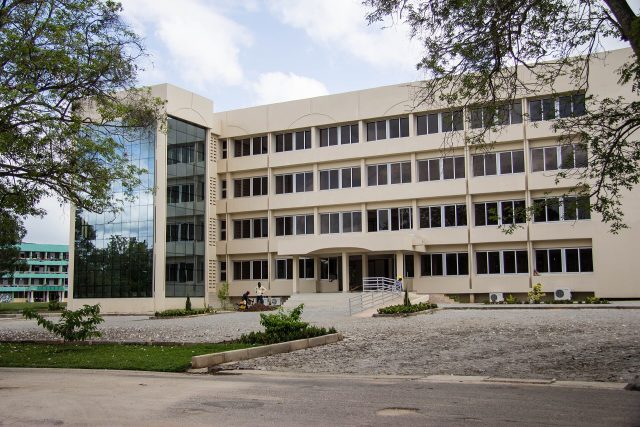
The town is also home to one of Ghana’s oldest universities, a place that adds a different rhythm to Winneba’s pace. Students lounge under shade trees with books, or gather in small groups at open-air spots near the beach. The campus sits close enough to the shore that the sound of waves drifts through the air, and on weekends, you might find young people playing football on the sand or sitting by the water, talking. The university gives the town a youthful energy, a counterpoint to the slower, more traditional life of the fishing community.
Food here is simple but full of flavor. Along the beach and in the town’s narrow streets, small stalls serve fresh fish—grilled, fried, or stewed with local spices. Tuna and barracuda are common, often paired with fried plantains or rice. For something heartier, there’s fufu, the starchy staple made from cassava and plantains, served with thick, spicy soups. The meals are unpretentious, the kind of food that’s meant to be shared. If you’re lucky, someone might invite you to join their table, a gesture that feels less like hospitality for tourists and more like the way things have always been done here.
Life in Winneba moves to the beat of the ocean. Mornings begin with the return of the fishing boats, their hulls heavy with the day’s catch. By midday, the heat drives people indoors or under the sparse shade of palm trees. Evenings bring a second wind—children playing football on the sand, teenagers clustering near the water, elders sitting on wooden benches, talking. On weekends, families from Accra and other cities arrive to spend the day by the sea, but the beach never feels crowded. There’s space here, both physically and in the way time seems to stretch.
This isn’t a place for those seeking luxury or entertainment. There are no jet skis, no beachfront resorts, no nightclubs. What Winneba offers instead is a sense of realness, a chance to step into a Ghana that exists beyond the tourist brochures. The beach is best in the early morning or at sunset, when the light turns the water gold and pink, and the only sounds are the waves and the occasional call of a seabird. You can walk for miles without seeing another soul, or sit under a palm tree and watch the world go by at its own unhurried pace.
If you come to Winneba, stay awhile. There are small guesthouses where the rooms are basic but clean, and the owners might offer you a cup of tea or a plate of fresh fruit. Talk to the people you meet—many speak English and are happy to share stories about their town. Try the grilled fish sold by women along the beach, and don’t be surprised if someone invites you to eat with their family. That kind of openness is still common here, a holdover from a time when Ghanaian hospitality was less about business and more about connection.
Winneba doesn’t ask much of its visitors, and in return, it gives something hard to find elsewhere: a sense of being somewhere real. The beach, the town, the people—none of it is staged. It’s just life, unfolding as it always has, with the ocean as its constant backdrop. If you’re looking for a place where time slows down and the world feels a little simpler, this might be it.