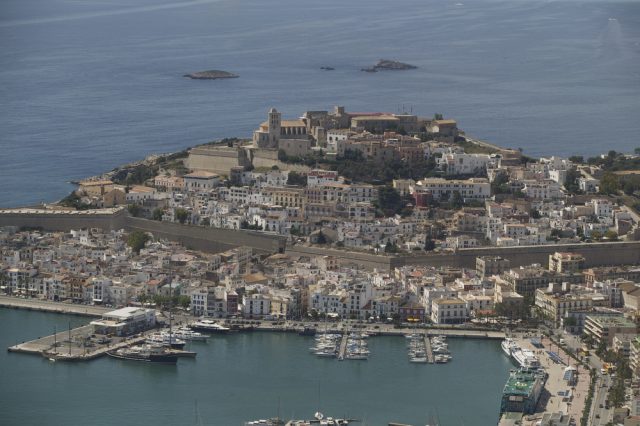
Perched on a hill in the heart of Ibiza’s old town, Dalt Vila, the Church of Santa María overlooks the labyrinth of narrow streets. Its whitewashed walls stand out against the terracotta rooftops below. Built in the 18th century on the site of an earlier temple, it has served as a place of worship, a meeting point for fishermen and merchants, and a gathering spot for festivals and prayers. The past lingers here, not as a relic, but as part of everyday life.
The church’s architecture reflects the island’s history. Ibiza was once a remote outpost of the Spanish crown, and its buildings were shaped by necessity. The façade blends late Baroque and neoclassical elements, simple and unadorned. Thick walls and small windows suggest its dual role as sanctuary and fortress—pirate raids were a constant threat. Inside, high vaulted ceilings and whitewashed walls create an airy space, while wooden beams overhead add warmth. It feels solemn, but not unwelcoming.
The 18th-century altarpiece dominates the interior. Gilded carvings frame images of saints, with the Virgin Mary at the center. Smaller chapels flank the main altar. One holds a statue of Saint Cyricus, protector of children, where parents still come to ask for blessings. Another is dedicated to Saint Anthony, and a third to Saint Joseph. These chapels tell the stories of personal devotions that have shaped the island’s people.
For centuries, Santa María was more than a church. It served as the town hall, courthouse, and place where news was announced. Festivals, processions, and markets filled the square outside. Today, locals gather for Sunday mass, while tourists wander in to light a candle or admire the architecture. In summer, the church becomes a quiet stop for those exploring Dalt Vila.
The view from the steps is worth the visit. The old town unfolds beneath you—terracotta rooftops, winding alleys, the harbor beyond. On clear days, Formentera and the islet of Espalmador appear in the distance. At sunset, the light turns the white walls golden. People come here to sit, to think, to watch the world go by. The view hasn’t changed in centuries.
Santa María has survived wars, raids, and economic hardships. It has no opulence, no Gothic arches or marble floors. Instead, its stones are worn smooth by generations of footsteps. The walls echo with voices from the past. History isn’t just remembered here—it’s felt.
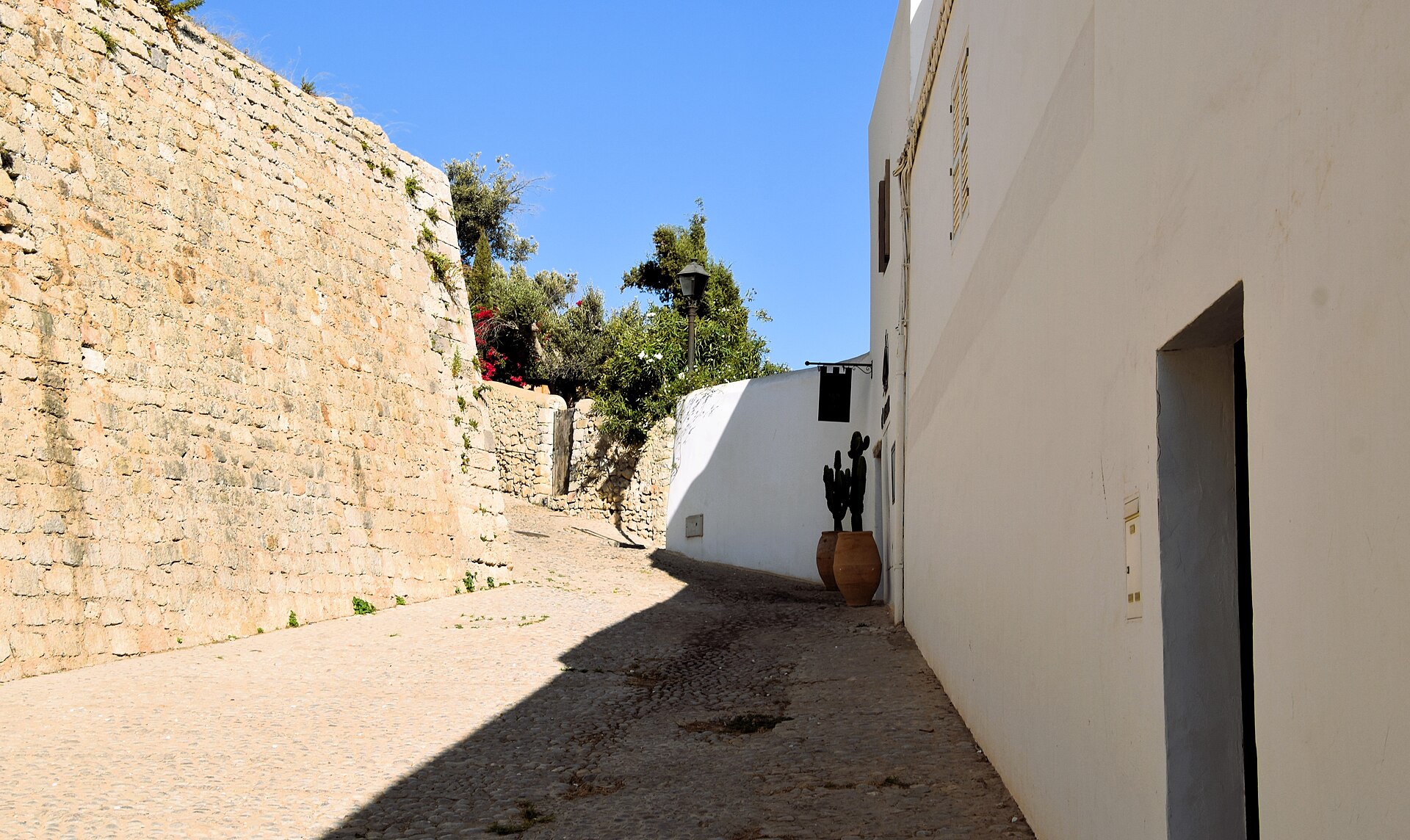
The streets around the church are a maze of whitewashed houses, balconies draped in bougainvillea. Walking through them, you can almost hear the clatter of carts and the chatter of merchants. Today, cafés hum and visitors laugh, but the spirit of the old town remains. The past isn’t preserved—it’s alive.
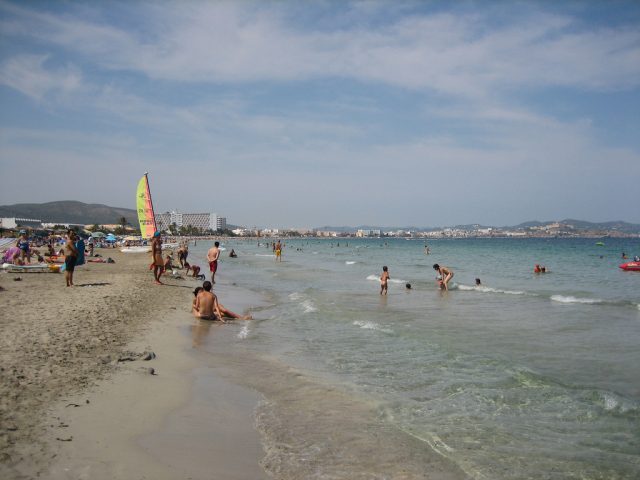
Ibiza is more than beaches and nightlife. The island has layers, and every building tells a story. Santa María is one of those places where the story is impossible to ignore. No grand spectacle, no guided tour—just a quiet space to sit, look out over the sea, and feel the weight of history around you. It stays with you long after you’ve left.