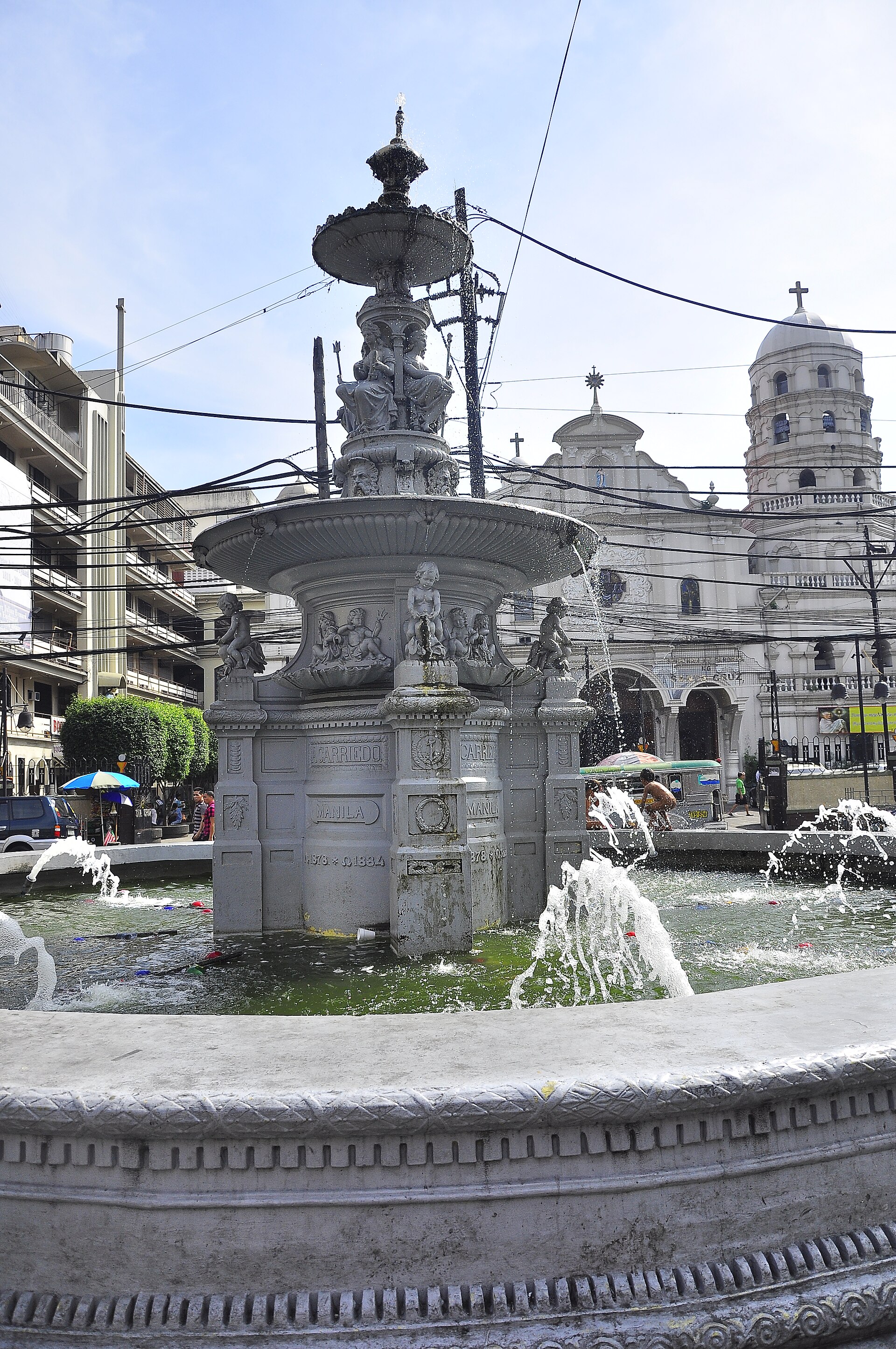
Santa Cruz Church stands where Manila’s history feels close enough to touch. Built in the early 1700s, it marks the spot where colonial legacy meets the daily life of a district that has long been a crossroads of faith, trade, and community. Tondo, one of the city’s oldest neighborhoods, has always been a place where different worlds meet—where Spanish missionaries once preached, merchants bartered, and locals shaped their own identity. The church has watched it all.
The architecture shows its past. The façade mixes Baroque and neoclassical styles, common in churches rebuilt after earthquakes. Thick walls of local stone and brick, sturdy buttresses, and tall arched windows were built to withstand tremors. Inside, wooden pews are worn smooth, the altar is simple, and faded frescoes depict saints in scenes that feel familiar. There’s no grandeur, just the quiet presence of a place that has served its purpose for centuries.
Tondo’s history is tied to the church’s.
Before the Spanish arrived, this was Tagalog land, a settlement along the Pasig River where life centered on trade and waterways. When colonizers came in the 16th century, they made Tondo a hub, and the church became a symbol of their rule. By the 1800s, the district was restless, with revolution stirring in its streets. The church saw Spanish friars preach, locals gather in secret, and later, the fight for independence that changed the nation. Many who prayed here joined that movement.
Today, Santa Cruz is still an active parish. On Sundays, incense and prayers fill the air. During fiestas, especially the feast of the Holy Cross, the church becomes the center of celebration. The street outside turns into a market with food stalls, sweets, and crafts, while music and dancing last into the night. For Tondo’s people, this isn’t just religion—it’s a tradition that connects them to their past.
Santa Cruz doesn’t ask for attention. There are no guided tours, no souvenir shops, no plaques explaining its importance. Instead, daily life hums around it: vendors selling mangoes and dried fish, children playing in alleys, old men chess under a tree. The church blends into the neighborhood so seamlessly that you might miss it—unless you look.
The building has survived hardship. During World War II, bombings damaged it, like much of Manila. The community rebuilt it, preserving its character even as the city changed. Today, cracks in the plaster and faded paint tell the story. These aren’t flaws; they’re signs of resilience. The church isn’t frozen in time—it’s a living space that has adapted to wars, earthquakes, and progress without losing itself.
For travelers who want to see the Philippines beyond postcards, Santa Cruz offers something real. No opulence, no gilded altars. Instead, you’ll find continuity—a place where the past isn’t just remembered but still lives. The faith that shaped a nation, the quiet strength of a community, the stories in its walls. If you listen, you might hear old Manila’s heartbeat.