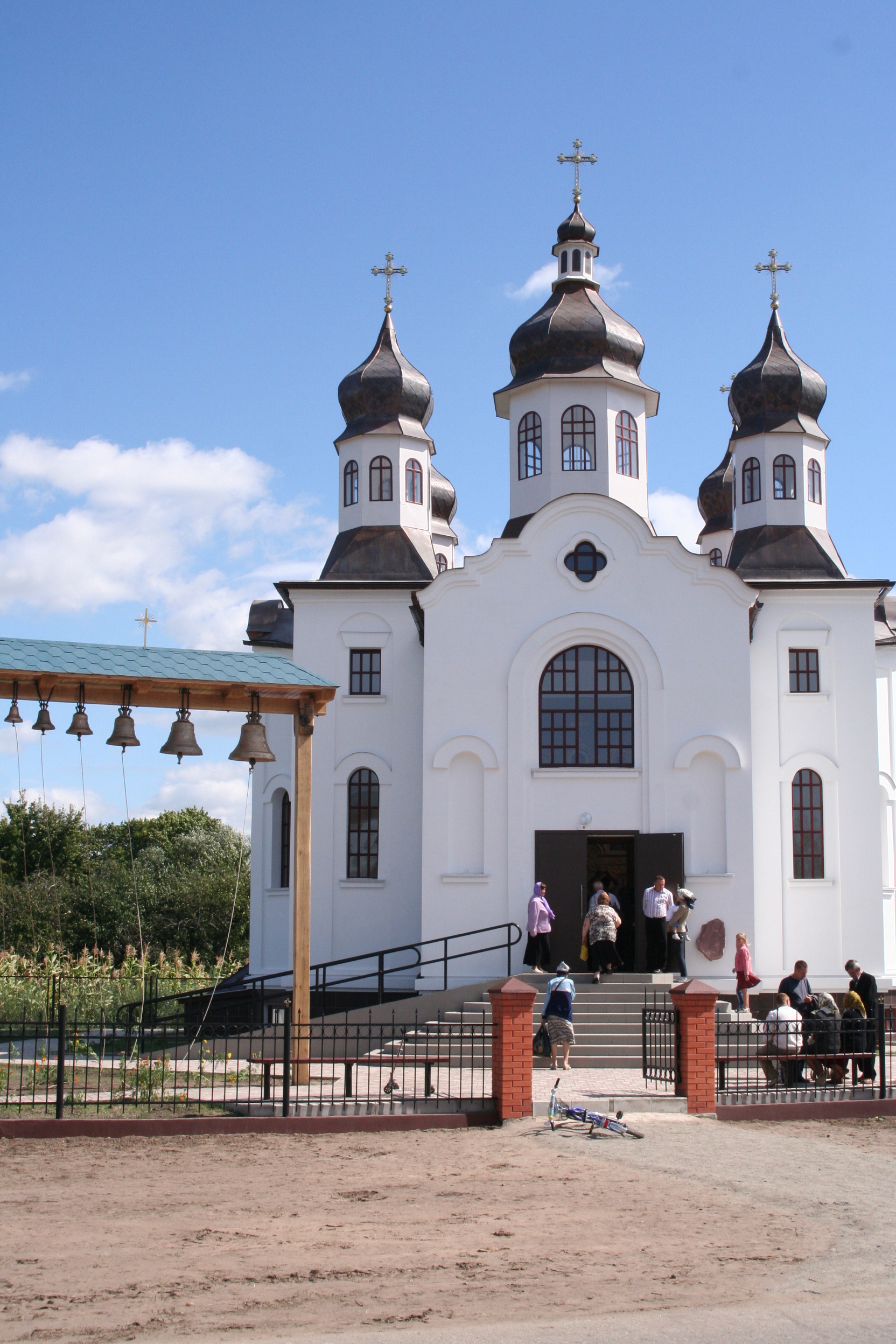
The Church of the Intercession of the Holy Virgin in Lozovoye is one of those rare places that seem untouched by time. Perched on a gentle hill, it overlooks the surrounding fields and groves, its golden domes catching the light on clear days. From a distance, the church stands as a quiet reminder of the faith that once shaped the lives of those who lived here generations ago. Built in the late 19th century, it has witnessed the changing fortunes of the village, yet its presence remains steadfast, as if anchoring the landscape itself.
The architecture is classic for late Russian Orthodoxy, though it carries subtle local touches. The white stone walls, adorned with delicate window frames, rise gracefully, their narrow windows drawing the eye upward. The five domes, arranged in the traditional style, give the structure an air of lightness, while the modest bell tower blends seamlessly into the design. Inside, the church feels spacious and bright, with high vaulted ceilings painted in soft, expressive frescoes. The iconostasis, crafted from dark wood and gilded accents, holds ancient icons, many of them created by local artisans whose names have long been forgotten.
The church’s history is deeply intertwined with that of Lozovoye. During the Soviet era, it faced hardship—closed, repurposed as a warehouse, and eventually abandoned. But in the 1990s, the village began to revive it. Residents, some of whom remembered the church from their childhoods, pooled their resources to restore it. Today, it functions once more, drawing not only the faithful but also those curious about the past. Services follow the old rites, with choir singing and prayers in Church Slavonic, creating an atmosphere of solemnity and reverence.
For Lozovoye, a small village where life moves at its own unhurried pace, the church has always been more than a place of worship. It has been a gathering point for generations—where children were baptized, couples married, and the departed remembered. In the past, fairs bustled around its walls on feast days, and on Sundays, farmers from nearby villages would come to pray. Though the village is quieter now, the church remains its heart. In summer, the air is thick with the scent of linden blossoms and hay, and the fields stretch endlessly, worked by hands that still follow the rhythms of their ancestors.
Visiting the church is less about ticking off a landmark and more about stepping into a different rhythm of life. There are no crowds, no tour groups, no hurried footsteps—just the quiet flicker of candles and the faint aroma of incense. On weekdays, the church is often empty, offering a chance to sit on one of the wooden benches, study the frescoes, or simply listen to the silence. If you’re lucky, you might see the elderly women of the village lighting candles and murmuring prayers, their devotion as much a part of the place as the stones beneath their feet.
Lozovoye isn’t on any tourist map, but reaching it is straightforward. The village lies a short distance from the regional center, accessible by bus or car. The journey itself is pleasant, winding through open fields, small woods, and villages where life seems to have paused decades ago. There are no hotels or restaurants in Lozovoye, but locals are welcoming and may offer a bed for the night or a meal of homemade pies. For those seeking solitude or a break from the noise of cities, this is an ideal retreat.
The Church of the Intercession is more than an architectural relic—it’s a living piece of the region’s history. It has endured wars, revolutions, neglect, and revival, yet it continues to serve its purpose, much as it did a century ago. There’s nothing performative about it; the authenticity is palpable in every stone, every icon, every whisper of wind through its domes. That’s why it’s worth visiting—not for grand spectacle, but for the quiet understanding of how a simple village church can embody faith, memory, and hope.