Perched on a hill overlooking Porto’s labyrinthine streets, the Church of the Clerigos is one of those rare places that doesn’t just stand in a city—it seems to hold it together. From a distance, its Baroque facade rises like a stone sentinel, its intricate carvings catching the light as if winking at the river below. Up close, the details unfold slowly: saints frozen in mid-gesture, cherubs peeking from behind curling vines, and the way the entire structure seems to lean forward, as though inviting you to step inside. It’s a building that carries the weight of history without ever feeling heavy.
The church took shape in the 18th century, a time when Porto was flush with wealth from the port wine trade. The city’s merchants and nobility, eager to display both piety and prosperity, commissioned a structure that would outshine anything else in the region. Construction dragged on for over fifty years, from 1732 to 1784, a testament to the ambition of its patrons and the meticulous craftsmanship of its builders. The lead architect, Niccolò Nasoni, an Italian who made Porto his home, blended Roman Baroque with a distinctly Portuguese sensibility. The result is a church that feels grand but never austere—its curves and flourishes give it a sense of movement, as if the stone itself is breathing.
The facade is where the drama begins. Statues of saints and angels crowd the entrance, their expressions ranging from serene to stern, while heraldic symbols and reliefs tell stories of faith and power. The central portal is particularly striking, framed by columns that twist like vines and crowned with a cross that seems to float above the city. Inside, the opulence continues, though it’s a quieter kind of splendor. The main altar, gilded in gold leaf, glows in the dim light, while side chapels house paintings and sculptures that reward close inspection. The acoustics are remarkable—every whisper or footstep lingers, making the space feel alive even in silence.
Next to the church stands the Clerigos Tower, once a bell tower and now Porto’s most iconic viewpoint. Climbing its 225 steps is a rite of passage for visitors, the narrow spiral staircase winding upward until the city unfolds below. From the top, the view is dizzying: terracotta rooftops tumble toward the Douro River, bridges stitch the banks together, and the Atlantic shimmers in the distance. On clear days, the horizon seems endless, a reminder of how deeply Porto’s identity is tied to the sea. The tower isn’t just a landmark—it’s a symbol of the city’s resilience, a structure that has watched over Porto through centuries of change.
Beyond its architectural grandeur, the Church of the Clerigos is a living part of Porto’s cultural fabric. The space is often filled with music, its soaring ceilings and stone walls perfectly suited for organ recitals and classical concerts. The sound swells and echoes, turning the church into a kind of instrument itself. Occasionally, exhibitions of religious art are held here, showcasing everything from centuries-old icons to intricately embroidered vestments. For locals, the church is woven into the milestones of life—baptisms, weddings, and funerals all take place within its walls. Even those who don’t consider themselves religious find themselves drawn back, whether for a moment of quiet or simply to admire the craftsmanship.
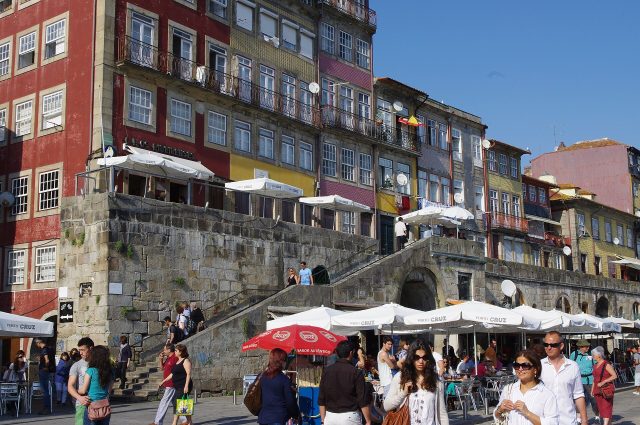
The area around the church hums with energy. The square in front is a gathering place, where tourists snap photos and locals linger over coffee at nearby cafés. In the evenings, the streetlamps cast a warm glow over the stone facade, softening the edges of the saints’ faces. The church sits at the heart of Porto’s historic center, a crossroads where past and present collide. Nearby, the Ribeira district spills down to the river, its narrow alleys lined with azulejo-tiled buildings, while just a short walk away, modern shops and galleries hint at the city’s evolution. The Clerigos isn’t just a relic—it’s a thread in the tapestry of daily life.
What makes the church special isn’t just its beauty, but the way it invites you to slow down. There’s no rushing through the Clerigos. The details demand attention: the way light filters through the stained glass, the faint scent of incense lingering in the air, the way the marble columns seem to shift color depending on the time of day. If you’re lucky, you might catch an organ rehearsal or see the altar bathed in golden light, a fleeting moment that feels almost sacred. And when you finally climb the tower, the city spread out below, it’s impossible not to feel a connection to the generations of people who have stood in that same spot, looking out over Porto.
The Church of the Clerigos isn’t just a monument to faith or art—it’s a monument to the city itself. It has witnessed Porto’s rise and fall, its triumphs and struggles, and yet it remains unchanged in all the ways that matter. Whether you come for the architecture, the history, or simply the view, the church offers something deeper: a sense of place. It’s the kind of spot where you might find yourself lingering longer than intended, not because you have to, but because you want to. And in a city as vibrant as Porto, that’s a rare and precious thing.