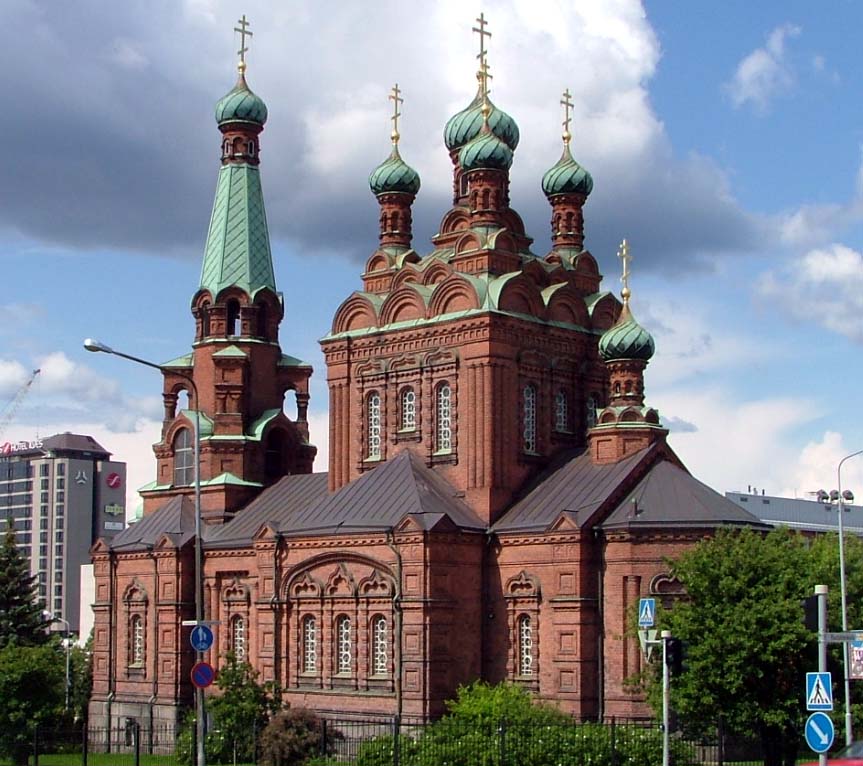
Tampere’s Alexander Church stands quietly in the heart of the city, a place where history and everyday life intersect without fanfare. Built in the late 19th century, it was named after Tsar Alexander II of Russia, a nod to Finland’s past under imperial rule. The church doesn’t dominate the skyline like some of Europe’s grand cathedrals, but its presence is unmistakable—a sturdy, red-brick structure that blends into the urban fabric while still holding its own.
The architecture is a mix of styles, though Gothic Revival is the most obvious influence. Tall, narrow windows with pointed arches let in soft light, and the interior is surprisingly intimate for a building of its size. The vaulted ceilings and dark wood pews give it a warm, almost understated elegance. Unlike many churches of the era, there’s no overwhelming ornamentation; instead, the design feels practical, as if built to serve the community rather than impress visitors. That said, the stained glass windows, though not as elaborate as those in older European churches, add a touch of color and quiet beauty.
What makes Alexander Church interesting isn’t just its design but its role in Tampere’s history. The city was industrializing rapidly when the church was completed in 1881, and it became a spiritual anchor for the growing population. Workers from the nearby factories would have passed by its doors daily, and for many, it was a place of solace amid the noise and grime of the mills. Even today, it’s not uncommon to see locals stopping by for a moment of quiet, whether for prayer, reflection, or simply to escape the bustle of the city center.
The church has also witnessed some of Finland’s most turbulent moments. During the Finnish Civil War in 1918, Tampere was a key battleground, and the church, like much of the city, bore the scars of conflict. Bullet holes from the fighting were once visible in its walls, though they’ve since been repaired. It’s a reminder that this place isn’t just a relic of the past but a building that has lived through the upheavals of modern Finnish history.
One of the most striking things about Alexander Church is how it fits into the rhythm of Tampere. It’s not a museum piece, roped off and untouchable, but a working church with regular services, concerts, and community events. The acoustics are excellent, and it’s not unusual to hear organ music drifting out onto the street. In winter, the church is a warm refuge from the cold, while in summer, its red brick facade glows in the long northern light.
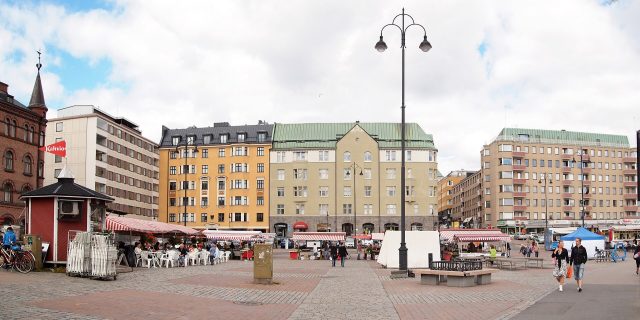
The surrounding area is just as much a part of the experience. The church sits near the Tammerkoski rapids, the same waterway that powered Tampere’s early industries. Today, the rapids are a scenic spot, lined with parks and walking paths. Nearby, you’ll find the city’s old market hall, where vendors sell everything from fresh fish to local crafts, and the main square, which buzzes with activity year-round. The church is close enough to these landmarks that you can easily visit it as part of a larger exploration of the city.
For those who appreciate history, Alexander Church offers a glimpse into Finland’s complex relationship with Russia. The fact that it was named after a tsar—at a time when Finland was an autonomous grand duchy under the Russian Empire—speaks to the political realities of the era. Yet the church was also a Finnish project, designed by a local architect and built by local hands. It’s a reminder that even in periods of foreign rule, the people of Tampere shaped their own identity.
There’s something quietly moving about the way the church has endured. It’s not the most famous landmark in Finland, nor the most architecturally groundbreaking, but it has a steadiness to it—a sense of continuity. Whether you’re religious or not, stepping inside feels like stepping into a slower, more deliberate pace of life. The air is still, the light is soft, and for a moment, the noise of the city fades away.
If you visit, don’t rush. Sit in one of the pews and listen to the silence, or time your trip to coincide with a service or concert. The church is open to everyone, and its doors are as much a part of its story as the bricks and mortar. In a city that’s always moving forward, Alexander Church remains a quiet constant, a place where the past and present coexist without fuss.