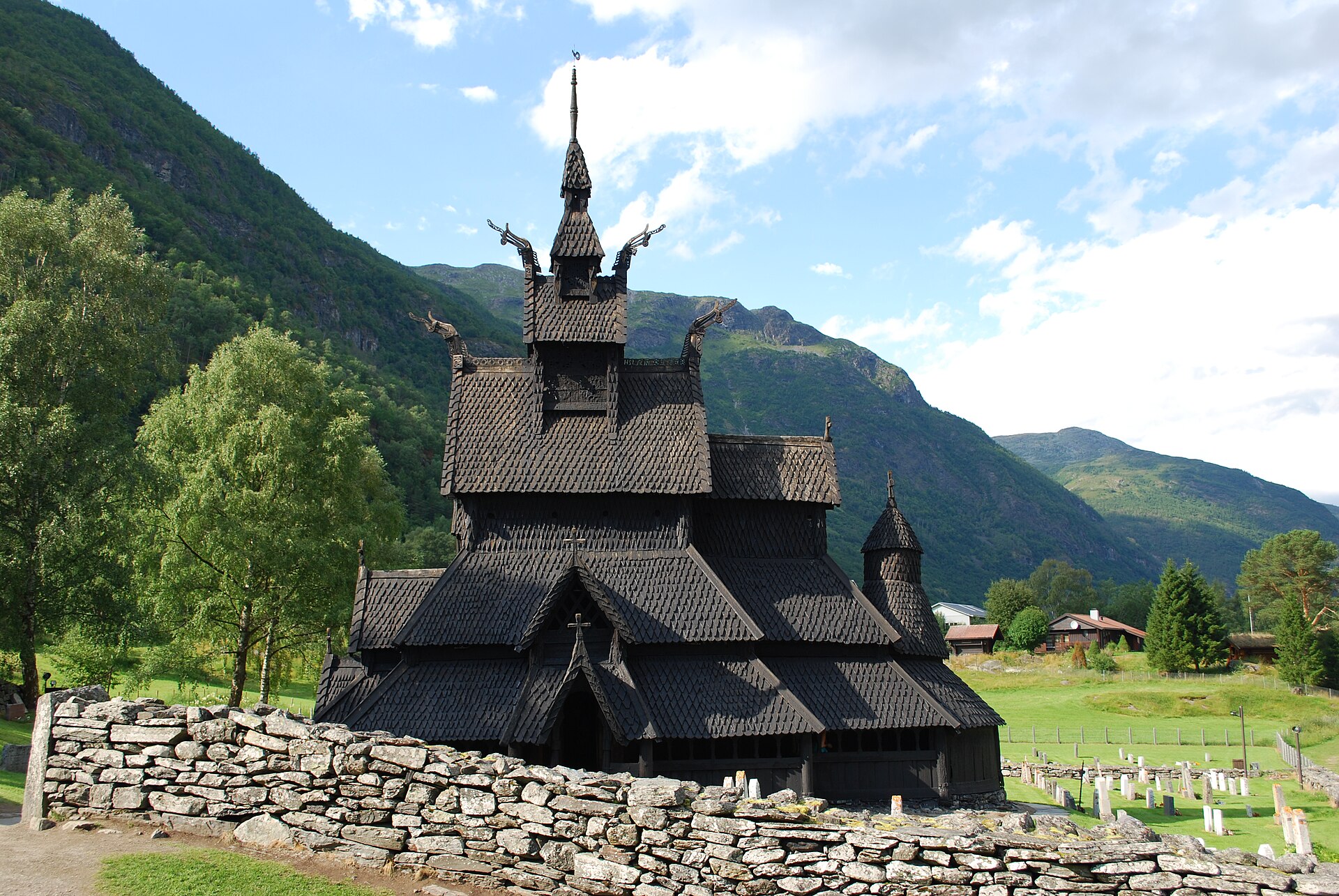
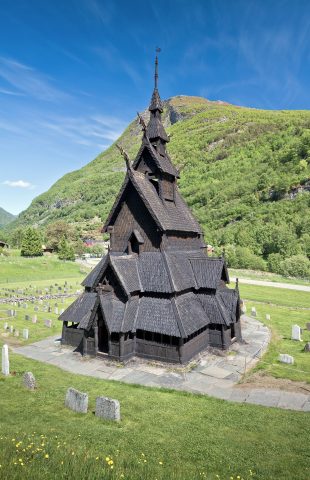
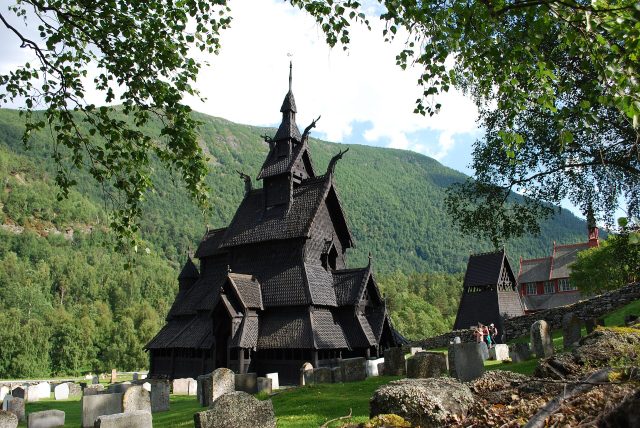
Borgund Open-Air Museum feels like a place where time has paused, not to stand still, but to let you catch your breath and look around. Tucked away in the quiet village of Borgund in southwestern Norway, it preserves the rhythms of rural life from centuries past, not through glass cases or polished exhibits, but through the very buildings, tools, and landscapes that shaped daily existence here. There are no crowds, no guided tours rushing you along—just the slow, steady pulse of a place that has always moved at the pace of the seasons.
The museum is a collection of historic farmsteads and outbuildings, each carefully relocated from different parts of Telemark. These aren’t replicas or stage sets; they’re the real homes, barns, and workshops of Norwegian farmers from the 18th and 19th centuries, reassembled here to tell their stories. The buildings stand as they always have, with doors left ajar, tools resting where they were last used, and the faint scent of woodsmoke lingering in the air. It’s less about looking at history and more about stepping into it.
What makes Borgund special is its unvarnished authenticity. There are no actors in period costumes, no dramatized scenes—just the quiet presence of structures built the old way, without nails, using techniques passed down through generations. The roofs are still covered in sod, the walls made of thick, hand-hewn logs, and the windows framed with intricate woodcarvings. Inside, the furniture is rough-hewn but sturdy, the pottery simple and functional, the looms and spinning wheels still set up as if someone had just stepped away. The details—the worn thresholds, the soot-stained hearths, the patches in the wooden floors—speak of lives lived in close connection to the land.
One of the most striking buildings is the Eidsborg farmstead, moved here from a nearby valley. Dating back to the 17th century, it’s one of the oldest and best-preserved peasant homes in Norway. The layout is traditional: a large central room with a hearth at its heart, sleeping alcoves curtained off for privacy, and storage rooms stocked with provisions for the long winter. Outside, the raised grain store on stilts is a clever solution to keep rodents away, a practical touch that says as much about the people who built it as any written record could. The house feels lived-in, not like a museum piece, but like a place where people once gathered, worked, and endured.
Borgund isn’t just about the past, though. It’s a living part of Telemark’s present, where traditional crafts are still practiced and passed on. Visitors can try their hand at weaving, woodcarving, or even blacksmithing under the guidance of local artisans who take pride in keeping these skills alive. In summer, the museum grounds come alive with the sounds of sheep grazing, bees humming in the orchards, and the occasional folk music concert drifting through the evening air. Winter brings a different kind of quiet, the kind that settles over the landscape like a thick blanket, broken only by the crunch of snow underfoot or the distant chop of an axe.
For Norway, places like Borgund are more than tourist attractions—they’re a way of holding onto a way of life that shaped the country’s identity. Before industrialization took hold, rural culture was the backbone of Norwegian society, especially in regions like Telemark, where the land is unforgiving and the winters long. There’s no grandeur here, no opulence—just the straightforward, no-nonsense functionality that has always mattered most to Norwegians. The buildings, the tools, the very layout of the farms reflect a deep understanding of what it took to survive in this landscape.
Walking through Borgund is less like visiting a museum and more like stepping into a different era. It’s impossible not to reflect on how much has changed—and how much hasn’t. The same concerns that occupied people centuries ago—providing for their families, making do with what the land offered, finding warmth and light in the darkest months—are still familiar. The museum doesn’t try to impress with scale or spectacle; it simply presents life as it was, in all its simplicity and resilience. That’s what makes it so moving. It’s not about the past being better or worse, just different. And in that difference, there’s a quiet reminder of what endures.