Grand Prismatic Spring is one of those rare places that make you believe nature has a magic of its own. Tucked within the vast wilderness of Yellowstone National Park, it doesn’t just impress with its size or the vivid colors that ripple across its surface—it reminds you how fragile and powerful the world beneath our feet truly is. Here, where the earth breathes through steaming vents and bubbling pools, water shimmers in every shade of the rainbow, creating a spectacle you won’t find anywhere else on the planet.
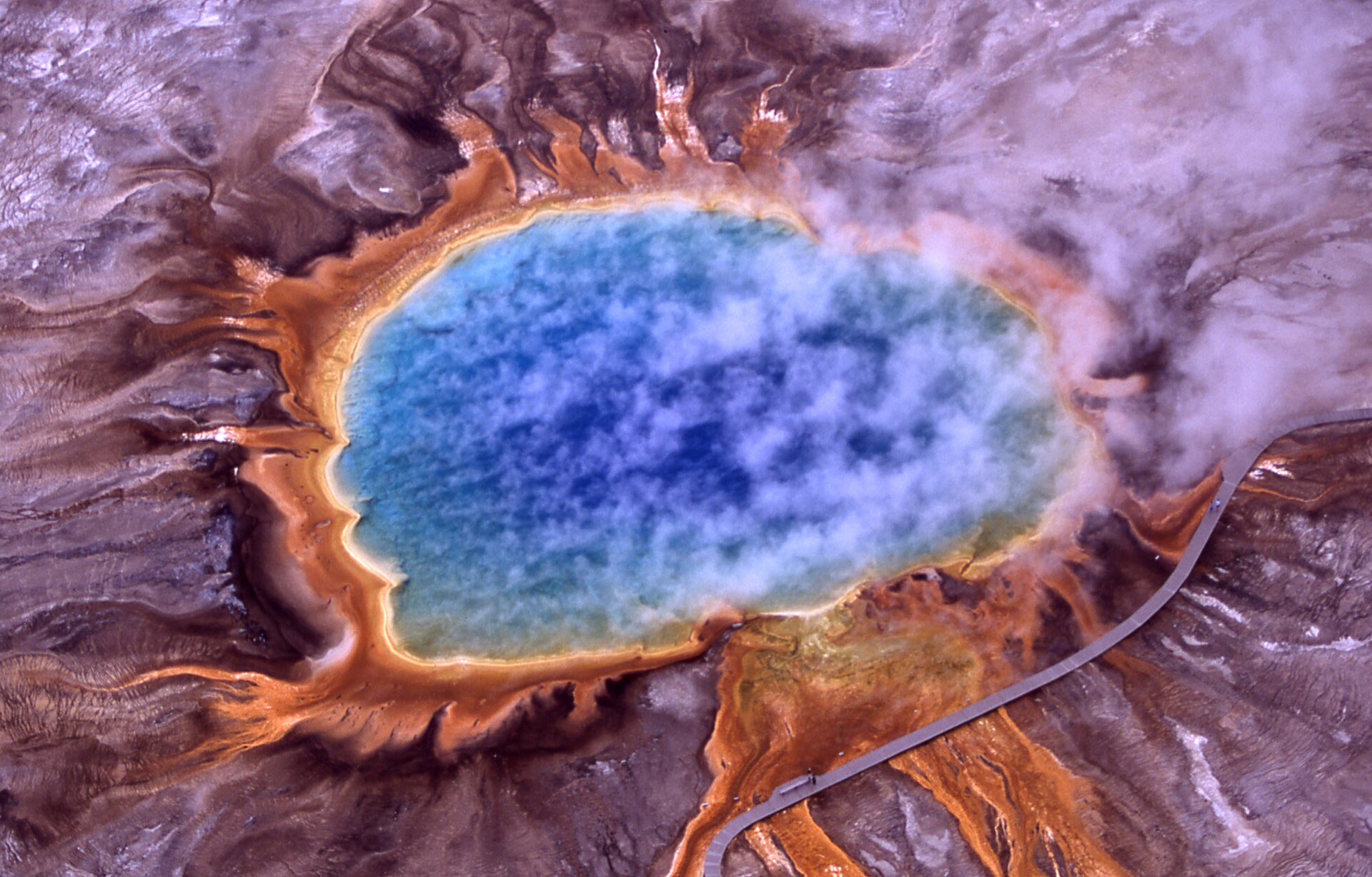
The spring earned its name for good reason. Nearly a hundred meters across and over thirty meters deep at its center, its sheer scale is striking. But what truly sets it apart is the way its colors shift from the deepest blue at the heart to turquoise, then green, yellow, and finally fiery orange toward the edges. These hues aren’t just a trick of the light—they’re the work of thermophilic bacteria and algae that thrive in the scalding water, painting the mineral deposits in different tones depending on the temperature. The cooler the water, the warmer the colors, creating a living palette that changes with the seasons and even the time of day.
The story of Grand Prismatic Spring is woven into the history of Yellowstone itself. The first written accounts of it appeared in the mid-1800s, when explorers and trappers began venturing into this remote corner of the American West. Long before that, Native American tribes knew of the hot springs, treating them as sacred sites tied to the spirits of the land. For them, these waters were not just a natural wonder but a place of reverence. European settlers, however, saw something different—scientific curiosity and the potential for tourism. In 1871, an expedition led by geologist Ferdinand Hayden documented the spring in detail, and just a year later, Yellowstone became the world’s first national park. Since then, Grand Prismatic has remained one of its most iconic sights, drawing visitors who come to witness the raw beauty of geothermal activity.
There’s no man-made architecture here, yet the natural formations are no less breathtaking. Over time, the spring has sculpted terraces of travertine—a type of limestone deposited by the mineral-rich water—into intricate, ever-changing patterns. The water carves new paths, seals old ones, and reshapes the landscape in ways that feel almost deliberate. In winter, steam rises in thick plumes, shrouding the area in mist, while frost crystals form along the edges, glinting like scattered jewels in the sunlight. Come summer, the heat creates mirages over the water, making it seem as though the spring is on the verge of boiling over. It’s a place where the earth feels alive, constantly shifting and adapting.
Visiting Grand Prismatic Spring is more than just a stop on a sightseeing tour—it’s a chance to step into a world where geology takes center stage. The best view comes from the overlook, a short hike up a nearby hill that offers a sweeping panorama of the entire spring. From above, the colors blend seamlessly, like a living painting, while the steam rises in lazy curls when the wind is still. On calm days, the water’s surface becomes a perfect mirror, reflecting the sky above. In the early morning or late afternoon, the light catches the steam just right, turning it golden, as if the spring itself is glowing from within.
But Grand Prismatic is more than just a visual marvel—it’s a reminder of how dynamic our planet really is. Beneath Yellowstone lies one of the world’s largest active supervolcanoes, a sleeping giant that could, in theory, reshape the climate if it ever erupted. For now, though, there’s no cause for alarm. Geologists monitor the park’s activity closely, and while the ground shifts and the springs bubble, there’s no sign of imminent danger. Instead, visitors get a rare glimpse into the inner workings of the earth, a chance to see how these forces shape the landscape without causing destruction.
The atmosphere around the spring is unlike anywhere else in the park. Despite the crowds, there’s a sense of quiet awe, as if everyone understands they’re standing in the presence of something extraordinary. People linger by the railings, watching the steam rise and the colors shift, their voices hushed. Even children, usually full of restless energy, fall silent, captivated by the sight. Maybe it’s because Grand Prismatic makes you pause and think about things you don’t often consider—the slow, relentless power of nature, the way time moves differently here, or how little we truly know about the world beneath our feet.
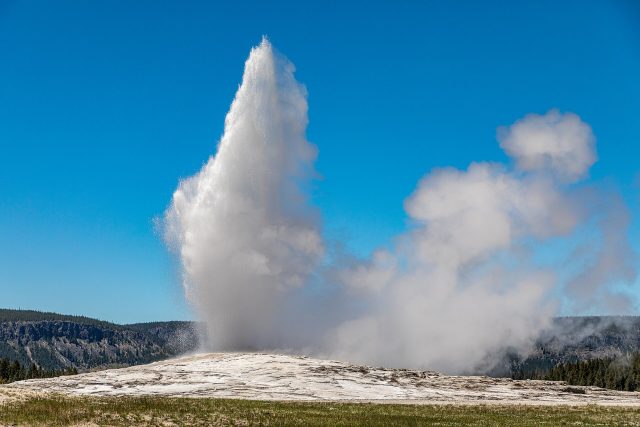
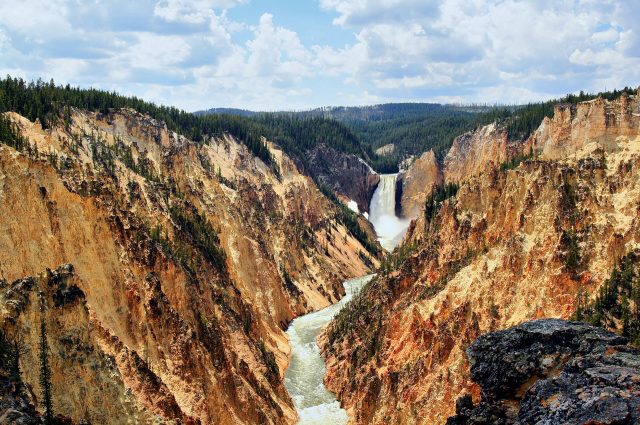
For many, Yellowstone begins and ends with this spring. While the park is home to countless other wonders—geysers, waterfalls, and canyons that stretch for miles—Grand Prismatic has a way of staying with you long after you’ve left. Perhaps it’s because it embodies everything we love about wild places: beauty that feels almost unreal, a sense of mystery, and the quiet understanding that you’re witnessing something far greater than yourself. Here, it’s easy to lose track of time, to forget about itineraries and schedules, and just stand there, watching the earth breathe. That’s why people keep coming back—to remind themselves that the world is still full of wonders, and some of them don’t need to be explained.