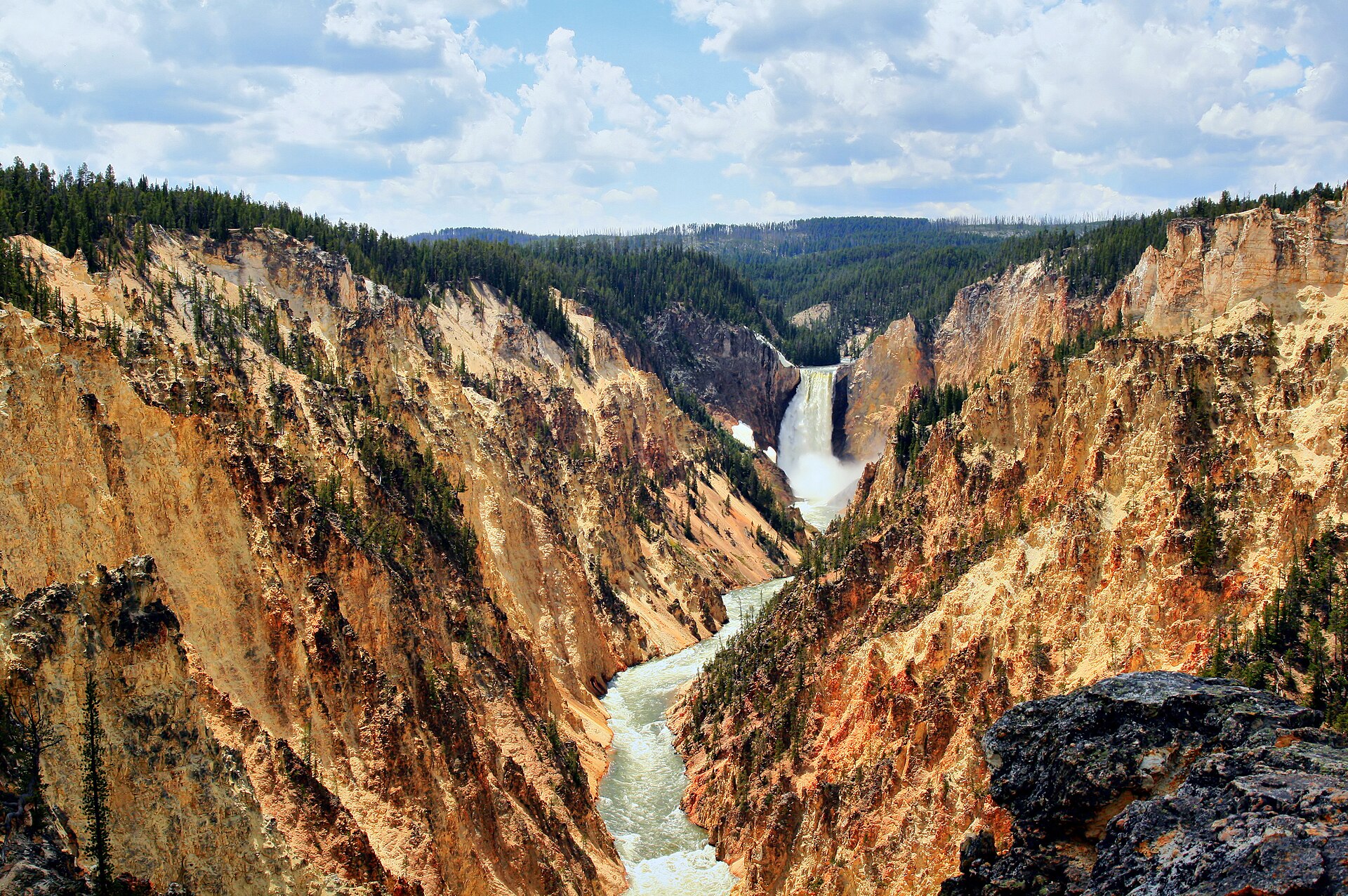
The Grand Canyon of the Yellowstone is where the earth seems to have gathered all its raw, untamed beauty into one breathtaking scene. Over millennia, the Yellowstone River carved its way through ancient volcanic rock, leaving behind sheer cliffs that rise up to four hundred meters high. The walls glow in hues of gold, amber, and rust, their colors forged by centuries of geothermal activity and mineral deposits. The canyon stretches for forty kilometers, but the most dramatic section lies between the Upper and Lower Yellowstone Falls, where the river plunges into the depths, filling the air with mist and thunder.
This landscape was shaped by forces far older than human memory. Millions of years ago, volcanic eruptions sculpted the terrain, layering rock upon rock in a slow, violent dance. Long before European settlers arrived, Indigenous peoples—including the Shoshone and Crow—knew this place as sacred ground, woven into their stories and traditions. The first recorded outsider to witness the canyon was John Colter, a member of the Lewis and Clark expedition, who stumbled upon it in the early 1800s and described it as something almost otherworldly. By the late 19th century, the canyon had become one of the crown jewels of Yellowstone National Park, the world’s first national park, established to protect such wonders from exploitation.
There are no man-made structures here, yet the architecture of the canyon is as grand as any cathedral. The cliffs appear chiseled by some colossal hand, their striations telling the story of geological epochs. The Lower Falls is the most striking feature—a cascade nearly twice the height of Niagara, where water crashes ninety-four meters into the gorge below. The impact sends up a perpetual spray, and when the light hits just right, rainbows shimmer in the mist. The canyon walls form natural amphitheaters, amplifying the roar of the falls until it feels like the earth itself is speaking.
To experience the canyon’s full majesty, there are several vantage points, each offering a different perspective. Brink of the Lower Falls is the most famous, a short but steep trail leading to a viewpoint directly above the waterfall. The descent is manageable, but the climb back up demands effort. Artist Point, as the name suggests, offers a scene so picturesque it could be a painting—the canyon’s vast expanse framed by the river winding like a silver thread far below. For those seeking solitude, Lookout Point reveals the river’s sharp turn as it carves deeper into the rock, a quieter but no less impressive sight.
The canyon changes with the seasons, each one revealing a new facet of its character. In summer, the slopes are lush with greenery, and bison or elk might wander near the rim while the river rushes below. Autumn turns the landscape into a blaze of gold and crimson, the cliffs seeming to glow from within. Winter quiets everything, blanketing the canyon in snow, though the falls never fully freeze, their ice-encrusted edges glinting in the pale light. Spring brings a surge of meltwater, swelling the river into a frothing torrent, while the air fills with the scent of pine and damp earth. Even repeat visitors find something new in these shifting moods.
Beyond its natural beauty, the canyon holds traces of human ambition and folly. In the early 20th century, there were plans to dam the river for hydroelectric power, a project halted by public outcry. Today, only fragments of concrete remain, slowly being reclaimed by the land. The canyon also bears the marks of early tourism, when visitors arrived by stagecoach to witness its wonders firsthand. Some of the trails they walked are still in use, offering a glimpse into the past for those who follow in their footsteps.
For those who want more than just a view, the canyon offers adventure. Trails like the Uncle Tom’s Trail descend steeply to the river’s edge, rewarding hikers with a perspective few get to see—the Lower Falls from below, where the water’s power feels even more immense. Photographers will find endless inspiration here, as the light shifts throughout the day, casting new shadows and highlights. Morning mist clinging to the river adds a layer of mystery, and the best shots often come to those who wait, letting the scene unfold at its own pace.
What makes the Grand Canyon of the Yellowstone unforgettable isn’t just its scale or its beauty, but the way it makes you feel small in the best possible sense. Standing at the rim, it’s impossible not to marvel at the forces that shaped this place over millions of years, forces that continue to shape it still. The canyon exists on a timescale far beyond our own, a reminder that the world is far older and more complex than we often realize. That’s why people keep coming back—not just to see it, but to feel connected to something greater than themselves.