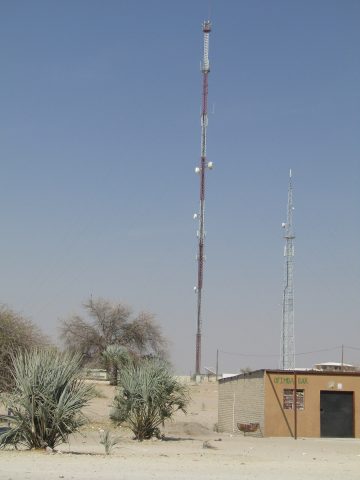
In the heart of a quiet Namibian town, there’s a place that doesn’t announce itself. Behind an unassuming facade, Omutia’s library is more than just a collection of books—it’s a living piece of the community, where the hush of a reading room meets the rhythm of everyday life outside.
Omutia isn’t a place you’ll find in most travel guides. There are no crowds of tourists here, just the steady pulse of northern Namibia. For locals, the library is more than an institution; it’s a second home. Schoolchildren do their homework at the tables, students cram for exams, and older residents flip through newspapers or simply chat. In a country where access to education isn’t always guaranteed, places like this become anchors.
The building itself is modest—a single-story structure with a flat roof, painted in light colors. Inside, it’s spacious but unpretentious: wooden shelves, simple tables, a handful of computers. There are no grand staircases or polished marble floors, just the quiet authenticity of a place that serves its purpose. The books here aren’t just stored; they’re passed from hand to hand, becoming part of people’s lives in ways that go beyond their pages.
The town of Omutia began as a trading post in the early 20th century, when Namibia was under German rule. Back then, education was a rarity, and books were a luxury. The first library in the area started as a small collection in a local school, with just a few hundred titles in English, German, and Afrikaans. It wasn’t until the 1990s, after Namibia gained independence, that the library got its own building.
Today, the collection holds several thousand books. Classics of world literature sit alongside modern works in English and local languages. A special section is dedicated to Namibia itself—its history, culture, and landscapes. You’ll find studies on the traditions of the Ovambo and Herero people, guides to national parks, and rare accounts of the colonial past. For many in Omutia, this is the only place to find such books; there are hardly any bookshops in town.
But the library is more than just a repository of books. It’s a hub for the community. Local authors come to read from their work, artists display their paintings and photographs, and occasionally, there are concerts or lectures on Namibian history. For children, there are reading sessions and creative workshops. These events turn the library into a reflection of the town’s interests and passions.
Like many small libraries, this one faces challenges: the shift toward digital media, shrinking budgets, the pull of the internet. Yet it hasn’t abandoned its roots. The librarians adapt, offering access to e-books and setting up mobile lending stations in remote villages. The goal isn’t to compete with the digital world but to find a way to coexist with it.
If you visit, you’ll see how a place like this functions far from the usual tourist trails. There’s no hustle, no commercial buzz—just the quiet hum of a space where people come to learn, connect, and unwind. You can pick up a book, sit at a table, and watch life in Omutia unfold through the windows.
Culture and knowledge don’t always need grandeur. Sometimes, they thrive in simple places, among people for whom books are a necessity, not a luxury. If you find yourself in this corner of Namibia, step inside. You might discover something here that you won’t find in the more famous spots.