Prizren’s bazaar isn’t just a place to shop—it’s the beating heart of the old city, where history seeps through every stone and the air carries the scent of spices, fresh bread, and strong coffee. Winding through narrow alleys lined with low-slung buildings, the bazaar feels more like a living maze than a marketplace. There are no sterile aisles or fluorescent lights here, just a tangle of workshops, stalls, and cafés where time moves at its own pace. Every corner seems to hold a story, whether it’s the worn wooden counter of a silversmith’s shop or the faded sign of a spice merchant whose family has traded here for generations.
The bazaar’s roots stretch back to the Ottoman era, when Prizren was a key stop on the trade routes connecting Istanbul, Thessaloniki, and Dubrovnik. In the 16th and 17th centuries, caravans laden with goods passed through the city, while local craftsmen gained fame for their silverwork, leather, and textiles. The bazaar wasn’t just an economic hub—it was where deals were struck, news was shared, and traditions were passed down. Many of the shops still belong to families who have practiced the same craft for centuries, their skills honed over generations. Walking through the bazaar today, you can still sense that continuity, as if the past hasn’t quite faded away.
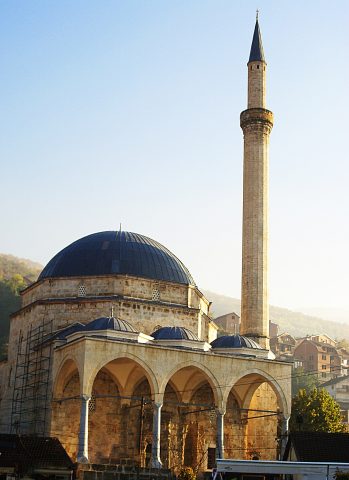
The architecture here is a mix of Ottoman and Balkan influences, with stone buildings topped by wooden eaves and narrow passageways so tight you can almost touch both walls at once. Overhead, wires crisscross between buildings, and underfoot, the uneven cobblestones bear the weight of centuries. At the bazaar’s center stands the old clock tower, a landmark that once guided merchants and townspeople. Nearby, the Sinan Pasha Mosque, built in the 17th century, rises above the rooftops, its minaret visible from afar. These structures aren’t just relics—they’re still part of the city’s daily rhythm, as much a backdrop to life here as the mountains that loom in the distance.
What makes the bazaar special isn’t just what you can buy, but how it feels. In the mornings, the market comes alive slowly, with vendors arranging their wares and early visitors drifting between stalls. You’ll find shops selling handmade silver jewelry, leather goods, and ceramics, alongside spice merchants offering dried fruits, local cheeses, and honey. Small cafés serve thick, sweet coffee brewed the Turkish way, along with fresh *burek*—flaky pastry stuffed with cheese or meat. There’s no rush here. People linger over their drinks, bargaining is done with a smile, and conversations unfold at a leisurely pace.
The bazaar is also where you’ll see the city’s daily life unfold. Elderly men play backgammon in the shade of a café, their laughter mixing with the clink of coffee cups. Craftsmen work with quiet concentration, their hands shaping silver or leather with practiced ease. Children dart between stalls, and tourists pause to take photos, though the real magic isn’t in the pictures—it’s in the moments that can’t be captured. By evening, the bazaar transforms. Lanterns cast a warm glow over the cobblestones, music spills from open doorways, and the air fills with the hum of conversation. It’s as if the day’s energy lingers, refusing to fade.
For many in Prizren, the bazaar is more than just a place to work—it’s a piece of their identity. Some of the older vendors remember the market as it was decades ago, before wars and modern changes reshaped the city. They’ll tell you about the most popular shops of their youth, the goods that once arrived by donkey, or the festivals that once filled the streets. These stories aren’t just nostalgia; they’re a reminder that the bazaar has always been a place of connection, where the past isn’t just remembered but lived.
If you visit, take time to notice the small details. The old signs above shop doors, written in a mix of Serbian and Turkish, hint at the city’s layered history. The carved wooden entrances to workshops, some worn smooth by generations of hands. The tiny *mehanas*—traditional taverns—where locals gather to drink *rakija* and share plates of grilled meat. Try the *prizrenska gibanica*, a rich, layered cheese pie that’s a local specialty, or *fljaki*, a hearty tripe soup that might surprise you with its depth of flavor. These aren’t just dishes; they’re part of the bazaar’s soul.
What makes Prizren’s bazaar different from other historic markets is that it hasn’t been polished for tourists. There’s no attempt to sanitize its rough edges or force it into a tidy narrative. It’s messy, authentic, and unapologetically itself. The cobblestones are uneven, the alleys can feel labyrinthine, and the pace is slow—but that’s exactly why it works. This isn’t a place to rush through. It’s a place to wander, to sit with a coffee and watch the world go by, to strike up a conversation with a shopkeeper or a stranger at the next table.
For anyone trying to understand Prizren, the bazaar is the perfect starting point. It’s where the city’s history, culture, and daily life intersect, where the Ottoman past and the Balkan present coexist without fuss. You won’t find grand monuments or carefully curated exhibits here—just the quiet persistence of a place that has endured, adapted, and remained true to itself. That, in the end, might be the most remarkable thing about it.