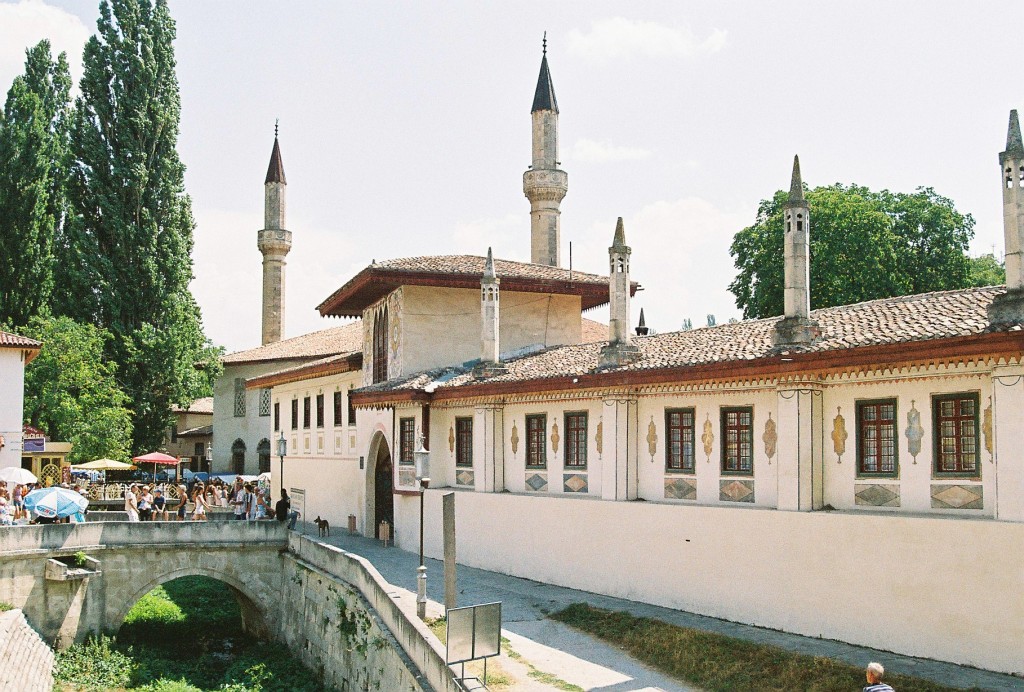
Bakhchisaray feels like a place where time has softened its pace, allowing the layers of history to unfold without rush. Nestled in the valley of the Churuk-Su River, this town has long been a crossroads where different cultures, religions, and empires left their mark. The Bakhchisaray Historical and Cultural Reserve is more than just a collection of monuments—it’s a living archive of the Crimean Tatar legacy, with the Khan’s Palace at its heart. This is the only surviving example of Crimean Tatar palace architecture in the world, a rare glimpse into the era when Bakhchisaray served as the capital of the Crimean Khanate, a powerful state that stretched between the Black Sea and the Azov steppes.
The palace wasn’t built in a day, nor was it the work of a single architect. Constructed and expanded between the 16th and 18th centuries, it absorbed influences from Ottoman, Persian, and even European traditions, blending them into something uniquely Crimean. There’s a quiet elegance to its design—no gilded excesses, no overwhelming grandeur, just a thoughtful harmony of form and function. The carved wooden columns of the porticos, the cool marble fountains in the inner courtyards, the painted ceilings and stained-glass windows all tell a story of a culture that valued beauty without ostentation. Walking through its halls, you can almost hear the echoes of the past: the murmur of diplomats in the reception rooms, the clatter of hooves in the stables, the distant call to prayer from the nearby mosque.
One of the palace’s most famous features is the Fountain of Tears, immortalized by Pushkin in his poem. According to legend, it was commissioned by Khan Krym-Girey in memory of his beloved, the Polish noblewoman Maria Potocka, who died young. The fountain still stands today, its water trickling down a series of marble basins in a slow, mournful rhythm. It’s a striking example of both art and engineering, a testament to the skill of craftsmen who could create something so delicate yet enduring. But beyond the legend, the fountain is also a reminder of the palace’s role as a place of power, where personal grief and political ambition often intertwined.
Beyond the palace walls, the old town of Bakhchisaray unfolds like an open-air museum. Narrow streets wind between houses with flat roofs and intricately carved shutters, their facades bearing the marks of centuries. Mosques with slender minarets stand alongside former caravanserais, public baths, and madrasas, each building a piece of the puzzle that is Crimean history. One of the most striking sights is the Uspensky Monastery, carved into the cliffside as early as the 8th century. Its cave churches, adorned with faded frescoes and icons, are a powerful reminder of the region’s religious diversity. The monastery is still active, its quiet corridors offering a stark contrast to the bustle of modern life below.
What makes Bakhchisaray special is its ability to feel both timeless and alive. The reserve isn’t just a relic of the past—it’s a place where history and contemporary life intersect. Throughout the year, the palace and its surroundings host festivals, concerts, and exhibitions. In summer, the courtyards fill with the sounds of traditional Crimean Tatar music, while winter brings Christmas fairs and the scent of spiced tea. The town’s cafes serve up hearty dishes like chebureki, shashlik, and baklava, and local artisans sell handmade ceramics, embroidery, and honey in small shops. There’s no rush here, no pressure to perform for tourists. Visitors wander at their own pace, soaking in the atmosphere rather than ticking off sights from a list.
For many, Bakhchisaray comes as a revelation—a place where history isn’t confined to glass cases but woven into the fabric of everyday life. Unlike the crowded resorts of Yalta or Sevastopol, this town offers a different kind of Crimean experience, one that goes beyond beaches and sunsets. It’s a land where mountains meet the sea, where the footsteps of Greeks, Genoese, Tatars, and Russians have all left their mark. The reserve serves as a gateway to understanding this complexity, a place where the past isn’t just remembered but still felt.
A full day is ideal for exploring the reserve. Start with the palace in the morning, when the light is soft and the courtyards are still cool. By afternoon, the old town beckons, with its labyrinth of streets and hidden courtyards. A climb up to the Uspensky Monastery offers a quiet moment of reflection, and as evening falls, there’s nothing better than settling into a local café to try some Crimean Tatar cuisine. The surrounding area is rich with other sights—ancient cave cities like Chufut-Kale and Mangup, the eerie rock formations of the Valley of Ghosts, and vineyards that have been producing wine for centuries. But even if you never leave Bakhchisaray, the town has a way of lingering in your memory.
There’s nothing flashy about Bakhchisaray. It doesn’t try to impress with luxury or spectacle. Instead, it offers something rarer: authenticity. The town wears its history lightly, its scars and stories visible in the worn stones and quiet corners. It’s a place for those who appreciate the quiet beauty of a place that has seen empires rise and fall, where the past isn’t just studied but experienced. As the sun sets behind the mountains, casting a golden glow over the palace walls, it’s easy to understand why this town has captivated travelers for centuries—not for what it once was, but for what it still is.