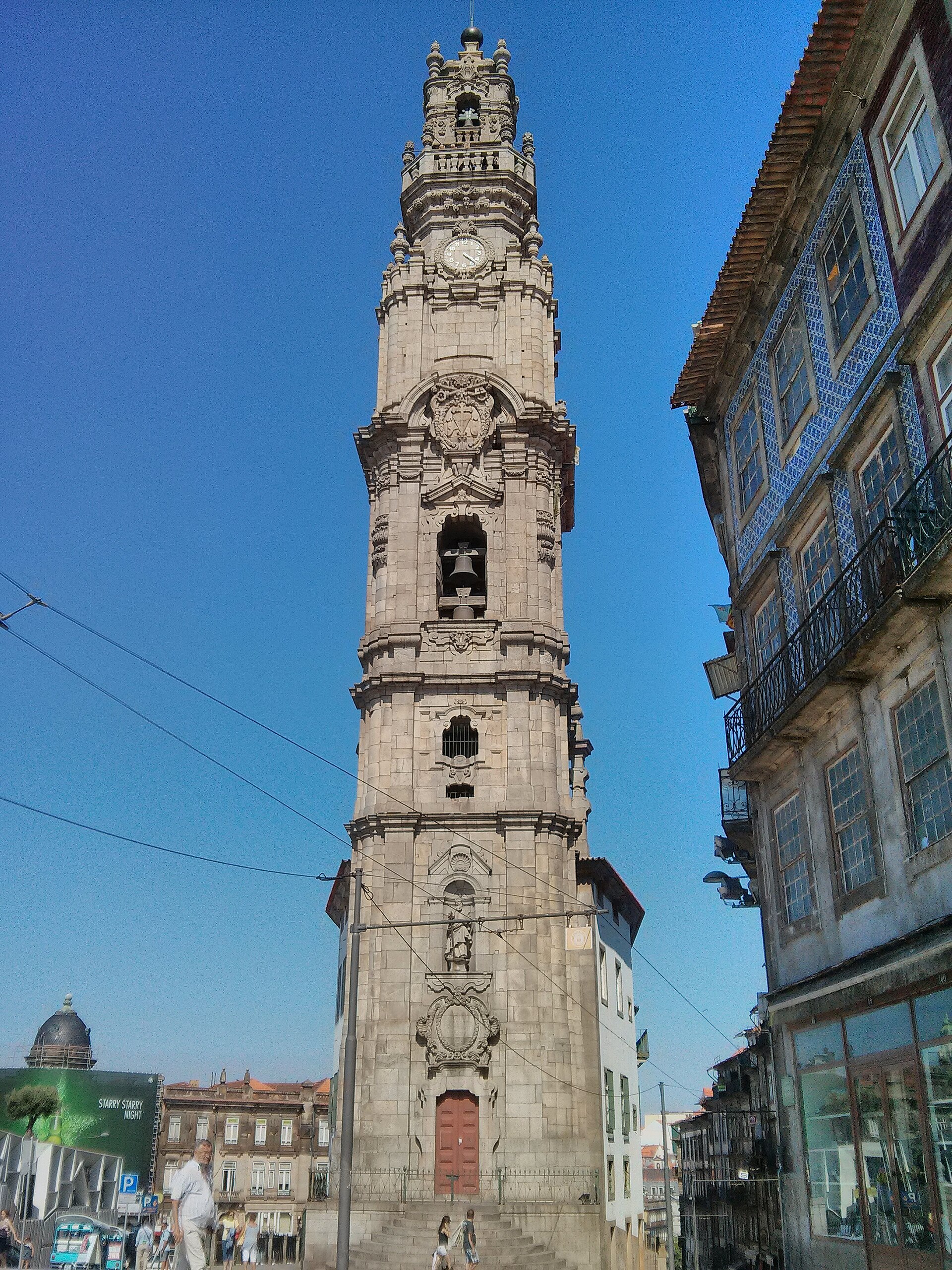
Perched on one of Porto’s hills, the Torre dos Clérigos stands apart from the city’s busy streets. From its heights, the rooftops of the old town slope toward the Douro River, their terracotta tiles catching the afternoon sun. The tower was once part of the Convent of the Clarissas, founded in the early 18th century when Porto thrived on trade and maritime life. The convent is gone, but the tower remains, its granite walls holding centuries of stories.
The tower’s design is straightforward. Built from pale local stone, it rises in a clean square, its facade broken only by narrow windows and subtle pilasters. These windows, small and high, were meant to let in light while keeping the nuns secluded. At the top, a balcony with a simple balustrade offers a view of the city—one that must have felt like a rare glimpse of the outside world for women who lived in silence. Today, that same balcony is a favorite spot for visitors photographing the UNESCO-listed historic center, its churches and bridges stretching toward the horizon.
The tower’s history mirrors Porto’s own. The convent was established in 1732 under the archbishop’s patronage, intended to strengthen the Church’s presence in a city shaped by commerce. By the 19th century, political changes dissolved religious orders, and the convent fell into ruin. Most of its buildings crumbled, leaving only the tower standing. In 1910, it was declared a national monument, which likely saved it from further decay.
Inside, the tower feels like a preserved moment in time. The lower floors hold fragments of the original convent and a small exhibit on the Clarissas, a Franciscan order known for their strict way of life. The nuns here spent their days in prayer and labor, their world confined to these walls. Visitors can climb the narrow staircase to the top, where the air is cooler and the city spreads out below. Outside, a small park with shaded benches offers a quiet place to sit.
The Torre dos Clérigos is part of Porto’s identity. The city has always balanced commerce with tradition, and the tower sits where the old town’s narrow streets meet the wider avenues of the modern city. It marks a boundary between past and present, where the noise of daily life fades into something quieter. In the evenings, when the light softens, the tower’s stone holds the day’s warmth.
The tower now hosts cultural events. Exhibitions, concerts, and lectures take place nearby, drawing both locals and visitors. On summer nights, musicians play in the park below, their music rising with the echoes of old prayers. The tower doesn’t just hold history—it lets it live on, blending the old with the new. For Porto’s residents, it’s a familiar place to meet or take a moment for themselves. For visitors, it’s a chance to see the city differently.
What makes the Torre dos Clérigos special isn’t just its age or design. It doesn’t feel staged or polished. Instead, it feels like a place that has always been here, watching Porto change. The climb to the top is worth it for the view and the sense of connection—to the city below and to those who stood here before. It’s a place where time slows, where the past isn’t just remembered but felt. In Porto, that kind of quiet stands out.