Baidarsky Gate is one of those rare places in Crimea where nature’s grandeur makes you pause and reconsider your place in the world. It isn’t just a mountain pass—it’s a natural limestone arch carved by time, wind, and water, framing a view that stretches from the rugged peaks to the distant sea. Perched about six hundred meters above sea level, it marks the boundary between the cool foothills of the Crimean Mountains and the warmer, sun-drenched southern coast. For centuries, it has served as a threshold between two worlds, a quiet witness to the travelers who passed through.
The history of this place is woven into the ancient trade routes that once crisscrossed the Crimean Peninsula. In the Middle Ages, a road ran through here, connecting coastal settlements with the inland regions. Merchants, pilgrims, and weary travelers would stop at the pass to rest before descending into the valley or gathering strength for the climb ahead. By the 19th century, when Crimea became a fashionable retreat for Russian aristocracy, a proper highway was built, making the pass more accessible. Today, it’s part of the road between Sevastopol and Yalta, and even now, drivers instinctively slow down as the arch comes into view, unable to resist the pull of the landscape unfolding before them.
The arch itself is a testament to the slow, relentless work of nature. Over millennia, limestone cliffs eroded into jagged shapes, leaving behind a twenty-meter-wide opening that feels almost deliberate, as if designed by human hands. Local legends add layers to its story—some say it was a hiding place for Crimean Tatars fleeing persecution, others claim it guided sailors approaching the shore. There’s no historical evidence to support these tales, but they linger in the air, giving the place a sense of mystery. It’s not just a geological formation; it’s a landmark steeped in the echoes of the past.
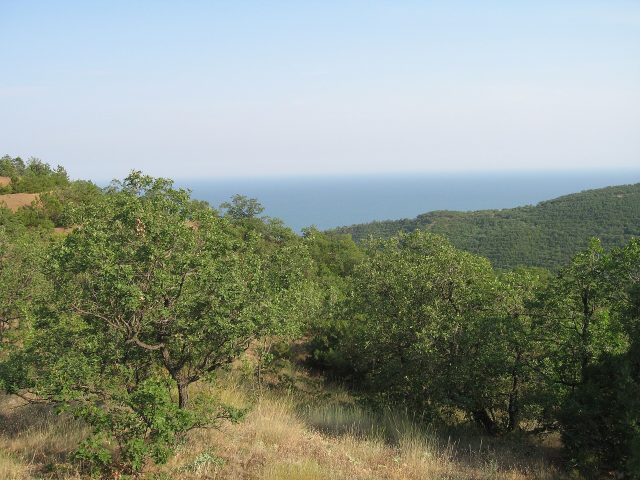
Standing at Baidarsky Gate, you can’t help but feel small against the vastness of the landscape. Below, the Baidar Valley spreads out like a green bowl, dotted with villages, orchards, and vineyards, encircled by mountains. Beyond it, the sea shimmers on the horizon, merging with the sky on clear summer days or darkening to a slate gray before a storm. The light here is ever-changing—golden at dawn as the sun spills through the arch, casting long shadows, or soft and muted at dusk when the valley falls into shadow while the sea still holds the last glow of the day.
The area around the pass carries traces of different eras. Nearby, you might stumble upon the ruins of old structures, perhaps remnants of roadside inns or waystations from a time when travel was slower and more arduous. During the Soviet era, a memorial stele was erected to honor those who fought in the Great Patriotic War, as the pass was a strategic point during the conflict. Today, it attracts visitors, but it hasn’t become a crowded tourist spot. Instead, it remains a quiet place where you can step away from the noise and simply be, surrounded by history and the natural world.
For those arriving by car, Baidarsky Gate is an unexpected gift—a sudden, breathtaking view that makes you pull over, step out, and just stand there, taking it all in. Hikers who’ve made the climb up the mountain trails find it a well-earned reward, a moment to catch their breath and soak in the scenery before moving on. The pass looks different in every season. In spring, the valley bursts into bloom with wildflowers. Summer brings cool relief from the coastal heat. Autumn turns the mountains into a blaze of red and gold, while winter blankets the landscape in snow, transforming it into something out of a fairy tale.
Baidarsky Gate isn’t just a natural landmark; it’s a symbol of connection. It marks the divide between two climates, two landscapes, two ways of life. Here, the rhythms of the coast meet the quiet of the mountains. Travelers heading south from the interior pass those coming up from the shore, and for a moment, their paths intersect. Maybe that’s why the place feels so special—it reminds you that nature and history don’t recognize borders, and that humans are only temporary guests in this vast, enduring world.
What makes Baidarsky Gate worth returning to isn’t the promise of guided tours or picture-perfect moments. It’s the feeling you get when you stand there—the silence, the space, the quiet melancholy that comes with realizing how fleeting beauty can be. There are no crowds, no souvenir stalls, no noisy cafes. Just the wind, the rocks, the distant sea, and the sense that you’re standing at the edge of something much larger than yourself. It’s a place that doesn’t demand attention but rewards those who take the time to notice.