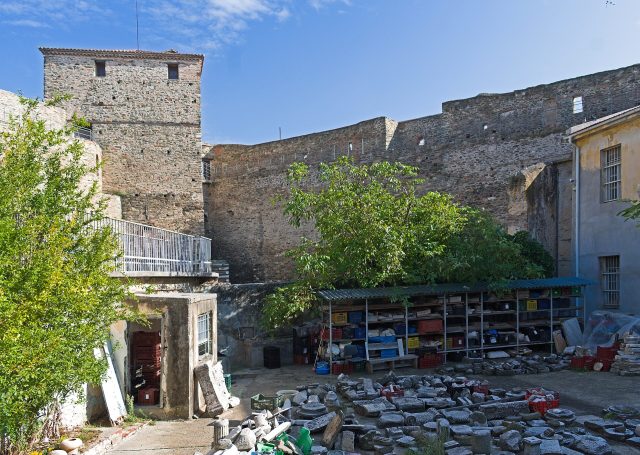
Thessaloniki’s Archaeological Museum is where the past feels almost tangible, as if the stories of those who lived here thousands of years ago are waiting just beneath the surface. The city itself is a living monument to history, founded in 315 BC by Cassander, a general of Alexander the Great, and named after his wife, Thessalonike, Alexander’s half-sister. Over the centuries, it grew into a thriving hub of trade, culture, and power, first under the Macedonians, then the Romans, and later the Byzantines. The museum captures this layered history, offering a glimpse into the lives of the people who shaped the region—from rulers and warriors to merchants and artisans.
The museum building, designed in the 1960s by architect Patroklos Karantinos, is a study in understated elegance. Its clean lines and spacious galleries provide a neutral backdrop that allows the artifacts to take center stage. There’s no rush here; visitors move at their own pace, lingering over objects that once belonged to someone’s daily life. The collection spans from the Neolithic era to late antiquity, with each piece telling a fragment of a much larger story. Among the most striking exhibits are those from the royal tombs of Vergina, discovered in 1977. The golden wreaths, weapons, and jewelry found in the untouched burial site of Philip II, Alexander the Great’s father, are some of the most breathtaking artifacts in the museum.
One of the most compelling sections is dedicated to ancient Macedonia. The artifacts here—gold diadems, intricately crafted earrings, and bronze statues—reveal the sophistication of a kingdom that once dominated the ancient world. The craftsmanship is astonishing, with delicate filigree and precise engravings that speak to a highly developed artistic tradition. A particularly striking piece is a marble head believed to depict Alexander the Great, its features still sharp and expressive after centuries. It’s hard not to wonder about the man behind the legend when standing so close to something he might have once touched.
The Roman period is equally well represented, reflecting Thessaloniki’s importance as a key city along the Via Egnatia, the ancient road linking Rome to its eastern provinces. The museum’s collection includes fragments of marble reliefs depicting gods and emperors, as well as everyday objects like coins, pottery, and tools. The funerary steles are especially moving, with their carved portraits of the deceased and heartfelt inscriptions. These simple monuments offer a quiet reminder of how people in antiquity honored their loved ones, blending personal grief with artistic expression.
Thessaloniki was also one of the first cities where Christianity took root, and the museum’s early Christian exhibits highlight this pivotal moment in history. Mosaic fragments from basilicas, crosses, and oil lamps show how the new religion gradually reshaped the city’s identity. The collection of early Christian sarcophagi is particularly striking, with their detailed biblical scenes carved in relief. These works bridge the gap between the old world and the new, showing how pagan traditions slowly gave way to Christian symbolism.
Beyond the permanent exhibits, the museum regularly hosts temporary displays, lectures, and educational programs that bring history to life in new ways. Interactive screens in the galleries provide deeper context for the artifacts, while the museum’s library offers a wealth of resources for those who want to explore further. It’s not just a place to observe the past but to engage with it, making the museum feel like a living institution rather than a static archive.
Walking through the museum is like flipping through the pages of a history book, where each chapter reveals a different era of Thessaloniki’s evolution. From the humble clay figurines of the Neolithic period to the opulent gold treasures of Macedonian kings, from Roman tombstones to early Christian mosaics, the collection paints a vivid picture of a city that has always been at the crossroads of civilizations. The artifacts may be silent, but their stories are anything but. All you have to do is listen.