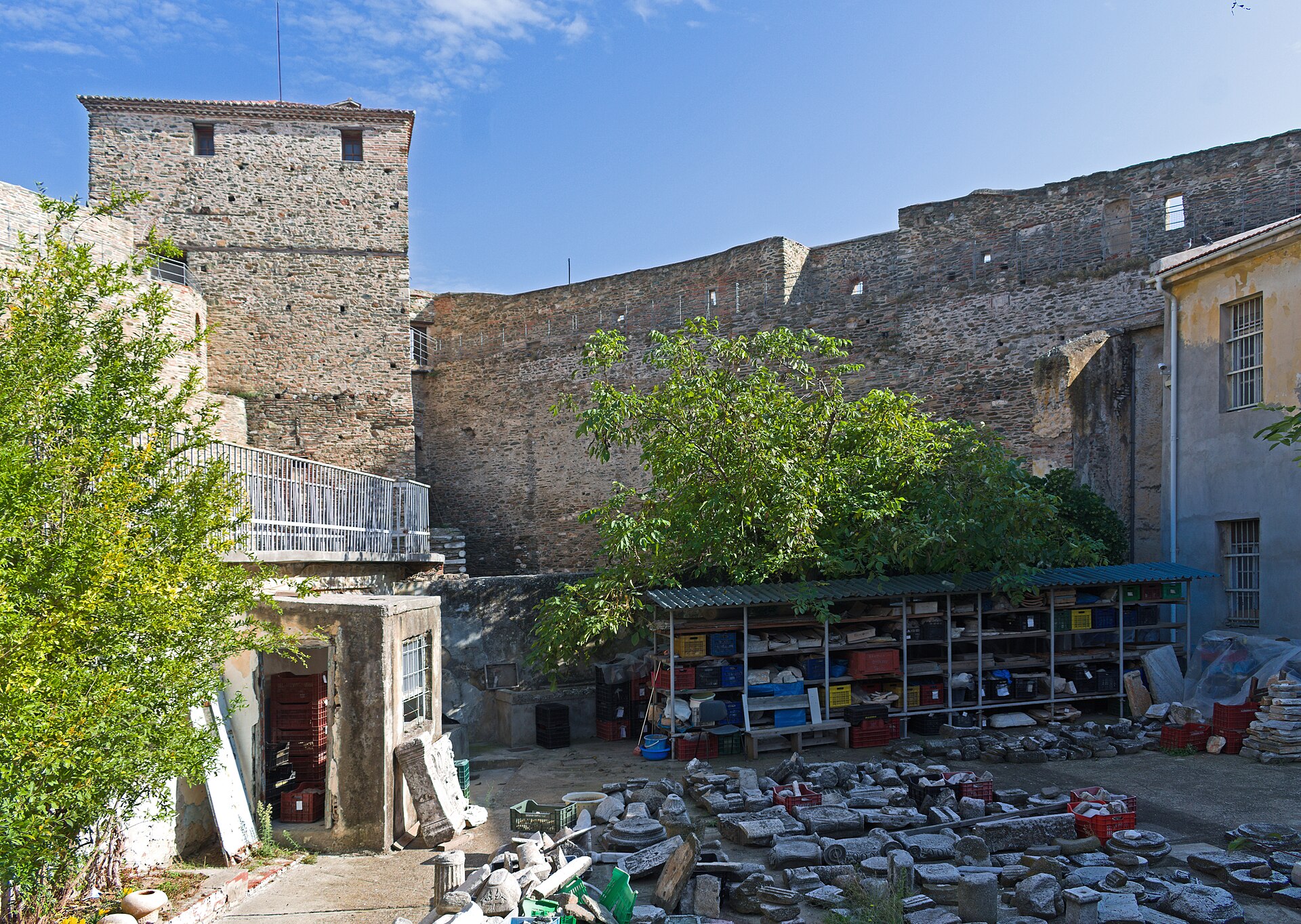
Thessaloniki’s Heptapyrgion fortress clings to the highest point of the old upper town, where the city’s Byzantine walls converge. The name translates to "seven towers," though in reality there are ten—five from the Byzantine era and five added later by the Ottomans. It’s a place where layers of history stack unevenly, each period leaving its mark on the stone.
The northern section dates back to the ninth or tenth century, built atop even older foundations. The Byzantines constructed it as part of the city’s defenses, though little remains of that original purpose beyond the weathered walls. The southern part, including the gatehouse with its Ottoman inscription, was added in the late fifteenth century after the city fell to the Turks. The fortress then served as a military stronghold, its role shifting with the changing rulers of Thessaloniki.
For nearly a century, from the 1890s until 1989, the Heptapyrgion was a prison. First a civilian one, then a political detention center, it held resistance fighters during World War II and later dissidents under the military junta. The cells, now empty, still carry the weight of that history. After the prison closed, restoration work began, though much of the site remains raw, its past more visible than any modern intervention.
Today, parts of the fortress are open to visitors. The walls and towers stand largely as they were, their rough surfaces softened only by time. Inside, the old prison blocks have been left mostly untouched—narrow corridors, barred windows, and the occasional graffiti from its last inmates. The real draw, though, isn’t the exhibits but the place itself. From the ramparts, the view stretches over the city and the Thermaic Gulf, with Mount Olympus visible on clear days, a distant presence across the water.
The upper town around the fortress is the only part of Thessaloniki that survived the great fire of 1917. Its streets twist uphill, lined with wooden houses and overhanging balconies, their facades darkened by age. The remnants of the old city walls run through the neighborhood, half-buried in places, as if the past is still settling into the present.
Getting here takes some effort. The climb from the city center is steep, and the sun beats down on the exposed stone. There’s no shade, so bringing water is a good idea. The easiest way up is by bus, a twenty-minute ride from the center, though walking back down through the upper town is pleasant enough. The fortress is open during daylight hours, and entry is free, though some sections remain closed for ongoing restoration.
The best time to visit is late afternoon, when the light softens and the city below glows in the setting sun. The view from the gatehouse is one of the finest in Thessaloniki, a quiet reward after the climb. It’s not just the panorama that lingers, but the sense of standing in a place where history hasn’t been polished for tourists—where the past feels close, almost tangible.