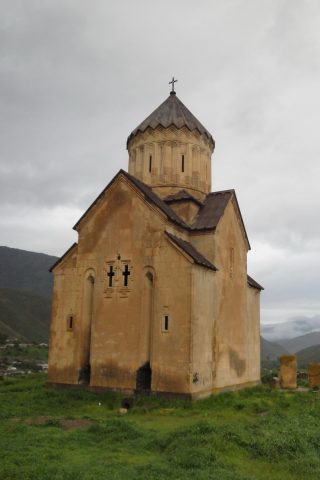
Areni sits in a valley where rocky hills meet sun-drenched vineyards. The Armenian Wine and Viticulture Museum stands here, not as a gallery of relics, but as a record of traditions that have shaped the country for thousands of years. Winemaking in Armenia was never just a craft—it was part of life, handed down like an heirloom.
The village is known for its vineyards along the Arpa River. Archaeologists found the world’s oldest winery here, over six thousand years old. The museum began with that discovery, built to show how Armenian winemaking grew from this land and changed over time. The hills, the river, the stones—all of it is part of the story.
The exhibits start with the first traces of winemaking in Armenia. How did grapes become part of the culture? Ancient presses, worn by use, stand next to clay vessels called *karases*. Some are big enough to hold a person. These vessels, buried underground, are still used today, unchanged since ancient times. They connect past and present.
Armenia’s geography shaped its wine. High-altitude vineyards, volcanic soil, and strong sun create conditions found nowhere else. Local grapes like Areni Noir grow here, producing wines with dark berries, spices, and a mineral edge. The museum explains why these grapes are rare outside Armenia—and why the land flavors the wine.
Wine was more than a drink. It was hospitality, a sacred offering, even medicine. Exhibits show its role in rituals: blessings, funerals, toasts at gatherings. Stories reveal how wine marked life’s moments—births, weddings, farewells. A shared cup carried meaning.
You don’t just look at the museum. The tasting room lets you try wines from the surrounding vineyards. No pretension, just wines that taste of the earth. One sip might hint at the valley’s sun-baked stones, another at the winemakers’ patience. These wines don’t need fancy labels. They tell their own stories.
Areni moves at its own pace. No city noise, just vineyards and the scent of grapes. After the museum, the landscape feels different. The hills, the vines, the buried *karases*—all part of a story that didn’t end centuries ago but continues today.
The village isn’t just a stop. It’s a chance to step into a story still being written. For those who want to understand Armenia beyond the usual sights, the Wine Museum in Areni offers something rare: a connection to the country’s soul. The place speaks through the people, the wine, the traditions that refuse to fade. It’s not about looking back. It’s about seeing how the past lives on.