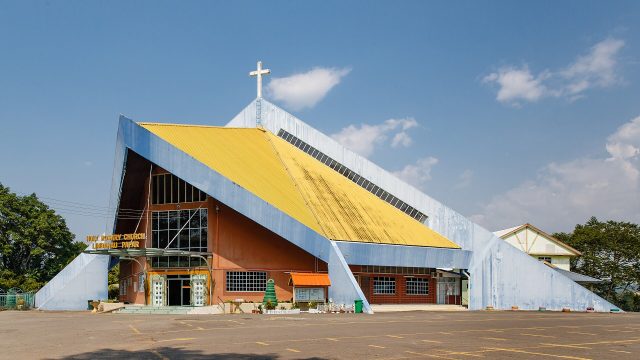
The Archbishop’s House in Dhaka is a quiet place with more beneath its surface. Tucked away in the city’s center, it serves as the residence of the Catholic archbishop and the administrative hub of the Dhaka Archdiocese. For those interested in Bangladesh’s history, it offers a glimpse into Christianity’s story here—a faith that has endured for centuries, often unnoticed.
Built in the mid-20th century, the house reflects a mix of influences. Its architecture blends European ecclesiastical traditions with local craftsmanship. The facade is simple but dignified, with tall windows and heavy wooden doors that suggest the colonial era. Inside, high ceilings, handcrafted furniture, and religious iconography create a space for reflection. The building isn’t a museum, but it feels like an archive of the Catholic community’s presence.
The Archbishop’s House isn’t open to the public, but its role in the city’s religious life matters. It hosts church events—services, clergy meetings, and charitable work. For worshippers, it’s a place of connection to earlier generations. Its privacy adds to its intrigue, as if the building holds stories for those who seek them.
The house stands in an area where the past and present overlap. Modern high-rises rise above narrow lanes, while remnants of old Dhaka—colonial buildings, markets, and centuries-old mosques—are nearby. Outside, the city hums with activity; inside, the walls quiet the noise. The neighborhood itself holds traces of British rule, Mughal influence, and recent urban growth.
For most travelers, the Archbishop’s House isn’t a must-see. It lacks the grandeur of a cathedral or the dramatic history of a fort. But for those who notice it, the building tells a story of coexistence. Bangladesh is often seen through its Muslim majority, yet Christianity has been part of the region since the 16th century, when Portuguese missionaries arrived. The house is a link to that history, where the past is still alive.
The Christian community in Bangladesh is small, less than one percent of the population, but its roots go back hundreds of years. The house symbolizes that continuity, a bridge between early missionaries and today. It’s part of the city’s cultural fabric, witnessing Dhaka’s growth from a town to a megacity. Its endurance reflects the resilience of the community it serves.
If you pass by, pause to look at its facade. You might see parishioners arriving for mass or priests going about their day. There’s no fanfare, no attempt to draw attention. The building doesn’t need to announce itself; its presence is enough. In a city that never stops, it offers a moment of stillness.
The Archbishop’s House is a quiet witness to Dhaka’s history. For some, it’s a spiritual anchor; for others, a curiosity. It doesn’t demand attention, but those who notice it remember it long after the city’s noise fades.