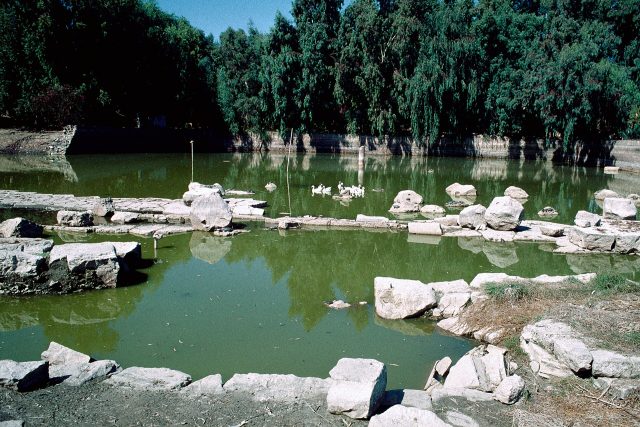
The aqueduct in Selçuk is one of those quiet places that don’t demand attention at first glance, yet often reveal more about a city than its most famous landmarks. These weathered stone arches, stretching across the edges of the modern town, were once part of an intricate water system that sustained Ephesus—one of the ancient world’s greatest cities. Today, only fragments remain, but even these give a sense of the engineering mastery that made such a vast network possible.
The story of the aqueduct is inseparable from the rise of Ephesus itself. Founded in the 11th century BCE, the city flourished under Roman rule, becoming the capital of the province of Asia and a vital Mediterranean trade hub. With a population exceeding two hundred thousand, water wasn’t just a necessity—it was the lifeblood of urban life. Public baths, fountains, temples, and even the sewer system relied on a steady supply. To meet this demand, a sprawling network of aqueducts was built, stretching for dozens of kilometers and channeling water from mountain springs into the heart of the city.
While the exact date of construction remains uncertain, most scholars place the Selçuk aqueduct in the Roman period, likely between the 2nd and 3rd centuries CE. The system was designed with precision: water flowed by gravity through gently sloping channels, while settling tanks filtered out impurities. Some sections still stand today, offering a glimpse into how carefully every detail was calculated. The arches, built without mortar, relied on the weight of the stone itself to maintain stability—a technique that allowed them to endure for centuries.
Over time, the aqueduct became part of the changing landscape. Once towering over fields and vineyards, it now stands amid modern houses and roads, a silent witness to the passage of time. Locals have long grown accustomed to its presence, and in some places, small cafés or stalls have sprung up beneath the arches. There’s something strangely intimate about sitting under the same vaults that once carried water to an ancient metropolis, as if the centuries between then and now momentarily dissolve.
The architecture is unmistakably Roman—massive stone blocks fitted together with such skill that no binding material was needed. The height of the arches varies, some barely rising above the ground while others stretch several meters high. In places, newer stones mark where restorations have been made, their lighter color contrasting with the weathered originals. Yet these modern additions don’t detract from the sense of age; if anything, they highlight how the structure has been cared for across generations.
Unlike the crowded ruins of Ephesus, the aqueduct remains a place of quiet reflection. There are no tour groups here, no guides rushing visitors along—just the occasional passerby or the sound of birds overhead. Walking along the arches, you can touch the same stones that have stood for nearly two thousand years, imagining the rush of water that once flowed through them. It’s a rare opportunity to connect with history without the usual distractions.
For those who pause to consider it, the aqueduct offers a meditation on time and change. Ephesus, the city it was built to serve, is now a collection of ruins, a tourist attraction in its own right. Yet the aqueduct endures, its original purpose long forgotten but its presence undiminished. It has outlasted empires—the Roman, the Byzantine, the Ottoman—and now watches over a modern town that has grown up around it. There’s a quiet resilience in that, a reminder that even the grandest civilizations are fleeting.
If you find yourself in Selçuk, don’t rush straight to the ruins of Ephesus or the Basilica of St. John. Take a moment to wander along the aqueduct, especially in the early morning or at dusk, when the light casts long shadows across the ancient stones. It’s in these unassuming moments that the past feels closest—not through museum displays or explanatory plaques, but through the simple act of standing where history once flowed.