Würzburg
Germany · 6 places
Photo: DXR, CC BY-SA 3.0
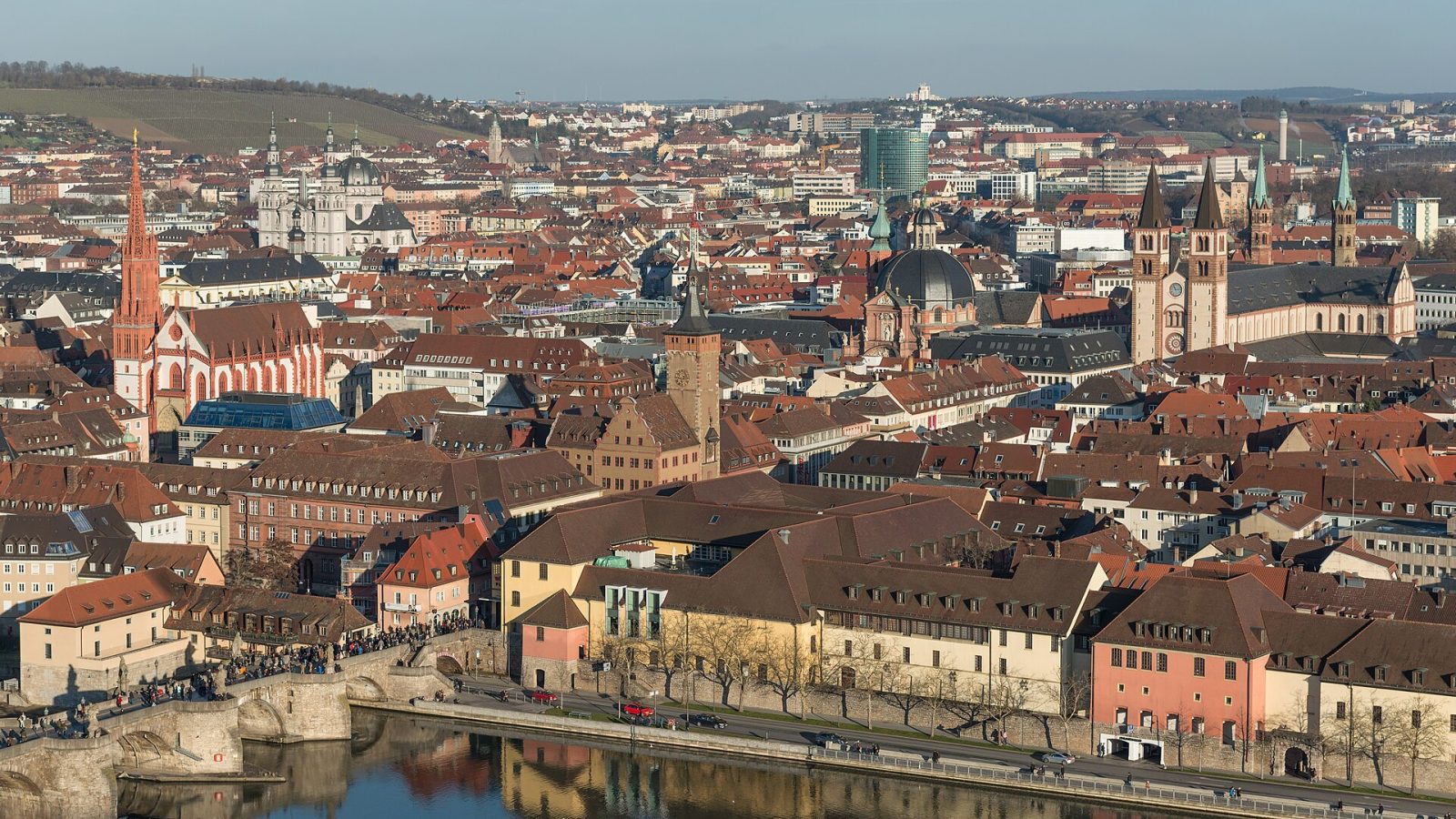
Würzburg feels like a place where time moves to its own rhythm, effortlessly blending the weight of history with the pulse of everyday life. Nestled along the Main River in the heart of Franconia, it carries the quiet charm of a town that has seen centuries pass without losing its character. The streets hum with the usual rhythms—students rushing to lectures, winemakers debating the latest harvest, tourists pausing to admire the intricate facades of half-timbered houses. Yet step away from the main thoroughfares, and the city reveals itself in layers: the Marienberg Fortress looming over terraced vineyards, a hidden alley where each building seems to whisper stories from another era.
At the heart of Würzburg stands the Residenz, a masterpiece of Baroque architecture that locals simply call the palace. Built in the 18th century for the prince-bishops, it remains a living part of the city rather than a relic behind glass. The Imperial Hall dazzles with its gilded mirrors and frescoes by Tiepolo, where gods and heroes appear to float across the ceiling. But what makes the Residenz truly special is how it fits into daily life—children playing in the courtyard, couples lingering on the steps, and wine cellars beneath where visitors can taste the crisp, mineral-rich Rieslings that Franconia is known for. It’s a place where grandeur and simplicity coexist, where history isn’t just preserved but lived.
Wine is woven into Würzburg’s identity, as much a part of its culture as the river or the fortress. The vineyards begin just beyond the city limits, rolling across the hillsides in neat rows that turn golden in autumn. Franconian wines may not have the fame of those from the Rhine, but they have a distinct personality—dry, earthy, with a hint of bitterness that lingers. The local wine bars aren’t just places to drink; they’re gathering spots where conversations flow as freely as the wine, and regulars debate the nuances of each vintage. A glass of Silvaner or Riesling here feels like a connection to the land and the people who’ve cultivated it for generations.
The city’s student population gives Würzburg its youthful energy. The University of Würzburg, one of Germany’s oldest, fills the streets with laughter, chatter, and the occasional protest. Cafés spill over with students cramming for exams or debating philosophy, while old taverns buzz with discussions about everything from medieval history to modern politics. Yet this vibrancy doesn’t overshadow the past—it complements it. The university’s historic buildings stand alongside sleek modern facilities, and its library holds manuscripts that have survived centuries. There’s a sense that the city belongs to everyone, whether you’re a 19th-century scholar or a 21st-century traveler.
The Main River is Würzburg’s quiet constant, its waters reflecting the bridges, towers, and vineyards that line its banks. In summer, the promenade comes alive with cyclists, families, and evening strollers, while the lights from riverside restaurants shimmer on the water. Winter softens the scene, wrapping the city in mist and making the old stone buildings feel even cozier. Würzburg doesn’t try to impress—it doesn’t need to. It’s a place where history and modernity coexist without fanfare, where the past isn’t something to be admired from a distance but something that’s still being written.
Eat & Drink
0 placesNothing in this category yet — the catalogue is still growing.
All placesPlaces on the map
Marker colour follows the categoryClimate and weather
Detailed weather: Würzburg- Average temperature
- 11 °C
- Precipitation per year
- 581 mm
- Sunshine hours per day
- 5.2 h
Average air temperature
°C
2
4
7
10
15
19
20
20
16
11
5
3
Jan
Feb
Mar
Apr
May
Jun
Jul
Aug
Sep
Oct
Nov
Dec