- Home
- Burkina Faso
- Ouagadougou

Ouagadougou
Burkina Faso · 5 places
Photo: The black photographer, CC0
Ouagadougou moves at its own pace. It isn’t a capital of grand boulevards or relentless energy, and that sets it apart. There are no crowds of tourists here—just daily life shaped by those who live it. Mornings begin with the scent of fresh bread and spices from the markets. Afternoons see elders gathering under trees to talk. By evening, the streets fill with music and laughter, a city that exists for itself.
Its history goes beyond its role as Burkina Faso’s capital, a title it took in 1960 after independence. Founded in the 15th century as a Mossi settlement, Ouagadougou became a center for trade and craftsmanship. The former governor’s palace, now the presidential residence, remains a colonial relic, but the city’s character lies elsewhere. In workshops, artists turn scrap metal into sculptures. In neighborhoods, homes are still built from clay using old techniques.
Ouagadougou is West Africa’s cultural heart. Every two years, it hosts FESPACO, the continent’s largest film festival. For a few days, the city changes—open-air screenings appear on street corners, cafés buzz with film debates, and music plays late into the night. But culture isn’t just for festivals. The National Museum holds masks and everyday objects from Burkina Faso’s peoples. Local theaters stage performances in Mooré, the Mossi language.
This isn’t a city that overwhelms at first glance. No skyscrapers or cathedrals, just quiet beauty. Markets mix bolts of patterned fabric with handmade instruments. Children play soccer on dusty lots. Women carry baskets of fruit on their heads. Families sit under mango trees to escape the midday heat. Ouagadougou doesn’t try to impress—it simply exists, and that’s why it stays with you.
Eat & Drink
1 place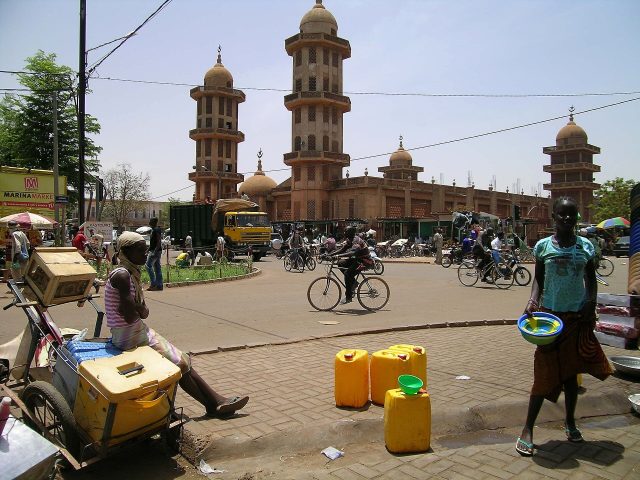
Places on the map
Marker colour follows the categoryClimate and weather
Detailed weather: Ouagadougou- Average temperature
- 29 °C
- Precipitation per year
- 838 mm
- Sunshine hours per day
- 8.3 h
Average air temperature
°C
26
28
33
34
33
30
28
27
28
30
29
26
Jan
Feb
Mar
Apr
May
Jun
Jul
Aug
Sep
Oct
Nov
Dec