- Home
- Burkina Faso
- Ouagadougou
- Ouagadougou Cathedral
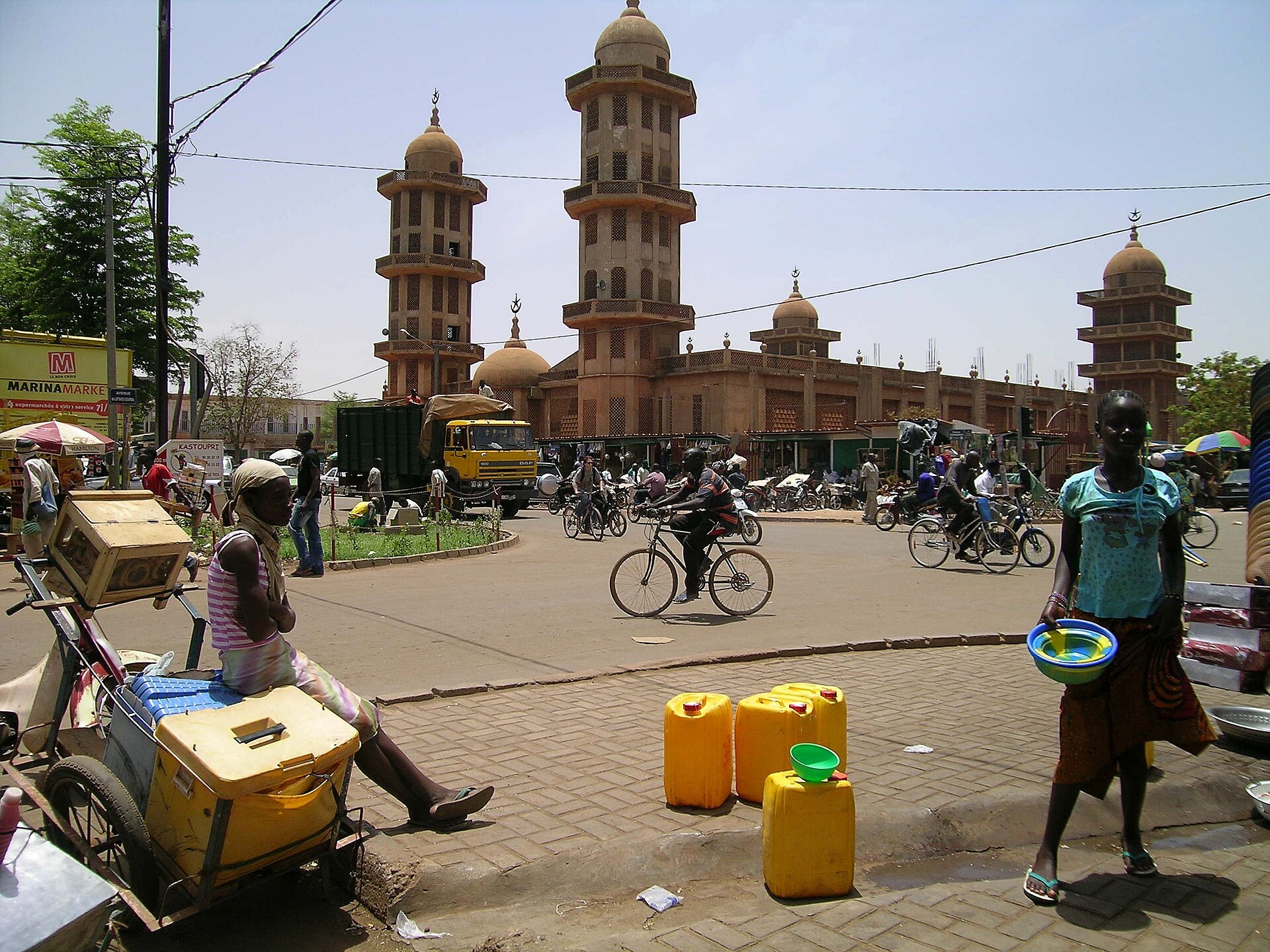
Photo: C. Hugues https://www.flickr.com/photos/chugues/, CC BY-SA 2.0
Ouagadougou Cathedral
out of 5 0 ratingsOuagadougou’s Cathedral stands as one of the most striking landmarks in Burkina Faso’s capital, a building that transcends its role as a place of worship to become a defining feature of the city’s skyline. Built in the mid-20th century, its imposing structure contrasts sharply with the low-rise buildings and sprawling trees around it, its presence most dramatic at sunset when the fading light bathes its walls in warm hues. From a distance, it commands attention, a quiet but unmistakable symbol of the city’s layered history.
The cathedral’s origins trace back to the colonial era, when Burkina Faso was still known as Upper Volta. Construction began in 1934 under the guidance of French missionaries, part of a broader effort to establish a Catholic presence in the region. The design reflects both practical and spiritual considerations: thick walls and soaring ceilings were engineered to combat the intense heat, while large windows allow natural light to filter through the interior, creating a sense of openness even in the hottest months. Completed in 1936, the cathedral has remained an active place of worship ever since, though its significance extends far beyond religious observance.
Architecturally, the cathedral blends European influences with local materials and sensibilities. The façade, with its arches and columns, evokes Romanesque traditions, yet the use of laterite—a reddish clay common in West Africa—grounds the structure in its surroundings. Inside, the space feels vast and uncluttered, with high vaulted ceilings and minimal ornamentation. The simplicity of the design lends it a solemnity, a quiet dignity that invites reflection. The altar, crafted from local stone, stands in stark contrast to the whitewashed walls, a subtle nod to the land’s natural beauty.
Beyond its religious function, the cathedral serves as a cultural hub for Ouagadougou. It hosts concerts of sacred music, art exhibitions, and community gatherings that draw people of all faiths. During major holidays like Christmas and Easter, the area around the cathedral comes alive with song, prayer, and celebration, as locals and visitors alike gather to share in the festive atmosphere. These moments reveal the cathedral’s role not just as a place of worship, but as a space where the city’s diverse communities intersect.
Burkina Faso is predominantly Muslim, yet the cathedral remains a powerful symbol of religious coexistence. It stands as a reminder that different traditions can thrive side by side without erasing their distinct identities. For travelers, the cathedral offers more than just a glimpse into the history of Catholicism in Africa; it’s a chance to see how architecture can embody the spirit of a place and its people. The building itself tells a story of adaptation, of how foreign influences were reshaped by local hands and materials.
Visiting the cathedral requires no special preparation. It’s open to all, with no admission fee, and the best time to go is in the morning, when the heat is still manageable and the interior remains cool. A small garden surrounds the building, offering shaded spots to sit and absorb the quiet. Unlike the bustling streets of central Ouagadougou, the cathedral’s grounds feel removed from the city’s pace, a place where time slows down. It’s an ideal spot for a moment of reflection, whether you’re drawn by faith, history, or simply curiosity.
Over the decades, the cathedral has become an indelible part of Ouagadougou’s identity, its image appearing on postcards and in travel guides. Yet behind its imposing façade lies a living space—one where people pray, mark milestones, and seek solace. For many residents, the cathedral is more than just a building; it’s a repository of personal and collective memories, a place where the past and present converge.
The cathedral has undergone several restorations in recent years, efforts that have preserved its original character without turning it into a relic. It doesn’t feel like a museum piece but rather a living monument, one that continues to evolve alongside the city. The surrounding area is a mix of markets, schools, and residential neighborhoods, and the cathedral fits seamlessly into this rhythm, offering a pocket of tranquility amid the urban energy.
If you find yourself in Ouagadougou, the cathedral is worth a visit, even if only for a short while. You don’t need to be religious to appreciate its atmosphere or the stories it holds. It’s a place where time seems to move differently, where the weight of history feels tangible yet harmonious with the present. Whether you come to admire the architecture, soak in the quiet, or simply take a break from the city’s hustle, the cathedral offers something rare: a moment of stillness in a world that seldom pauses.
Day around this place
Where else to go on the same day
Building the day…
Where it is
12.36198, -1.52699