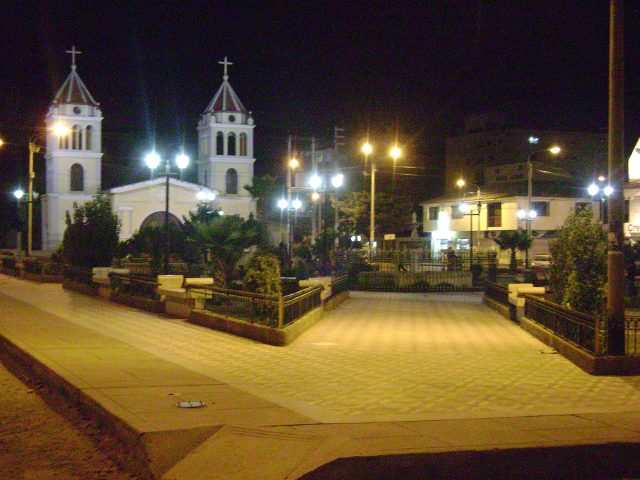
Oran
Algiers · 8 places
Photo: Faycal.09, CC BY-SA 3.0
Oran doesn’t reveal itself all at once. It asks you to slow down, to wander beyond the first impressions, and to let its layers unfold in their own time. Perched on the Mediterranean coast, where rocky hills meet the sea, the city feels suspended between land and water. The climate here is gentle—summer heat softened by the salt-tinged breeze. There’s no frantic energy of a capital, nor the sleepy stillness of a backwater town.
The heart of the city beats along its corniche, a promenade that curves around the bay. By evening, it fills with life—locals strolling, families settling onto café terraces, conversation mixing with the clink of glasses. The buildings here are painted in soft whites and pale blues, their shutters a faded green. Beyond them, the harbor hums: fishing boats bob in the water, their hulls weathered by salt and sun, while larger vessels come and go. The water shifts color with the light—turquoise, jade, or something in between. Climb one of the hills behind the city, and Oran spreads out below: domes of churches brush against minarets, terracotta rooftops tumble toward the sea, and the horizon blurs water and sky.
Music is the soul of Oran. This is where raï was born, a sound that became the voice of a generation. It’s improvised, passionate, full of stories about love, struggle, and everyday lives. In older quarters, you might find a dimly lit club where musicians gather after dark, fingers dancing over guitar strings, voices rising and falling in call-and-response. Raï isn’t just something you listen to; it’s something you feel. There’s a museum dedicated to it, where you can trace its evolution and listen to recordings of the legends who shaped it. But the real magic happens when you hear it live—when music spills out of a café or square, unplanned, and the city seems to sway with the beat.
History here is carved into the city’s bones. Santa Cruz Fort, built by the Spanish in the 16th century, looms over Oran. From its ramparts, you see the city sprawled below, the bay stretching to the horizon, the sea glinting under the sun. The fort has seen empires rise and fall: Spanish, Ottoman, French. Inside, old cannons still point toward the water, their barrels rusted, and a small chapel stands as a reminder of the faith that once shaped these lands. At night, the fort glows, its stone walls bathed in gold. Nearby, the Pasha Mosque, with its elegant lines and towering minaret, offers another glimpse into the past. Built in the 17th century, it stands as a place of reflection.
Oran refuses to fit into a single story. Modern shopping centers sit blocks away from markets where vendors sell fresh fish and handwoven rugs. On the same street, a woman in a traditional haik walks beside a teenager in ripped jeans. An old man plays dominoes in the shade while children kick a soccer ball in the dust.
The scent of freshly baked bread wafts from a bakery. Street vendors haggle over prices. Waves crash against the rocks below. Laughter spills out of open windows. It doesn’t try to dazzle you at first glance. But if you give it time, it will stay with you long after you’ve left.
See & Do
All of them


Places on the map
Marker colour follows the categoryClimate and weather
Detailed weather: Oran- Average temperature
- 20 °C
- Precipitation per year
- 228 mm
Average air temperature
°C
14
15
16
18
20
23
26
26
24
22
18
16
Jan
Feb
Mar
Apr
May
Jun
Jul
Aug
Sep
Oct
Nov
Dec