- Home
- United States
- New Orleans

New Orleans
United States · 9 places
Photo: Pedro Szekely from Los Angeles, USA, CC BY-SA 2.0
New Orleans doesn’t just exist—it pulses, hums, and breathes in a rhythm all its own. There’s no mistaking it for anywhere else. The air carries the scent of spices and damp earth, the Mississippi’s slow current mirroring the city’s unhurried pace. Here, time doesn’t rush; it lingers, as if the streets themselves know there’s no need to hurry. Mornings might wake you with the distant wail of a trumpet from some dimly lit club, while evenings dissolve into the maze of the French Quarter, where every crumbling facade and wrought-iron balcony whispers stories of the past. The city isn’t polished or perfect—it’s alive, with all its scars, celebrations, and contradictions laid bare.
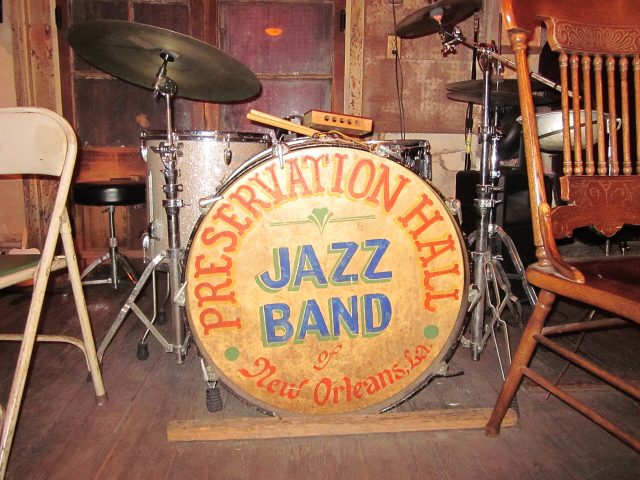
Its history is a patchwork of cultures, languages, and lives stitched together over centuries. Founded by the French in the early 1700s, the city changed hands like a well-worn deck of cards—Spanish rule, American annexation, the forced labor of enslaved Africans, the waves of Creoles, Caribbean immigrants, and European settlers who reshaped its identity. The French Quarter, with its hidden courtyards and lacy ironwork, still bears the marks of colonial ambition, while Tremé, one of the oldest African American neighborhoods in the country, holds the echoes of resilience and resistance. Jazz, blues, and gospel spill from doorways here, and the music feels less like performance and more like the city exhaling.
New Orleans doesn’t do hedonism in the flashy, performative way—it’s quieter, deeper. Pleasure here is found in the small, unscripted moments: a cold beer in a sticky-floored bar, a steaming bowl of gumbo from a sidewalk stand, the way rain turns a street into a dance floor during a spontaneous second line. Mardi Gras isn’t just a festival; it’s a state of mind, a week when the city sheds its skin and becomes something wilder, more uninhibited. But even outside of carnival season, the unexpected is always around the corner—a parade with no announced route, a brass band materializing on a street corner, a dive bar serving the best roast beef po’boy you’ll ever taste. The city doesn’t just tolerate chaos; it thrives on it.
Water defines New Orleans, shaping its moods and its myths. The Mississippi rolls past like a lazy giant, its banks lined with people watching barges drift by, the air thick with the cries of seagulls. Beyond the levees, the wetlands stretch out, a tangled world of cypress knees and murky channels where alligators bask in the sun and legends of voodoo and ghosts feel just plausible enough to believe. The city has survived storms and floods, most notably Hurricane Katrina, yet it hasn’t been tamed. If anything, the struggle has only made it more defiant, more alive. New Orleans doesn’t apologize for its messiness or its magic—it simply is, stubborn and unshakable.
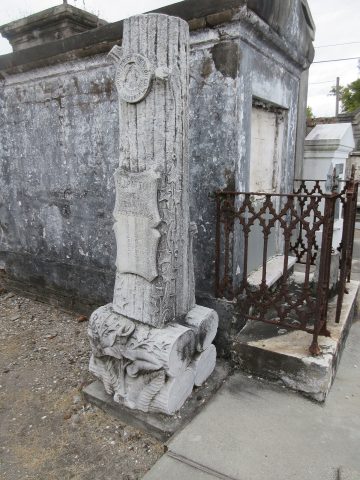
There’s no wrong way to spend time here. You could wander the above-ground cemeteries, where ornate tombs house jazz legends and long-forgotten pirates, or lose an hour in a tiny bakery devouring beignets, their powdered sugar drifting onto your clothes like snow. Or you could do nothing at all—just sit on the steps of a weathered building and watch the city go by: an old man playing trumpet on the corner, a woman in a bright dress swaying to the music, a tourist fumbling through a French phrase to order a cocktail. New Orleans doesn’t demand anything from you except an open mind. And if you let it, it will give you something unforgettable in return.
See & Do
9 places



Places on the map
Marker colour follows the categoryClimate and weather
Detailed weather: New Orleans- Average temperature
- 22 °C
- Precipitation per year
- 1713 mm
Average air temperature
°C
13
16
19
22
26
29
29
29
28
24
18
15
Jan
Feb
Mar
Apr
May
Jun
Jul
Aug
Sep
Oct
Nov
Dec


