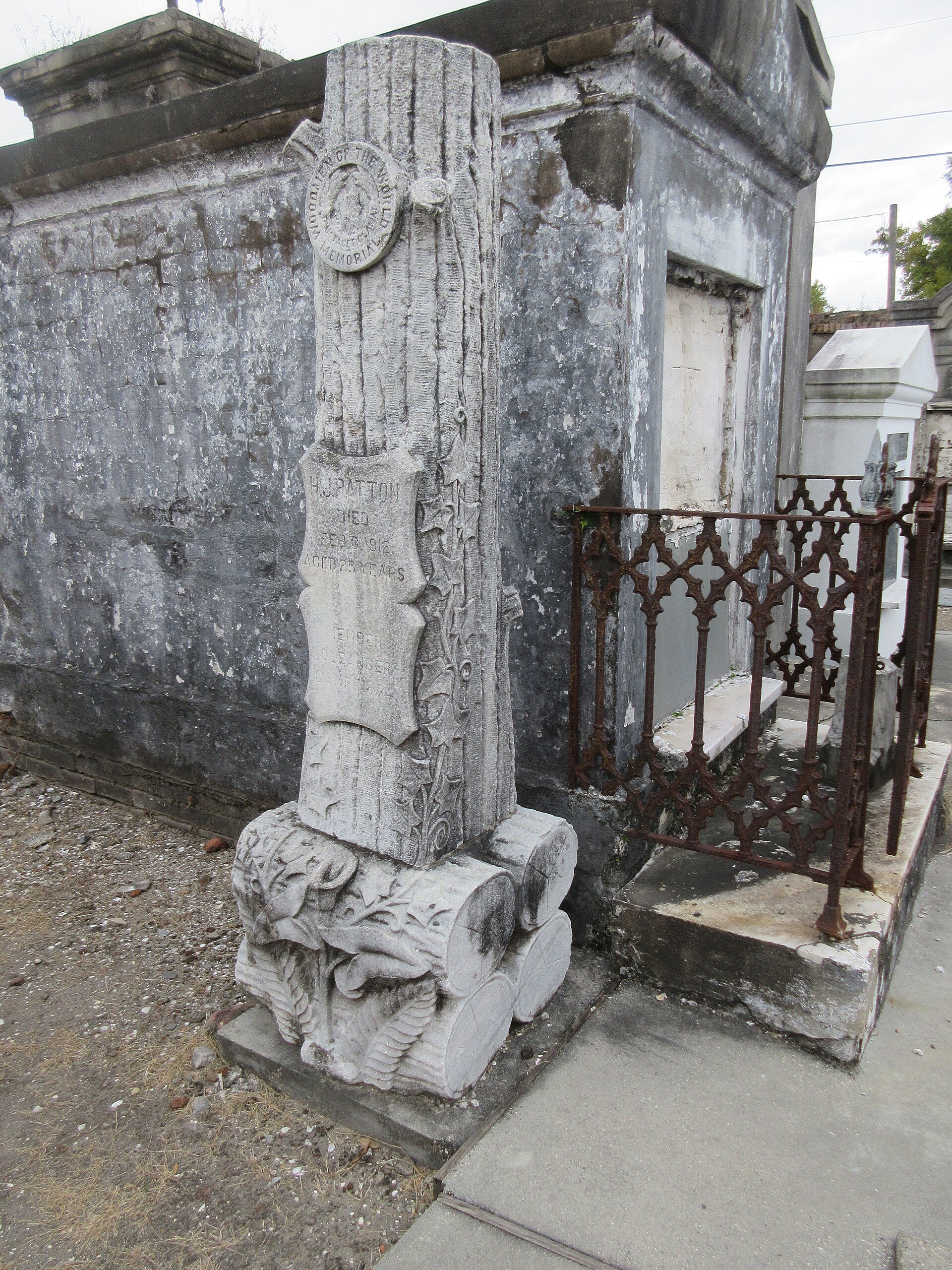
New Orleans has a way of holding onto its past, and nowhere is that more evident than at St. Louis Cemetery No. 1. Tucked just beyond the lively streets of the French Quarter, this place feels like a quiet pause in a city that never stops moving. There are no manicured lawns or orderly paths here—just a maze of sun-bleached tombs, their whitewashed surfaces worn smooth by time and weather. Some lean slightly, as if tired from standing for centuries, while others bear the marks of age in peeling plaster and rusted ironwork. It’s easy to imagine that every stone here has a story, and every vault a secret it hasn’t quite let go of.
The cemetery dates back to 1789, when New Orleans needed a new burial ground after a devastating fire destroyed the old one. Built on swampy land, the city had long struggled with traditional underground burials, which quickly flooded. Instead, the Spanish and French influence took hold, leading to the construction of above-ground tombs—miniature houses for the dead. These structures became a defining feature of New Orleans cemeteries, and many at St. Louis No. 1 still bear the names of old Creole families, their inscriptions faded but legible.
This isn’t just a graveyard; it’s an open-air museum of the city’s history. Some of the people buried here shaped New Orleans in ways that still echo today. There’s Ettore Boccia, an Italian immigrant who founded the city’s first opera company, and Bernard de Marigny, a flamboyant aristocrat who introduced the dice game craps to America. But the most famous resident by far is Marie Laveau, the legendary Voodoo queen of the 19th century. Her tomb remains a pilgrimage site, covered in offerings—coins, candles, even cigarettes—left by visitors hoping for luck or a favor granted.
The architecture of St. Louis No. 1 reflects the city’s layered past. Spanish colonial tombs with arched doorways and wrought-iron gates stand beside French-style vaults with classical columns. Some structures have Moorish flourishes, a nod to the diverse immigrants who settled here. Many are adorned with carvings of angels, crosses, or symbolic scenes, though time has softened their details. A few tombs look almost new, while others are half-collapsed, their walls split open by creeping roots.
Walking through the cemetery feels less like visiting the dead and more like stepping into the rhythm of old New Orleans. In the 19th century, locals didn’t just come here to mourn—they strolled among the tombs as a form of leisure, since public spaces were scarce. Today, the contrast is striking: the stillness of the cemetery against the hum of the city just beyond its walls. It’s a reminder that in New Orleans, life and death have always been close neighbors.
But time hasn’t been kind to St. Louis No. 1. The cemetery sits near the Mississippi River, and the high water table has caused many tombs to deteriorate. Vandals have taken their toll, too, leaving some graves looted or defaced. In 2015, the site was temporarily closed for restoration, and since then, access has been restricted to guided tours. The change was necessary to protect what’s left, though it means visitors can no longer wander freely.
Still, the cemetery remains one of the most important places in New Orleans. It’s a physical record of how the city was built—by people from different cultures, faiths, and backgrounds. Catholic traditions blend with Voodoo rituals, and European architecture meets the realities of a swampy landscape. For locals, it’s more than a tourist attraction; it’s where their ancestors rest. For outsiders, it’s a chance to glimpse the soul of a city that has always marched to its own beat.
There’s something unsettling yet magnetic about St. Louis No. 1. The abandoned tombs, their names worn away, carry a quiet sadness. But the place also feels alive in its own way, as if the past refuses to fade completely. Maybe that’s why it draws so many people—because it reminds us that history isn’t just dates and events. It’s made up of real lives, and sometimes, those lives leave traces that linger long after they’re gone.