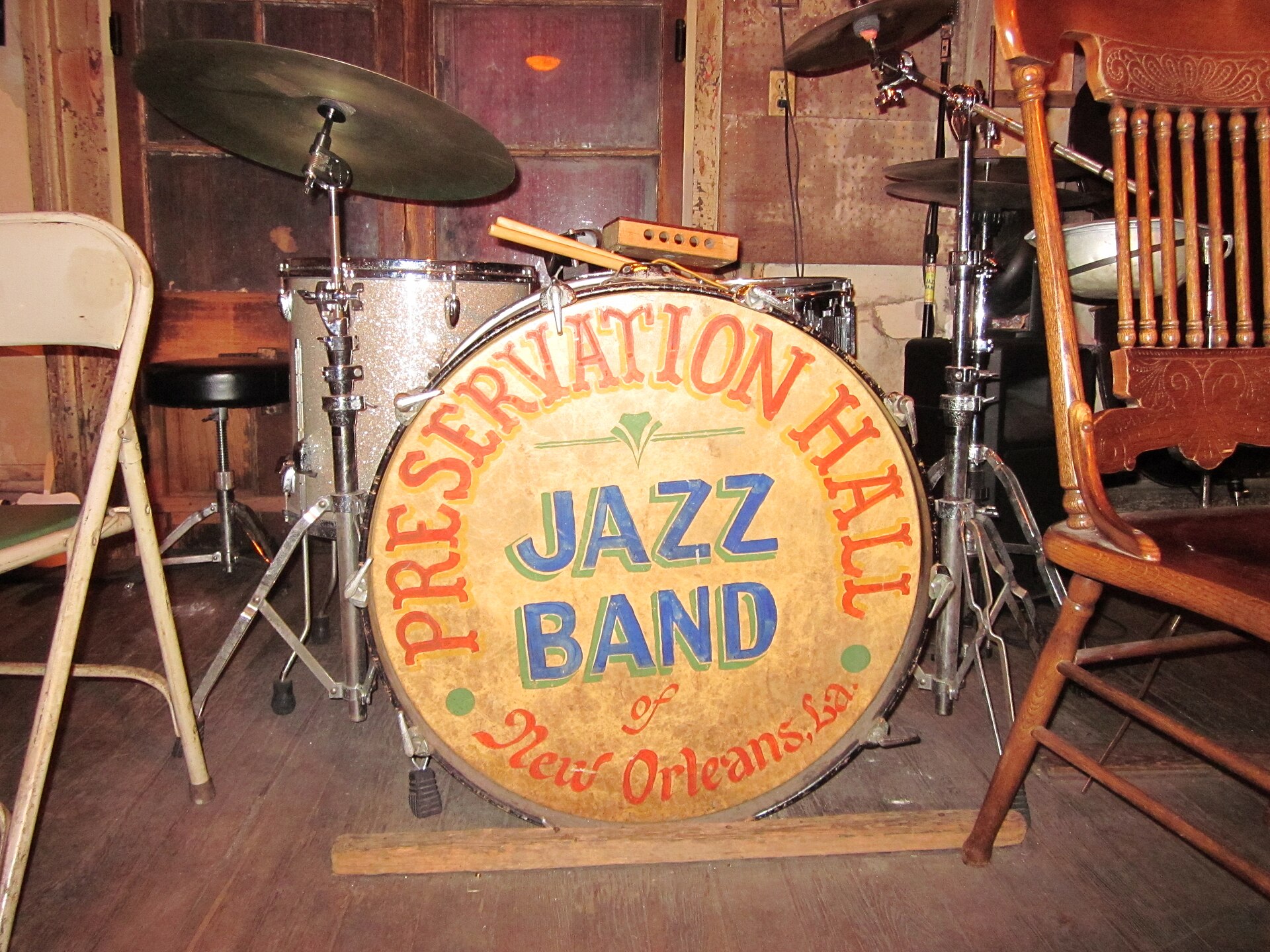
Preservation Hall isn’t just a music venue tucked away in the French Quarter—it’s a place where jazz breathes exactly as its creators intended. The low ceiling, worn walls, and simple wooden benches leave no room for distraction, only sound. There’s no grand stage, just musicians playing among the audience, the dim light barely enough to see by. The space feels suspended in time, as if the mid-20th century never ended. The atmosphere isn’t manufactured; it’s organic, an extension of the streets outside where jazz spills from every alley.
The hall’s story began in 1961, when two enthusiasts, Larry Borenstein and Allan Jaffe, set out to preserve New Orleans jazz at a moment when the genre was fading from mainstream popularity. Borenstein, an artist and collector, ran a gallery on St. Peter Street where he occasionally hosted intimate concerts for friends. Jaffe, a musician and businessman, saw potential in the idea and proposed turning the space into a permanent home for the city’s oldest jazz players. What emerged was a sanctuary for those who had performed in the early 1900s, when jazz was first taking shape in the neighborhoods of New Orleans. There was no commercial agenda—musicians were paid a modest fee, and the hall relied on small donations to stay open.
The building itself tells a quiet history. Constructed in the mid-1800s, it has served as a warehouse, a residence, and even a church over the decades. When it was repurposed for music, no one bothered to modernize it. The brick walls, uneven floors, and exposed wooden beams were left as they were, giving the space its raw, lived-in feel. The only addition was a small platform in the corner, so unobtrusive it seems like it’s always been there. There’s no air conditioning, and in the summer heat, the air grows thick, but no one complains. The discomfort is part of the experience—real jazz, after all, shouldn’t be too polished.
The musicians who play at Preservation Hall aren’t just performers; they’re keepers of a tradition. Many have been playing here for decades, passing down the craft without altering its essence. The repertoire is strictly classic New Orleans jazz—the kind that filled the clubs on Basin Street in the 1920s, long before it was sanitized for mass appeal. The songs are often forgotten elsewhere, but here they still pulse with life. Improvisation is common, but it’s never random; it follows rules handed down through generations, a language of its own.
Attending a show at Preservation Hall is like stepping into a living history. Performances happen several times a day, and no two are alike. The musicians feed off the energy of the room, the mood of the crowd, even the weather outside. Sometimes a set runs long, and you might hear rare tunes not on the usual playlist. Tickets are sold only at the door, and lines form early. It’s best to arrive ahead of time—seating is limited, and demand is high.
Preservation Hall isn’t a museum, though it’s sometimes called one. There are no exhibits under glass; the music itself is the artifact. In New Orleans, jazz was never just a genre—it was a way of life, a dialect the city used to speak to the world. This hall is one of the last places where that dialect is still spoken fluently. There’s no divide between performer and audience; everyone becomes part of the same rhythm, the same breath. Maybe that’s why people keep coming back, even if they’ve heard every song before.
Outside, the French Quarter hums with energy, but once you cross the threshold, the noise fades. There are no bars, no dance floors, no flashing lights—just music filling the space. Sometimes it feels like the hall exists outside of time, as if it has always been here and always will be. In a way, it has. Jazz in New Orleans isn’t a relic of the past; it’s a present that refuses to end. And Preservation Hall is one of the few places where you can reach out and touch it.