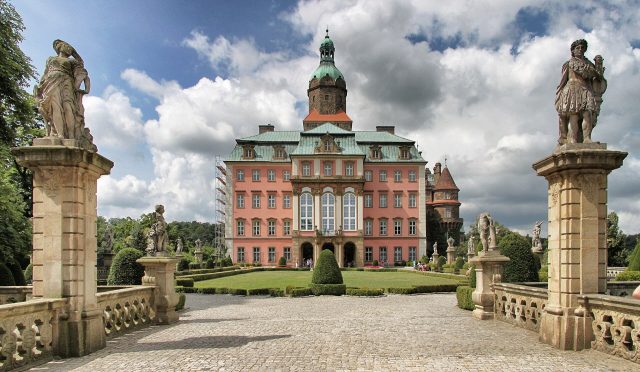
Mitaka, Tokyo
Japan · 8 places
Photo: Abasaa, Public domain
Mitaka sits quietly on the western edge of Tokyo, where the city’s relentless energy softens into something gentler. It’s the kind of place you might overlook if you’re only chasing neon lights and famous landmarks, but that’s precisely what makes it worth slowing down for. Here, the streets narrow, the buildings stay low, and the pace of life feels more human. Commuters step off the express trains and onto local lines, trading the crush of Shinjuku for the quiet rhythm of a neighborhood where people still greet their neighbors. There are no skyscrapers, no crowds jostling for the perfect photo—just the unhurried hum of a town that has long since decided it doesn’t need to impress anyone.
What you’ll find instead is the kind of Japan that rarely makes it into guidebooks. The houses, many built in the mid-20th century, wear their age with dignity, their wooden facades and small gardens speaking of lives lived at a different speed. Mornings bring the familiar sight of salarymen hurrying to the station, but also the quieter moments: an elderly man sweeping the sidewalk outside his home, a mother walking her child to school, the occasional stray cat dozing in a patch of sunlight. On weekends, the streets fill with cyclists and families heading to the park, their laughter mixing with the rustle of leaves. It’s ordinary, in the best possible way—no grand spectacles, just the quiet satisfaction of a place that feels lived-in and real.
The heart of Mitaka is Inokashira Park, a sprawling green space that changes with the seasons. In spring, it becomes one of Tokyo’s most understated cherry blossom spots, the trees bursting into pale pink clouds that reflect in the park’s central pond. Summer brings relief from the city’s heat, with locals picnicking under the shade of towering zelkova trees or renting rowboats to drift lazily on the water. By autumn, the park is a blaze of red and gold, the air crisp with the scent of fallen leaves. Even in winter, when the crowds thin and the branches stand bare, there’s a quiet beauty to the place—especially on the rare mornings when a dusting of snow transforms the paths into something almost magical. The park is also home to the Ghibli Museum, a must-visit even for those who aren’t die-hard fans of Studio Ghibli’s films. The building itself is a whimsical creation, its spiral staircase and stained-glass windows hinting at the creativity inside. There are no traditional exhibits here; instead, visitors wander through rooms filled with original animation cels, interactive displays, and a small theater showing exclusive short films. Outside, the museum’s rooftop garden is dotted with sculptures of beloved characters, and the on-site café serves dishes inspired by the studio’s movies—think soot sprite-shaped cookies or the hearty rice bowls from *Spirited Away*.
Mitaka’s location makes it an ideal base for exploring Tokyo without the usual chaos. The city center is just thirty minutes away by train, but the moment you step off at Mitaka Station, the noise of the metropolis feels distant. There are no luxury hotels here, but that’s part of the charm. Instead, you’ll find family-run guesthouses with tatami floors, small apartments rented out by locals, and the occasional ryokan where you can soak in a hot bath after a long day of wandering. The dining scene is equally unpretentious: tiny izakayas where office workers unwind with beer and yakitori, ramen shops that have been serving the same recipe for decades, and bakeries selling fluffy melon pan. In the evenings, some bars offer local sake or craft beer, but the real pleasure is in the lack of pretense—no one’s trying to be trendy, just good.
What sets Mitaka apart is its refusal to perform. It’s not a place that demands your attention or tries to dazzle you with spectacle. Instead, it offers something rarer: the chance to experience Japan as it is for most people, most of the time. The beauty here isn’t in grand gestures but in small, everyday moments—the way the light filters through the trees in the park, the sound of a bicycle bell ringing down a quiet street, the taste of a perfectly brewed cup of tea in a café that’s been open for generations. It’s a reminder that sometimes the most rewarding travel isn’t about seeing the biggest or the most famous, but about finding the places that feel like a quiet breath between the noise.
Eat & Drink
0 placesNothing in this category yet — the catalogue is still growing.
All placesClimate and weather
Detailed weather: Mitaka, Tokyo- Average temperature
- 26 °C
- Precipitation per year
- 1151 mm
- Average humidity
- 80 %
- Sunshine hours per day
- 10.4 h
- Time zone
- UTC+0 (GMT)
Average air temperature
°C
27
28
28
28
28
25
24
24
25
26
26
27
Jan
Feb
Mar
Apr
May
Jun
Jul
Aug
Sep
Oct
Nov
Dec