Maringá
Brazil · 5 places
Photo: Allice Hunter, CC BY-SA 4.0
Maringá
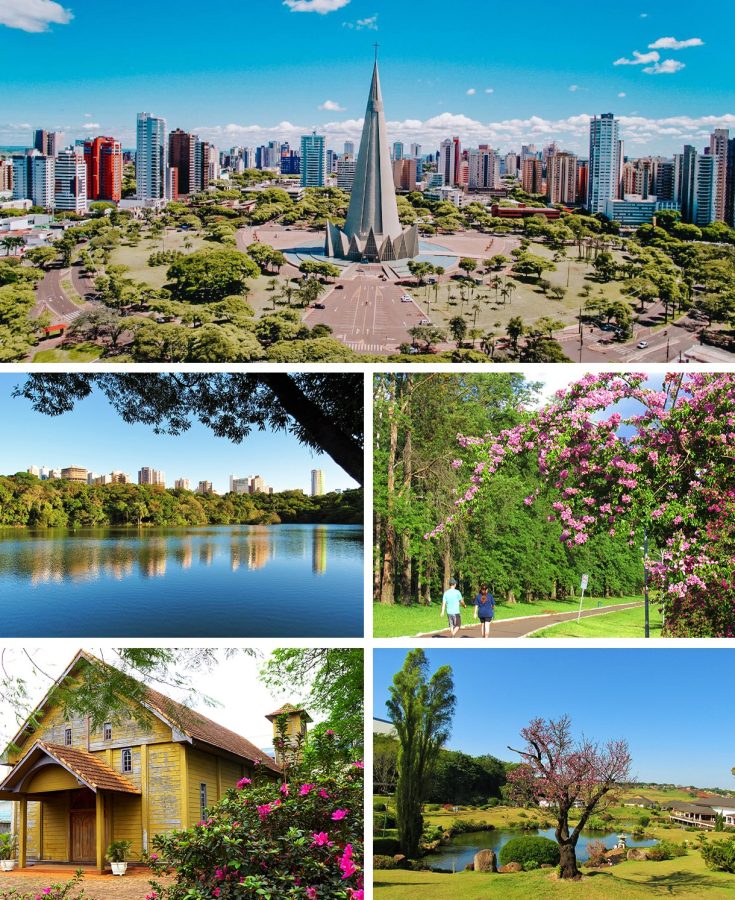
On a map of Brazil, Maringá is easy to miss. It lacks the instant recognition of Rio or Salvador, with their beaches and festivals. Instead, it’s a city where life unfolds slowly, where neighborhoods tell their own stories, and the streets still remember the hands that built them. Founded in 1947 as part of a plan to develop Brazil’s interior, Maringá has become one of the cleanest and safest cities in Paraná. There are no skyscrapers—just wide avenues, parks, and houses that look like they belong in a 1950s postcard.
The city is called the "Green Capital of Paraná." Trees line the sidewalks, fill the squares, and spill into courtyards, softening the urban landscape. During the rainy season, the foliage turns a deep green, and the air smells of damp earth and jacaranda. Even in summer, the city stays cool because of its elevation. People jog along the Pirapó River, picnic in Ingá Park, or sit on benches with coffee, watching the day pass without hurry.
Maringá isn’t a place for spectacle. It’s where you go to slow down.
The city is young but has its own rhythm. It’s not the chaos of a big city, nor the stillness of a small town. Downtown, mid-century modernist buildings stand alongside farms growing coffee and soybeans. The university brings students from across Brazil, filling cafés, bookshops, and galleries with life. Evenings feel relaxed but lively, with music spilling from open doors.
Culture here isn’t about grand museums. It grows from the people. Italian and Japanese communities shape the city—some neighborhoods still speak their languages, and restaurants serve dishes you won’t find elsewhere. Pastéis come from Japanese recipes, while coffee is treated like a tradition. On weekends, squares fill with music, blending bossa nova and southern folk.
Maringá doesn’t try to impress. There’s no list of must-see sights. The real draw is the way time feels here. Mornings start at the market, where farmers sell fresh produce. Afternoons pass under the shade of a park. Evenings end by the river, watching the sun set. The city doesn’t give you experiences—it gives you space to make your own. And that’s why people come back.
Eat & Drink
0 placesNothing in this category yet — the catalogue is still growing.
All placesPlaces on the map
Marker colour follows the categoryClimate and weather
Detailed weather: Maringá- Average temperature
- 23 °C
- Precipitation per year
- 1418 mm
Average air temperature
°C
25
25
26
23
20
20
19
21
24
24
25
25
Jan
Feb
Mar
Apr
May
Jun
Jul
Aug
Sep
Oct
Nov
Dec