- Home
- United Kingdom
- Marajon
Marajon
United Kingdom · 1 place
Photo: Wikimedia Commons, CC BY-SA 2.5
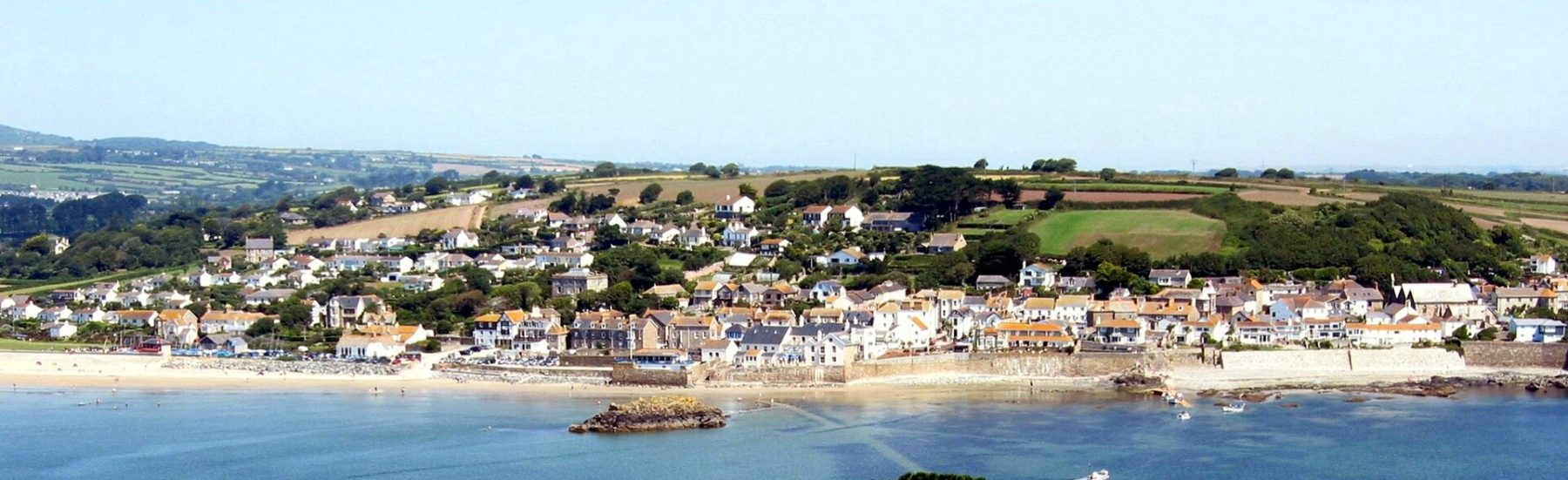
Marazion feels like a place where the world has paused just for a moment. Tucked along the edge of Mount’s Bay, it’s the kind of town that doesn’t announce itself—no crowds, no neon signs, no souvenir shops with plastic trinkets. Instead, there are low hills covered in heather, empty beaches with sand the colour of pale honey, and rocky coves where the only path in is a narrow track worn by the sea and the wind. The water here is calm, the kind that laps gently against the shore rather than crashing in dramatic waves, and the air carries the salt of the tide mixed with the earthy scent of gorse.
The town’s real claim to quiet fame is the view across the bay. St Michael’s Mount rises from the water like something from a storybook—a castle perched on an island that, at low tide, connects to the mainland by a causeway of stone and sand. When the tide rolls in, the path disappears, and the mount becomes an island again, its silhouette shifting with the light. Locals will tell you this is what makes Marazion special: the way the castle seems to float in the morning mist, gleam under the midday sun, or dissolve into the golden haze of sunset. It’s a view that doesn’t demand attention but rewards those who take the time to notice.
Life here moves at its own pace. The centre of town is small—a handful of pubs where fishermen and farmers gather in the evenings, a 13th-century church with a crooked spire, and a couple of shops that sell the essentials. In summer, families arrive to swim in the sheltered waters or walk the coastal paths, their laughter mixing with the cries of gulls. By winter, the town grows quieter, the streets emptying as the wind picks up and the days shorten. There are no grand hotels, just guesthouses with low ceilings and fireplaces that crackle in the evenings, their rooms filled with the faint scent of woodsmoke and old stone.
Marazion is a gateway to wilder parts of Cornwall. From here, the South West Coast Path stretches in both directions, leading to abandoned tin mines and cliffs where the land drops sharply into the sea. A short walk east brings you to the village of Mousehole, where ancient standing stones hint at a past far older than the town itself. To the west, beyond the headland, the beaches grow emptier, the sand giving way to jagged rocks and the occasional seal bobbing in the waves. Fishermen sometimes take visitors out in their boats, not for grand tours but for quiet trips—to see the caves hidden in the cliffs or to cast a line for mackerel in the early morning light.
The food here is simple and unpretentious. Pubs serve fish caught that same day, its flavour still bright with the sea. The local bakery sells pasties filled with meat and potatoes, their crusts golden and flaking, and a sweet dessert called clafoutis, studded with cherries and dusted with sugar. There’s no need for fancy restaurants when the ingredients speak for themselves—fresh, local, and prepared without fuss.
As evening falls, the light over the bay softens, turning the water a deep indigo. The castle on the mount glows faintly in the dusk, and the town settles into a quiet rhythm. It’s easy to imagine this is how it’s always been—a corner of Britain that time hasn’t quite caught up with, where the sea and the land still dictate the pace of life.
Eat & Drink
0 placesNothing in this category yet — the catalogue is still growing.
All placesPlaces on the map
Marker colour follows the categoryClimate and weather
Detailed weather: Marajon- Average temperature
- 12 °C
- Precipitation per year
- 1134 mm
- Sunshine hours per day
- 4.1 h
Average air temperature
°C
7
8
8
10
12
15
16
16
15
13
10
9
Jan
Feb
Mar
Apr
May
Jun
Jul
Aug
Sep
Oct
Nov
Dec