- Home
- Lake Malawi
- Likoma Island

Likoma Island
Lake Malawi · 6 places
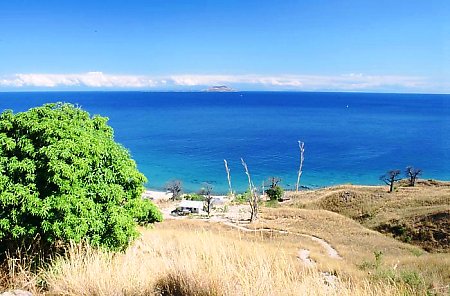
Photo: Moongateclimber, CC BY-SA 3.0
Likoma is an island adrift in the vastness of Lake Malawi, the southernmost of Africa’s great lakes. Though it belongs to Malawi on paper, it sits closer to the Mozambican shore, a quiet outpost where the rhythms of life move to the pulse of the water. Getting here takes effort—first a flight to a dusty mainland town, then a boat or ferry that doesn’t run every day. But that’s precisely why Likoma feels like a secret. There are no crowds, no hurried footsteps, no noise beyond the lapping of waves and the occasional call of a fisherman.
The island is small, its villages scattered between baobabs and mango trees, connected by winding dirt paths rather than roads. Most people here are fishermen or farmers, living in simple homes with thatched roofs, their days shaped by the seasons and the lake’s moods. The water is never far away, its presence constant—whether in the nets cast at dawn, the fish sizzling over open fires, or the way the light catches its surface at dusk. Locals call the lake Malawi, speaking of it with quiet reverence, as if it were both provider and guardian.
At the island’s heart stands St. Peter’s Cathedral, a striking white structure built by missionaries in the early 1900s. It’s one of the largest churches in Central Africa, its walls visible from the water long before you reach shore. Around it, the small settlement of Likoma Town hums with modest life—a handful of shops, a school, a few guesthouses where travelers can stay. There are no grand hotels here, no polished resorts. Instead, the island offers something rarer: the kind of stillness that makes you slow down, too.
The lake itself is a world of its own. Its waters shift from turquoise to deep blue, so clear in places that you can see fish darting below the surface. Divers and snorkelers come for the chance to explore underwater caves and rocky outcrops, though there’s little in the way of formal infrastructure—just a couple of local guides who know the best spots. The lake is home to hundreds of fish species, many found nowhere else, and the fishing is good, with tilapia and catfish pulled from the depths daily.
Evenings on Likoma are simple. Fires flicker on the shore as the sun dips below the horizon, painting the sky in streaks of orange and violet. The only sounds are the water lapping against the rocks and the occasional murmur of conversation. Some visitors come for the solitude, spending days wandering empty beaches or watching fishermen mend their nets. In the rainy season, the island feels even more cut off, with washed-out paths and fewer boats running. It’s as if Likoma has decided to retreat from the world entirely.
There are no museums here, no grand attractions, no carefully curated experiences. What the island offers instead is time—time to sit on the shore and watch the mist rise over the Mozambican coast, time to climb the old lighthouse on the northern tip, its beacon long dark but its view still breathtaking. From up there, on clear days, the lake seems to stretch forever, merging with the sky at the edges. Likoma isn’t a place for those who need constant excitement. It’s for those who want to step out of the rush, to listen, to breathe in the salt-tinged air, and to remember what it’s like to simply be.
See & Do
6 places
Places on the map
Marker colour follows the categoryClimate and weather
Detailed weather: Likoma Island- Average temperature
- 23 °C
- Precipitation per year
- 1530 mm
Average air temperature
°C
24
24
24
23
22
20
20
21
24
26
27
26
Jan
Feb
Mar
Apr
May
Jun
Jul
Aug
Sep
Oct
Nov
Dec


