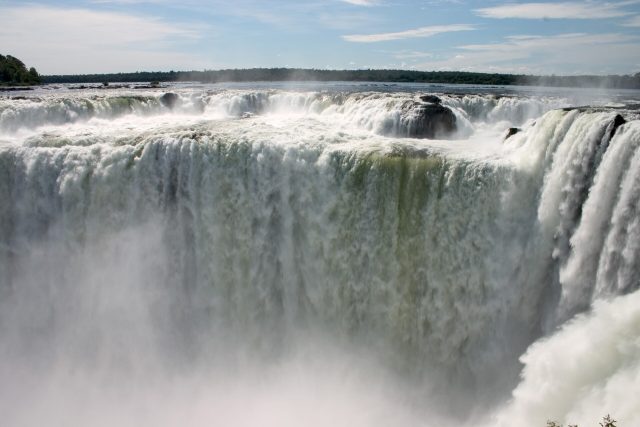
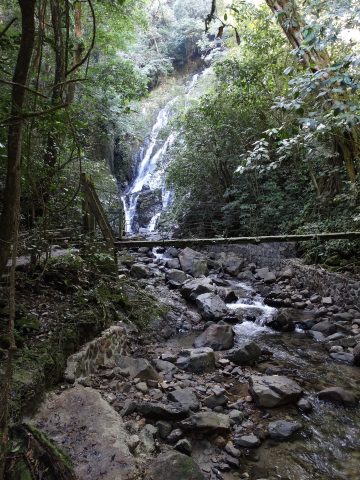
La Chorrera Waterfall
Panama · 8 places
Photo: Movist13, CC BY-SA 3.0
La Chorrera doesn’t reveal itself at first glance. Tucked away in Panama’s western province, far from the well-trodden tourist paths, it moves to its own quiet rhythm. There are no crowds here, no hurried footsteps—just the slow, steady pulse of a town where life unfolds without urgency. The air is thick with the scent of damp earth and ripe tropical fruit: mangoes, papayas, and bananas grow in abundance, their branches heavy with the weight of the season. Rolling hills, dense with greenery, frame the town like a living backdrop, softening the edges of the day.
This is a place shaped by hands and time. For generations, La Chorrera was known for its woven montuno hats, crafted from palm fibers with a patience that bordered on devotion. The tradition still lingers in small workshops where elders pass down the skill to younger hands, though the demand has faded. The hats, once a staple of daily life, now feel like relics of another era—yet they remain a quiet testament to the town’s craftsmanship. Beyond the hats, the land sustains the community. Coffee, sugarcane, and vegetables thrive in the surrounding fields, and the morning markets brim with produce fresh from the soil. The stalls are simple, the transactions unhurried, as if the day itself has no pressing business elsewhere.
The heart of La Chorrera beats slowest in its central square. Low-slung colonial buildings, their paint slightly faded, encircle a space where old men gather under the shade of trees to play dominoes. The clatter of tiles mixes with the murmur of conversation, punctuated by the occasional burst of laughter. Nearby, small cafés serve strong black coffee and juices squeezed from fruit picked that morning. There’s no grand spectacle here, no attempt to impress. The town doesn’t need to. Its charm lies in the unspoken: the way the baker pulls loaves from the oven just as the sun rises, the way the riverbank becomes a gathering place for those who want nothing more than to watch the water flow.
For those willing to venture beyond the town limits, the surrounding landscape offers its own rewards. A short drive away, the thermal springs of El Macho bubble up from the earth, their warm waters cutting through the cool mountain air. The national park of Campana, one of Panama’s oldest, sprawls across the hills, its trails winding through patches of untouched rainforest. Here, the forest hums with life—bright-winged butterflies, the distant call of howler monkeys, the rustle of leaves as something unseen moves through the undergrowth. The roads are rough in places, but that only adds to the sense of discovery.
La Chorrera isn’t a destination for those seeking grand hotels or polished attractions. It’s a place for travelers who want to see Panama as it is, not as it’s packaged for visitors. There’s no fanfare here, no rush to perform. Instead, there’s time—to wander, to linger, to notice the small things that often go unnoticed. The town doesn’t ask for much, but it gives something rare in return: the chance to step off the map and find a rhythm that feels like your own. If you pass through, don’t hurry. You might just find what you didn’t know you were looking for.
See & Do
8 places
Places on the map
Marker colour follows the categoryClimate and weather
Detailed weather: La Chorrera Waterfall- Average temperature
- 27 °C
- Precipitation per year
- 2318 mm
Average air temperature
°C
27
27
27
27
27
26
27
26
26
26
26
27
Jan
Feb
Mar
Apr
May
Jun
Jul
Aug
Sep
Oct
Nov
Dec