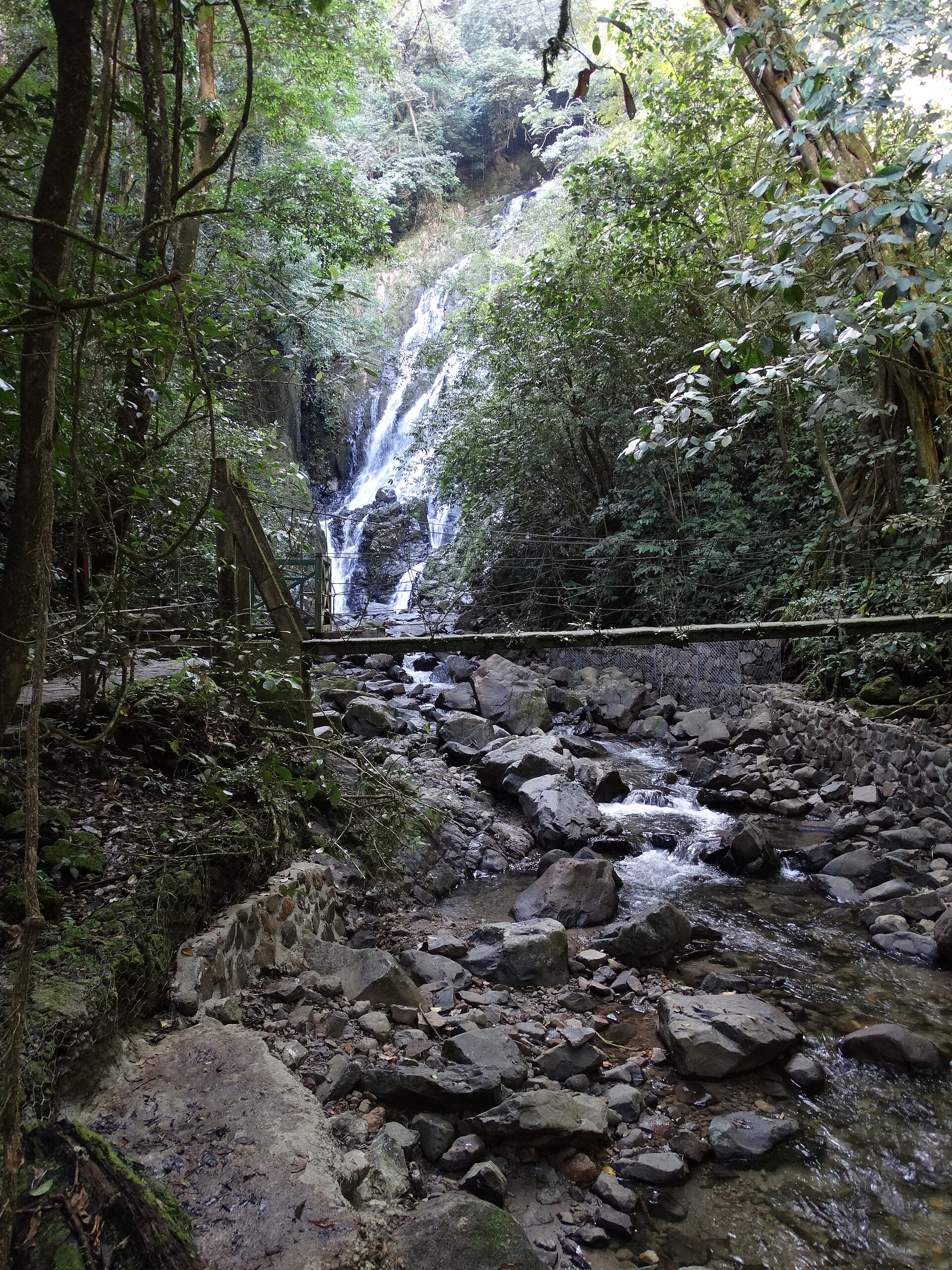
El Macho Falls is one of those places in Panama that feels like a well-kept secret, though it’s hardly hidden from those who know where to look. Tucked away in the lush hills near La Chorrera, about an hour’s drive from Panama City, the falls cascade down a series of rocky ledges into a deep, emerald pool below. The water here is cool and clear, fed by mountain streams that rush through the surrounding rainforest, and the sound of the falls blends with the chorus of birds and rustling leaves. It’s the kind of place where you can spend hours just sitting on the rocks, watching the water tumble and feeling the mist on your skin.
The name El Macho translates to "the male," though no one seems entirely sure why. Some say it refers to the powerful force of the water, others to the rugged, almost masculine terrain of the cliffs. Whatever the origin, the name suits the place—there’s something raw and untamed about these falls, especially after heavy rains when the water roars with even greater intensity. The trail leading down to the base is steep in places, winding through dense vegetation where howler monkeys occasionally call out from the treetops. It’s not a difficult hike, but it’s enough to make you feel like you’ve earned the swim at the bottom.
The falls themselves are a series of drops, the tallest of which plunges about thirty-five meters into the pool below. The water doesn’t just fall in a single sheet; it spills over the rocks in uneven streams, creating little curtains of water that catch the light in shifting patterns. At the base, the pool is deep enough for a proper swim, though the current can be strong near the falls, especially after rainfall. Locals often come here to cool off, and you’ll sometimes see families picnicking on the flat rocks nearby, their laughter mixing with the sound of the water.
What makes El Macho special isn’t just the falls themselves, but the way the place feels alive. The surrounding forest is thick with ceiba and guayacán trees, their roots twisting into the earth like something out of a storybook. The air is heavy with the scent of damp earth and green leaves, and if you’re lucky, you might spot a toucan or a sloth in the branches overhead. The water, too, has its own character—sometimes it’s a gentle trickle, other times a thunderous downpour, depending on the season. In the dry months, from January to April, the falls are at their most serene, while the rainy season brings a dramatic, almost primal energy to the place.
There’s a quiet history here, too, though it’s not the kind you’ll find in guidebooks. The area around La Chorrera has long been home to indigenous communities, and the land holds traces of their presence—stone tools, pottery shards, and the occasional petroglyph hidden in the forest. The falls themselves were likely a gathering place for generations, a source of fresh water and a natural landmark in an otherwise dense wilderness. Today, the site is managed with a light touch, meaning there are no grand visitor centers or paved walkways. You’ll find a few basic facilities—a small parking area, a couple of picnic tables, and a simple path—but beyond that, it’s just you, the water, and the forest.
Getting here is part of the experience. The drive from Panama City takes you through rolling hills and past small villages where life moves at a slower pace. The road narrows as you approach La Chorrera, winding through patches of farmland and clusters of palm trees. There’s no grand entrance to the falls, just a small sign pointing down a dirt track that leads to the parking area. From there, it’s a short walk to the trailhead, where the forest closes in around you almost immediately. The path is well-trodden but natural, with roots and rocks underfoot, and the occasional muddy patch after rain.
If you visit, it’s worth taking your time. The falls are beautiful, but the real magic is in the details—the way the sunlight filters through the canopy, the way the water changes color depending on the time of day, the way the forest seems to breathe around you. There’s no rush here, no agenda beyond simply being in the moment. Some visitors come for the swim, others for the chance to sit quietly and listen to the water. A few bring a picnic, spreading out on the rocks with fresh fruit and cold drinks. There’s no right or wrong way to experience El Macho; it’s the kind of place that adapts to whoever shows up.
That said, it’s not a place for those looking for polished tourist attractions. There are no souvenir stands, no guided tours, no fancy restaurants nearby. What you get instead is something far more authentic—a slice of Panama’s natural beauty, unfiltered and unpretentious. The falls are free to visit, though donations are sometimes left in a small box near the trailhead to help with upkeep. It’s a reminder that some of the best places in the world aren’t the ones that charge admission, but the ones that simply exist, waiting to be discovered.
If you’re in Panama and want to escape the heat and noise of the city, El Macho is worth the trip. It’s not the tallest or most famous waterfall in the country, but that’s part of its charm. Here, you won’t find crowds or selfie sticks, just the steady rhythm of water falling over stone, the whisper of the wind in the trees, and the quiet sense that you’ve stumbled upon something rare—a place that feels both ancient and untouched, even as the modern world hums just beyond the forest’s edge.