
Kursk
Russia · 17 places
Photo: Alexander Z, CC BY-SA 3.0
Kursk is a city that doesn’t demand attention but quietly rewards those who take the time to notice. It sits along the banks of the Tuskar and Seym rivers, where trade routes once hummed with activity and now life moves at its own unhurried pace. There’s no metropolitan rush here—just wide squares, leafy parks, and buildings that carry history not as something preserved behind glass, but as something lived in, passed down through generations. Kursk doesn’t try to imitate other cities, and that’s precisely what makes it interesting.
The city is best known for the Battle of Kursk, one of the largest confrontations of World War II. The memory of those days lingers not just in monuments and museums, but in the very atmosphere of the place. An hour’s drive away, the Prokhorovka Field is marked by the towering Zvonnitsa memorial, its bells echoing over the vast fields where tanks once clashed and now wheat sways in the wind. In the city itself, the memorial complex on Krasnaya Square honors the Kursk partisans, while local museums display soldiers’ personal belongings, letters from the front, and photographs that bring the past uncomfortably close. These aren’t just exhibits—they’re fragments of lives that shaped the city’s identity.
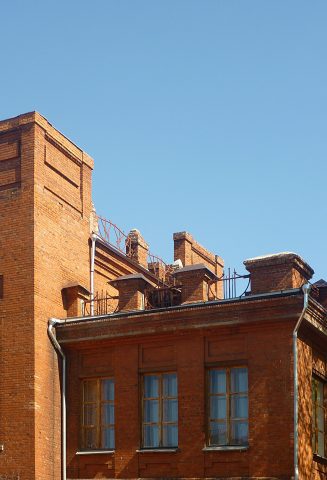
Yet Kursk is more than its wartime history. Its architecture tells a story of different eras layered one over another. In the center, 19th-century merchant houses with intricate woodwork and wrought-iron balconies stand beside austere Soviet buildings, a reminder of the city’s post-war reconstruction. The Sergievo-Kazan Cathedral, built in the early 20th century in the Neo-Russian style, dominates the skyline with its white stone and golden domes. Inside, light filters through stained glass, creating a quiet, almost timeless space. Nearby, the Triumphal Arch, erected to commemorate the victory in the War of 1812, serves as a modest but enduring symbol of the city’s resilience.
Kursk is a place where you can wander without an agenda. In summer, the embankments along the Tuskar come alive in the evenings, with locals strolling and open-air cafes filling the air with music. Winter transforms the city—snow dusts the rooftops of old houses, and the Lenin Square ice rink becomes a gathering spot. There’s no need to rush from one landmark to another here. The real pleasure lies in the small things: a corner café serving homemade pies, a quiet street where every building seems to hold a secret, or an unexpected conversation with someone who’s lived here all their life.
The city has a strong cultural pulse. It was the birthplace of composer Georgy Sviridov, and his music feels woven into Kursk’s fabric. The philharmonic hall hosts classical concerts, while the drama theater stages productions of Russian classics. In summer, open-air stages come alive with jazz and rock, drawing crowds who prefer live sound to recorded tracks. Art here isn’t something set apart—it’s part of everyday life, whether in a gallery, a street performance, or the way the city itself seems to breathe with creativity.
Kursk doesn’t try to be a tourist hotspot, and that’s its charm. It doesn’t put on a show or make grand promises. It simply exists—steady, self-assured, shaped by centuries of history. You could spend a day here or a week and still find something new: a hidden alley, a cozy spot you missed before, or a story you hadn’t heard. The city asks nothing of its visitors except curiosity. And if you’re willing to look, it will show you what it’s made of.
See & Do
15 places






Places on the map
Marker colour follows the categoryClimate and weather
Detailed weather: Kursk- Average temperature
- 8 °C
- Precipitation per year
- 716 mm
Average air temperature
°C
-5
-2
-2
8
14
20
23
22
12
6
3
-4
Jan
Feb
Mar
Apr
May
Jun
Jul
Aug
Sep
Oct
Nov
Dec


