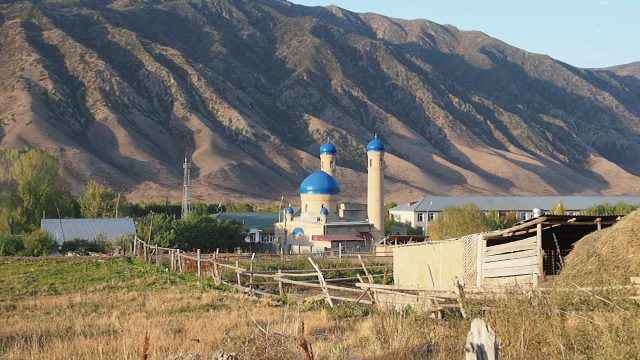
Kabgayi
Rwanda · 6 places
Photo: Adam Jones, Ph.D, CC BY-SA 3.0
Kabgayi sits quietly in the heart of Rwanda, a place that rarely makes it into guidebooks but feels all the more special for it. There are no crowds here, no bustling streets or the relentless energy of the capital. Instead, the town moves at its own unhurried pace, its narrow roads winding between green hills where life unfolds in a rhythm that hasn’t changed much over the years. This is a place shaped by faith—once the first Catholic bishopric in Rwanda during colonial times, its past lingers in the whitewashed walls of the old cathedral, its stained glass and worn wooden pews holding stories of another era.
The journey from Kigali takes you through the countryside, where the landscape shifts from rolling farmland to clusters of traditional homes. Women balance clay pots on their heads as they walk to fetch water, children tend to goats grazing by the roadside, and men work the fields with tools that have seen generations of use. Kabgayi itself is small enough to explore on foot in an afternoon. At its center, a modest market square buzzes with activity—vendors sell bright piles of fruit, sacks of spices, and fresh vegetables, while the scent of grilled meat and simmering stews drifts from roadside stalls. Here, you can try *ugali*, the thick maize porridge that’s a staple across East Africa, served with whatever’s in season—maybe stewed greens, maybe a piece of grilled fish or goat.
The town’s most striking landmark is Notre-Dame de Kabgayi Cathedral, built in 1925 and still a place of pilgrimage for Rwanda’s Catholics. Stepping inside feels like entering another time. The air is cool and dim, pierced by shafts of colored light filtering through the stained glass. The altar is carved with intricate patterns, and the walls are adorned with faded murals depicting biblical scenes. Beside the cathedral stands one of the country’s oldest seminaries, where young men in black cassocks hurry between classes or kneel in prayer. If you visit on a quiet weekday, you might catch the murmur of Latin chants drifting from the chapel.
Beyond the town, the land rises into hills blanketed with tea plantations and patches of dense forest. On clear days, the views stretch for miles—valleys folding into one another, distant ridges hazy in the afternoon light. Locals often hike these trails on weekends, families gathering by small waterfalls or picnicking along the riverbanks. Nearby, coffee and tea farms offer a glimpse into Rwanda’s agricultural life. Some welcome visitors to watch the harvest being processed, the sharp, earthy scent of fresh leaves filling the air as workers sort and dry them. A cup of tea here tastes different—brighter, somehow, as if the altitude and the soil have left their mark.
Kabgayi carries the weight of Rwanda’s history, too. In 1994, during the genocide against the Tutsi, the cathedral became a refuge for thousands fleeing violence. Today, a simple memorial stands nearby, its rows of graves marked with names and dates. There’s no grand monument, just the quiet of the place, the rustle of leaves, the occasional call of a bird. For many Rwandans, this is a site of reflection, a reminder of both loss and resilience. The town itself doesn’t dwell on the past, but it doesn’t forget it either.
There are no luxury hotels here, no fine-dining restaurants or polished tourist experiences. What you’ll find instead are small guesthouses where the owners might invite you in for a cup of sweet, milky tea, or a local bar where men gather in the evening to talk over bottles of *Primus*. Nights in Kabgayi are dark and still, the only lights coming from a few flickering streetlamps. The sounds of the countryside take over—the chirp of crickets, the distant bark of a dog, the low hum of conversation from a nearby home. Sometimes, if you’re lucky, you’ll hear the deep pulse of drums from a village celebration, the rhythm carrying across the hills. It’s in these moments, when the town feels most alive yet most at peace, that you realize how much there is to discover in a place that doesn’t try to impress.
Eat & Drink
0 placesNothing in this category yet — the catalogue is still growing.
All placesPlaces on the map
Marker colour follows the categoryClimate and weather
Detailed weather: Kabgayi- Average temperature
- 21 °C
- Precipitation per year
- 1199 mm
Average air temperature
°C
21
21
21
21
21
22
22
23
22
21
20
21
Jan
Feb
Mar
Apr
May
Jun
Jul
Aug
Sep
Oct
Nov
Dec