Jabiru
Australia · 5 places
Photo: Tourism NT, Attribution
Jabiru
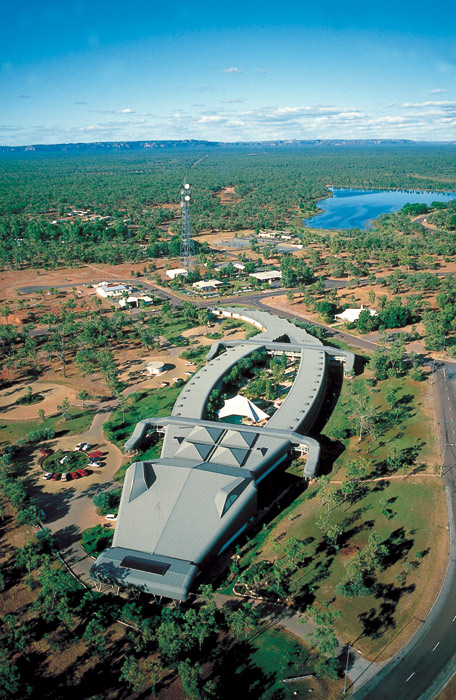
Jabiru sits quietly in the vast, sunbaked north of Australia, a small town where the wild sets the pace. It’s the only settlement of any size within Kakadu National Park, one of the country’s largest protected areas, and its presence feels almost incidental. The town itself is modest, little more than a cluster of low buildings, a fuel stop, and a handful of places to eat and sleep. But its unassuming nature is precisely what makes it special. Here, the real attraction isn’t the town at all, but the ancient landscape that surrounds it, where saltwater crocodiles glide through billabongs, jabirus—those tall, striking storks—wade through shallow waters, and the air hums with the calls of unseen birds.
Life in Jabiru is shaped by Kakadu’s rhythms. The park is the reason the town exists, a place where Indigenous Bininj and Mungguy people have lived for tens of thousands of years, and where their knowledge of the land still guides daily life. Many locals work as rangers, guides, or in tourism, sharing stories passed down through generations. Visitors use Jabiru as a base for exploring the park—renting boats to drift along the Yellow Water Billabong, joining a guided walk to spot wildlife, or driving out at dawn to watch the sun rise over the escarpments. There are no luxury resorts, just simple lodges and campgrounds where the sound of the bush seeps through the walls at night.
Kakadu’s rock art galleries, some dating back over 20,000 years, are among the oldest and most extensive in the world. These paintings depict ancestral beings, hunting scenes, and ceremonies. In Jabiru, the Warradjan Aboriginal Cultural Centre and guided tours at sites like Ubirr and Nourlangie explain their significance and the connection between the land and its traditional owners. For many, these encounters leave a lasting impression.
The climate here is tropical, split between the dry and wet seasons. From May to October, the weather is warm with clear skies and rivers still swollen from the rains. This is when the park is most accessible, when waterfalls like Jim Jim and Twin Falls cascade into plunge pools, and when the landscape bursts into color. The wet season, from November to April, transforms Kakadu. Roads vanish under water, some areas close, and the land becomes a lush, steaming expanse where storms roll in with intensity. It’s not the easiest time to visit, but those who do see a raw, untamed beauty.
What Jabiru offers isn’t spectacle or convenience, but something rarer: a chance to step outside the rush of modern life. There are no crowds, no queues for photos. Instead, there’s space—space to sit by a billabong at dusk, space to listen to the wind in the paperbark trees, space to feel the weight of history in the rock art and the stories of the people who still call this land home. Jabiru is a quiet outpost on the edge of the wild, a place where Australia’s ancient heart still beats.
Eat & Drink
0 placesNothing in this category yet — the catalogue is still growing.
All placesPlaces on the map
Marker colour follows the categoryClimate and weather
Detailed weather: Jabiru- Average temperature
- 28 °C
- Precipitation per year
- 1536 mm
Average air temperature
°C
27
27
28
28
27
26
26
28
29
31
30
29
Jan
Feb
Mar
Apr
May
Jun
Jul
Aug
Sep
Oct
Nov
Dec


