Hoi An
Vietnam · 10 places
Photo: Steffen Schmitz (more photos), CC BY-SA 4.0
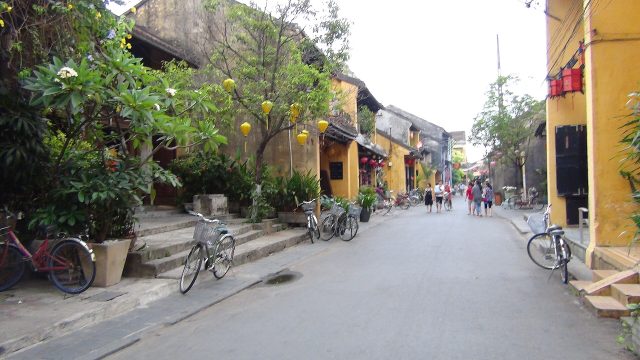
Hoi An feels like a place where time has gently paused, leaving behind a quiet rhythm that belongs only to itself. The narrow streets, lined with low-slung houses topped with weathered tiles, twist just enough to let two bicycles pass if they’re careful. At dusk, lanterns flicker to life, casting soft pools of light that slow the evening down.
Once a port where merchants from China, Japan, and Europe traded silk, spices, and stories, the city still carries the echoes of its past. You half-expect a wooden sailing ship to appear around the bend of the Thu Bon River, though these days, small boats ferry tourists along the water at sunset.
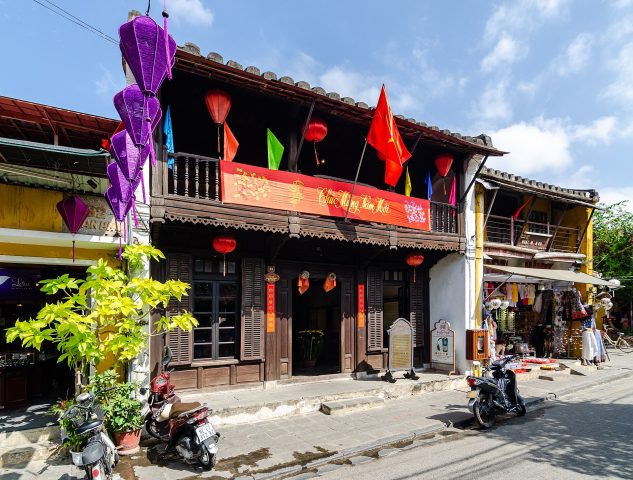
The Old Town is a maze of wooden shopfronts, tiny cafés, and workshops where artisans carve, weave, and paint. There are no towering hotels or roaring motorbikes—just the occasional hum of a scooter, the clatter of a loom, or the murmur of old men playing chess in a sunlit courtyard.
The Japanese Covered Bridge, built in the 17th century, arches over a narrow canal. Its wooden planks are worn smooth by centuries of footsteps. By night, it glows with lanterns, their reflections dancing on the water below. The bridge marks where rivers, cultures, and trades once met.
The beaches here are different. There are no high-rise resorts or rows of beach umbrellas, just a long shoreline where fishermen mend their nets and palm trees sway. The water is calm in the dry season, good for swimming. Small seafood shacks serve grilled squid, steamed clams, and whole fish fresh from the morning’s catch. You can eat with your feet in the sand, watching the sun dip below the horizon while the scent of salt and charcoal lingers.
What makes Hoi An special isn’t any single attraction. It’s the way the city moves—or doesn’t. There’s no rush. You can spend an afternoon in a tailor’s shop where bolts of silk are stacked to the ceiling, or sip coffee in a café so small it feels like someone’s living room.
In the evenings, the riverfront glows with lanterns and live music drifts from open-air bars. The air smells of grilled fish, lemongrass, and the sea. Hoi An doesn’t try to dazzle; it simply exists.
Mornings might begin at the central market, where vendors sell dragon fruit, durian, and fresh herbs. By midday, you could be cycling through nearby villages, where families craft pottery or weave baskets by hand. Their workshops are open to visitors.
As the light softens in the late afternoon, the Old Town feels warmer, slower. Hoi An isn’t for those seeking adrenaline. It’s for anyone who wants to step into a Vietnam that moves at its own pace, where the past isn’t just preserved but still alive.
See & Do
10 places


Places on the map
Marker colour follows the categoryClimate and weather
Detailed weather: Hoi An- Average temperature
- 27 °C
- Precipitation per year
- 2869 mm
- Sunshine hours per day
- 6.2 h
Average air temperature
°C
22
23
25
27
29
31
30
30
29
27
26
23
Jan
Feb
Mar
Apr
May
Jun
Jul
Aug
Sep
Oct
Nov
Dec