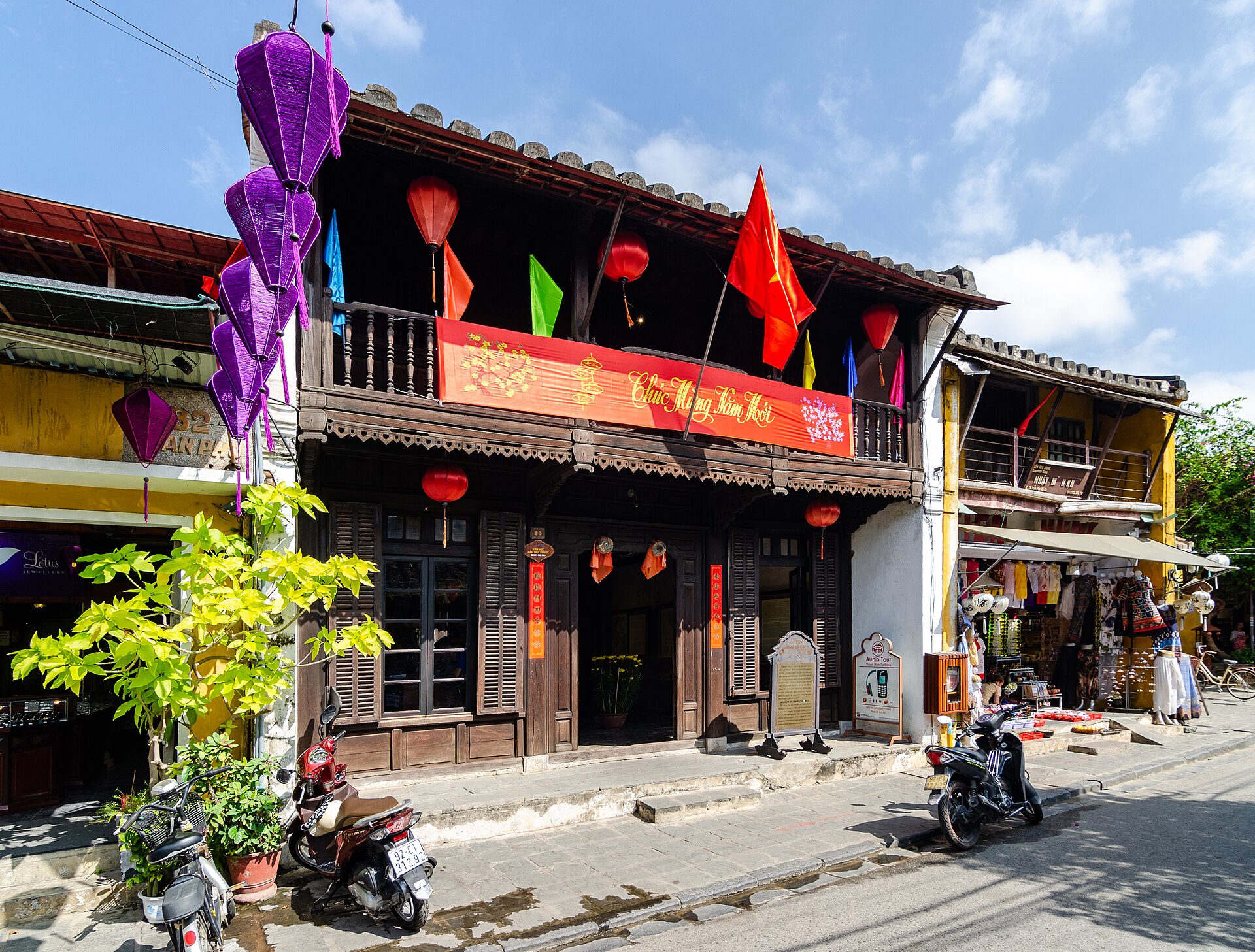
The museum occupies a restored merchant’s home in Hoi An, once a key trading hub in Southeast Asia. The building’s narrow front and deep layout show how space was used in traditional Vietnamese architecture—wooden beams, carved shutters, and an inner courtyard where goods dried in the sun. Inside, original partitions and household items remain.
The collection includes ceramics from different regions and centuries. Chinese porcelain shares space with Japanese stoneware, its glazes still visible. Vietnamese pieces carry local motifs, showing how styles changed through trade. Some exhibits come from shipwrecks off Vietnam’s coast, their surfaces worn by saltwater. These fragments reveal both the skill of their makers and the risks of sea voyages.
A section explains Hoi An’s role as a production center. Between the 15th and 17th centuries, local artisans learned from Chinese and Japanese potters, developing their own techniques. Tools, molds, and unfinished pieces show how clay was shaped and fired. Japanese merchants preferred simple designs; European buyers wanted bold patterns. The museum displays not just finished works but the process behind them.
Modern Vietnamese ceramics are also on view. Some potters still use traditional methods; others experiment with new forms. Visitors can see how techniques have changed or stayed the same, from clay preparation to kiln firing. Workshops let guests try shaping clay, though schedules vary.
The museum’s setting encourages slow visits. The courtyard, shaded by plants and centered around an old well, offers a quiet spot away from the heat. The wooden structure stays cool, and fewer crowds allow for closer looking. Temporary exhibitions sometimes focus on specific themes, like a dynasty or trade route, but the permanent collection holds enough detail on its own.
Hoi An is often called an open-air museum, and this one fits that idea. It doesn’t rely on spectacle but on how trade shaped the city. The ceramics here were more than goods—they carried designs, techniques, and ideas across oceans. The museum lets the objects tell that story.
The building, the artifacts, and the quiet atmosphere work together to show a time when Hoi An connected different worlds. For those who look closely, the museum reveals how trade, craftsmanship, and culture are linked—and how much of that history remains in the city today.