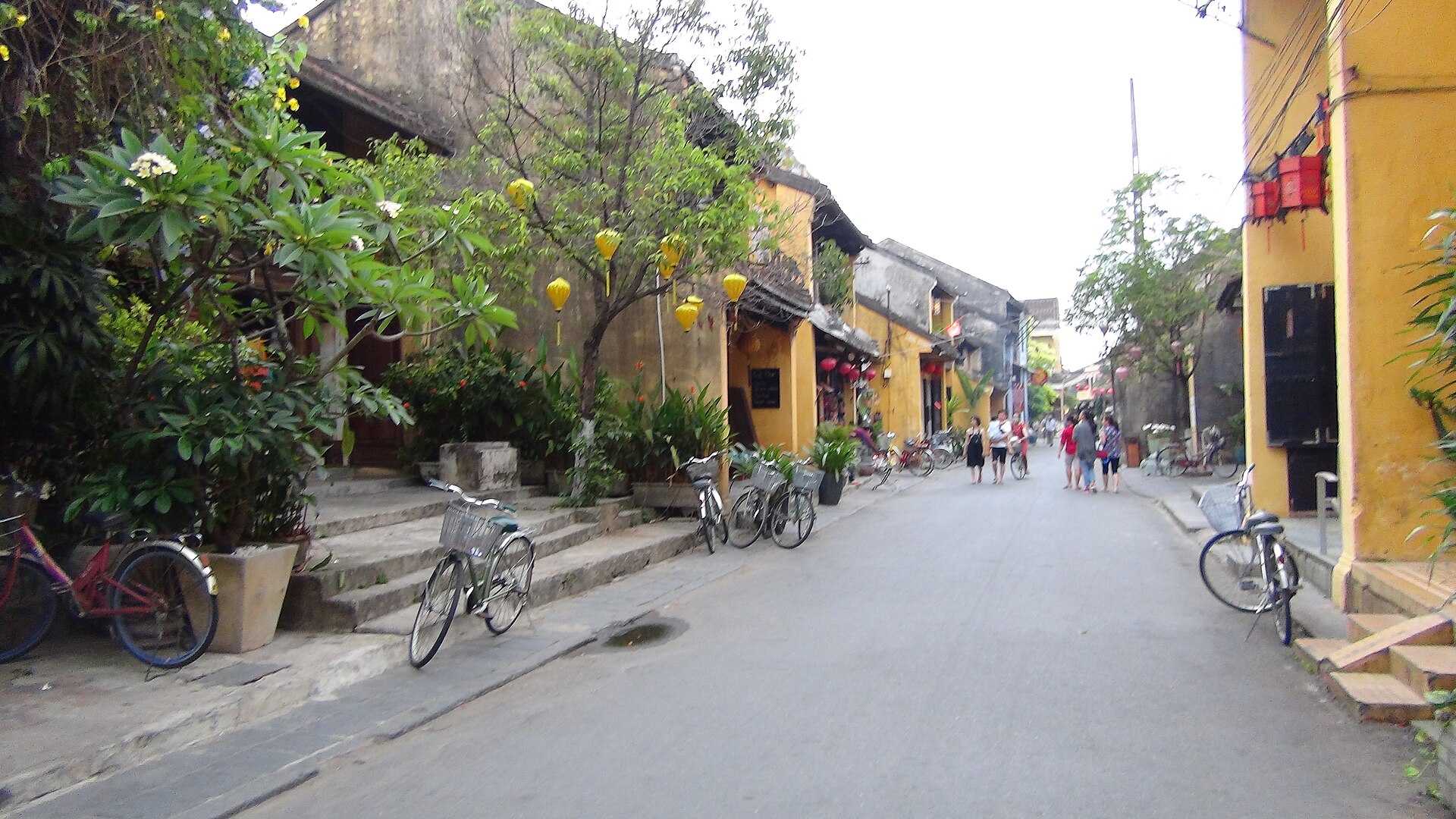
Tan Ky House in Hoi An is one of those rare places where history isn’t just preserved—it’s still alive. Built in the 18th century, this merchant home belonged to a prosperous family that traded in spices and silk during the golden age of Hoi An’s port. Unlike museums where artifacts sit behind glass, here the past lingers in the creak of wooden floorboards, the scent of aged timber, and the way sunlight filters through latticed windows, casting shifting patterns on the walls. The house has seen generations come and go, yet it remains much as it was when foreign ships docked along the Thu Bon River, their holds filled with goods bound for distant markets.
The architecture tells its own story of Hoi An’s cosmopolitan past. The house blends Vietnamese, Chinese, and Japanese influences, a reflection of the town’s role as a melting pot of cultures. The curved tiled roof, a hallmark of Vietnamese design, shelters wooden beams intricately carved with motifs of dragons and flowers. The walls, made of warm yellow brick, glow in the afternoon light, while the narrow windows and latticework were designed not just for beauty but for practicality—keeping interiors cool in the tropical heat. Inside, the layout follows traditional Vietnamese principles, with rooms arranged around open courtyards that allow air and light to circulate.
Stepping into the house feels like entering a time capsule. The furniture—dark wood tables, low stools, and lacquered cabinets—has been used for centuries, its surfaces worn smooth by generations of hands. Porcelain vases, calligraphy scrolls, and ancestral altars are arranged as they would have been in the 18th century, not as decorations but as functional parts of daily life. In one corner, a massive wooden chest once held precious cargo; in another, an altar honors the family’s ancestors, its surface still adorned with photographs and offerings. The house isn’t frozen in time—it’s still a home, and that makes the history here feel tangible, almost intimate.
The central courtyard is the heart of the house, a quiet space where a small pond once nurtured lotus flowers. In Hoi An’s humid climate, such open areas were essential for ventilation, drawing cool air through the rooms. Today, the courtyard remains a place of stillness, the only sounds the occasional ripple of water and the rustle of leaves from the surrounding trees. It’s easy to imagine merchants gathering here after a long day, discussing deals over tea, or children playing in the dappled shade. The design is simple but ingenious, a reminder of how people once adapted to their environment without modern conveniences.
What makes Tan Ky House unique is that it’s still a living space. While part of it is open to visitors, the family continues to reside here, and their presence adds a layer of authenticity that most historic sites lack. The current generation, descendants of the original merchants, often greet guests themselves, sharing stories passed down through the years. They might point out a crack in the wall from a long-ago storm or explain how the house was built without a single nail, its wooden joints fitted together like a puzzle. There’s no scripted tour here—just the quiet pride of a family preserving its heritage.
Hoi An is famous for its ancient houses, but Tan Ky stands apart for its unassuming charm. Unlike the more crowded attractions, it offers a sense of discovery, a chance to wander without the pressure of crowds. The details reward close attention: the delicate carvings on the doors, the way the light shifts across the courtyard as the day progresses, the faint scent of incense lingering near the ancestral altar. Each room feels like a chapter in a story, one that’s still being written. The house has witnessed wars, floods, and the slow march of time, yet it endures, a silent witness to the lives that unfolded within its walls.
Visiting Tan Ky isn’t like touring a museum. There are no flashy displays or guided narratives—just the quiet hum of history, waiting to be noticed. You might spend an hour tracing the grain of the wood with your fingers, listening to the creak of the floorboards underfoot, or simply sitting in the courtyard, watching the play of light and shadow. The house doesn’t demand attention; it invites you to slow down, to look closer, to imagine the voices that once filled these rooms. In a town where the past is never far away, Tan Ky offers something rare: a connection to history that feels personal, as if the walls themselves are sharing their secrets.