
Education City
Qatar · 8 places
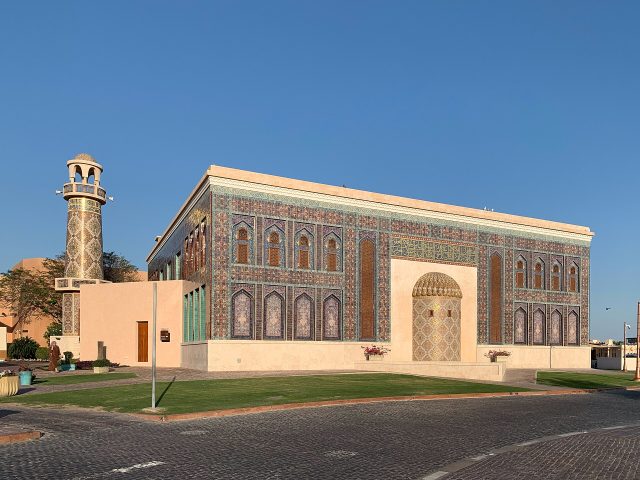
Photo: Republic of Korea, CC BY-SA 2.0
Education City isn’t a city in the way most people imagine—no bustling streets or historic neighborhoods, just a stretch of desert on the edge of Doha that’s been transformed into something far more ambitious. This is where Qatar’s vision for the future takes shape, not in skyscrapers or shopping malls, but in a cluster of world-class universities, research centers, and cultural spaces designed to foster collaboration. The idea is simple: bring together students, academics, and innovators from across the globe and give them the tools to turn ideas into reality. The result is a place where education isn’t confined to lecture halls, where labs and startup incubators sit side by side with libraries and art galleries, and where the line between learning and doing blurs entirely.
At the heart of Education City are the branch campuses of some of the most prestigious universities in the world. Georgetown, Northwestern, Carnegie Mellon—each maintains its own identity while being part of a larger ecosystem where students can take courses across institutions or work on joint research projects. The faculty isn’t just made up of traditional academics; entrepreneurs, engineers, and AI specialists regularly visit to share real-world insights. The approach is hands-on, with students encouraged to test theories in labs, launch startups in incubators, or debate policy in open forums. It’s an environment where curiosity isn’t just encouraged—it’s expected to lead somewhere.
Beyond the classrooms, Education City feels like a living laboratory of modern design. The Qatar National Library, with its angular, light-filled structure, houses millions of books alongside exhibition spaces and a museum of Islamic art. Nearby, Mathaf: Arab Museum of Modern Art hosts rotating exhibitions and performances that challenge and celebrate contemporary Arab culture. Then there’s Education City Stadium, built for the World Cup but now a hub for local and international sports, its modular design allowing it to adapt for concerts, conferences, or matches. Even the public spaces—parks, walkways, and plazas—are carefully planned to encourage interaction, whether it’s a spontaneous discussion under a shaded canopy or a jog along the waterfront at dusk.
The energy here doesn’t fade when the sun goes down. As evening falls, the campus comes alive in quieter ways: students gather in cafés, outdoor film screenings draw crowds, and the sports complexes stay open late for those who prefer a swim or a game of tennis under the stars. There’s no rush, no noise—just a steady hum of activity that feels purposeful rather than frantic. Locals and visitors often make the trip from Doha for a weekend escape, whether to browse the latest exhibition, stroll along the promenade, or simply unwind in a place where the desert meets the future.
What makes Education City remarkable isn’t just its scale or ambition, but its focus. There are no factories or high-rises here, just spaces dedicated to knowledge, innovation, and the people who drive them forward. It’s a place where Qatar is betting on brains over oil, investing in the kind of infrastructure that might shape not just the country’s future, but the region’s. The project is still young, but it’s already clear that this isn’t just another academic hub—it’s a statement about what a city can be when education and ideas take center stage. And in a landscape where the past and future often collide, Education City offers a glimpse of what happens when you build a community around the pursuit of something bigger.
See & Do
8 places



Places on the map
Marker colour follows the categoryClimate and weather
Detailed weather: Education City- Average temperature
- 29 °C
- Precipitation per year
- 86 mm
Average air temperature
°C
19
20
24
28
33
37
37
37
35
31
27
22
Jan
Feb
Mar
Apr
May
Jun
Jul
Aug
Sep
Oct
Nov
Dec


