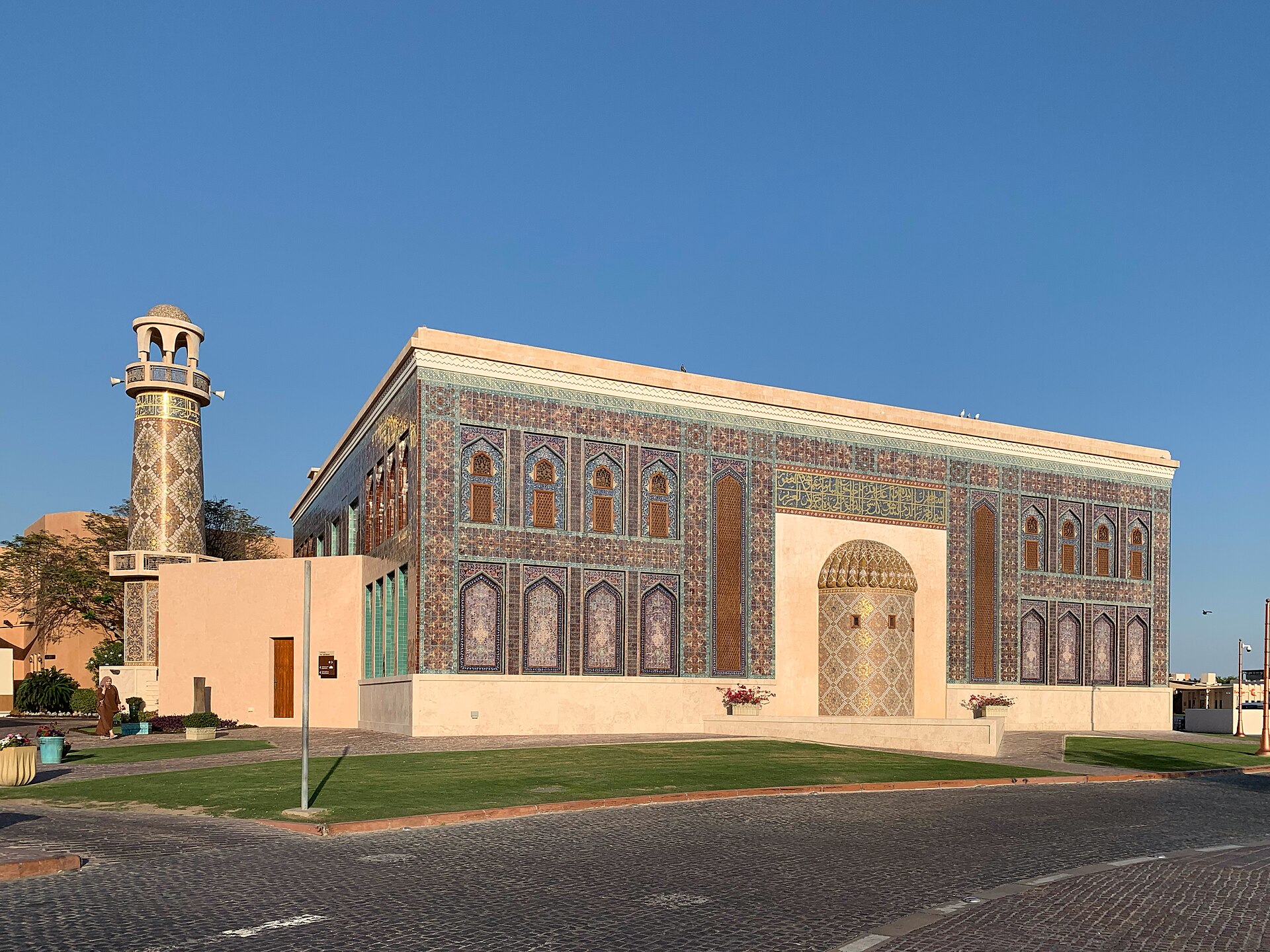
This is one of those quiet places where tradition and modernity meet without fuss. The mosque stands apart from Doha’s grand, ornate ones—no gleaming domes or marble facades. No crowds, no spectacle. The architecture is simple, built for the people who live and work here: students, academics, researchers. That’s why it feels calm, unhurried, almost like a home.
The mosque fits into Education City’s landscape. From outside, it looks like another academic building—light stone, clean lines, no decoration. Inside, it’s different. The prayer hall is spacious, with soft carpets and filtered light through lattice windows. The only sounds are Quran pages turning or quiet prayers.
Built in the early 2000s, the mosque grew as Education City became Qatar’s intellectual hub. The country was investing in education, bringing in top international universities. The mosque wasn’t just for prayer. It showed how spiritual traditions could stay relevant in a fast-changing world. Today, it serves a mix of locals, students, and faculty from across the globe.
Inside, there are no crystal chandeliers or gilded mihrabs. The space works for the people who use it. Men’s and women’s areas are separate but equally well-designed. In summer, when temperatures climb, the mosque offers a cool refuge—not just for prayer, but for a quiet moment.
This mosque isn’t advertised to tourists, but it’s not closed to them. If you’re in Education City—visiting a university or museum—you can step inside. Follow the usual customs: modest clothing for women, long trousers for men. No guided tours, no scripted visits. Ask politely, and you might be allowed to look around. Just be respectful: no loud talk, no photos without permission.
You won’t find this place in glossy travel magazines. It doesn’t dazzle at first glance. That’s what makes it real. No performance, no staged attraction. It’s a working mosque, where people come to pray, not to pose.
If you visit this part of Doha, don’t rush past. Wander the area. Step inside the mosque. Sit in its quiet hall. Here, you might see Qatar’s real rhythm—not the one on postcards, but the one behind the scenes.