Drumheller
Canada · 6 places
Photo: Ken Eckert, CC BY-SA 4.0
Nestled in the heart of Alberta’s badlands, Drumheller feels like a place where time has settled into its own rhythm. The town sits in the Red Deer River valley, a landscape shaped by ancient seas and the slow, relentless work of wind and water. Locals call it Drum, a name that carries the warmth of familiarity, as if the place has long since stopped being just a dot on a map and become something more—a home, a story, a quiet corner of the world where the past isn’t just remembered but still lingers in the air.
Drumheller’s history is written in coal. In the late 1800s, the valley was a wild frontier, drawing prospectors, miners, and dreamers chasing fortune beneath the earth. The town boomed almost overnight, sprouting mines, shacks, and storefronts as quickly as the prairie grass. By the mid-20th century, it was one of Canada’s largest coal-producing hubs, with a population that swelled to over twenty thousand. The mines are silent now, but their presence remains—in the rusted skeletons of old machinery, the hulking slag heaps, and the occasional haze of dust that still drifts through the streets. The stories, though, live on, passed down in local museums and the memories of those who remember the town in its heyday.
What truly sets Drumheller apart, though, is the land itself. The badlands here are a world of their own, a maze of eroded cliffs, jagged spires, and winding gullies that look like the ruins of some long-forgotten civilization. The most famous spot is Horseshoe Canyon, where layers of sedimentary rock unfold like the pages of a book written by time. On a clear day, the view stretches for miles—the Red Deer River carving its way through the valley, the distant peaks of the Rockies just visible on the horizon. It’s a landscape that invites wandering, where every turn reveals something new, whether it’s a rock formation that resembles a castle or a fossilized bone half-buried in the dirt.
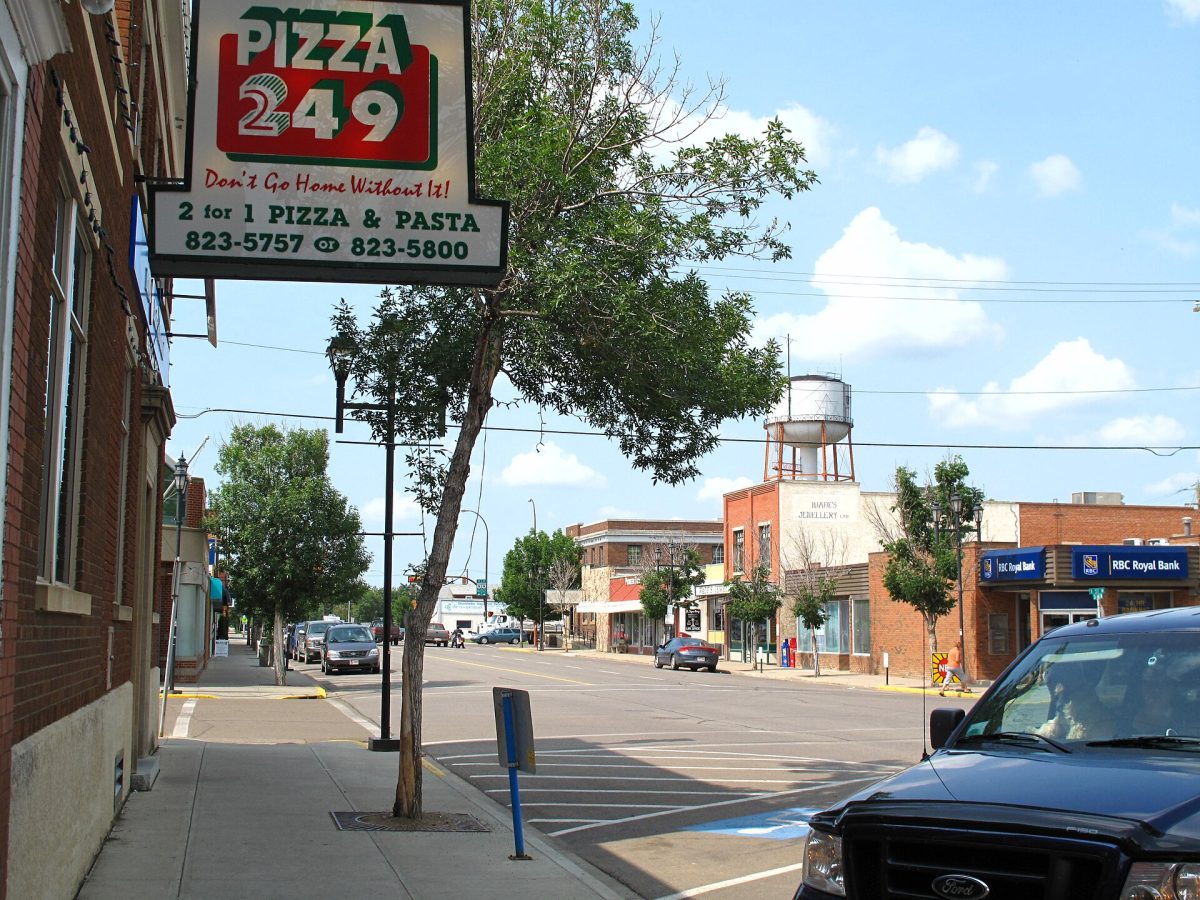
Despite its small size—fewer than ten thousand people call it home—Drumheller has a character all its own. The downtown still feels like the heart of a working town, with its brick storefronts, family-run diners, and the occasional festival celebrating everything from vintage cars to country music. Then there’s the Atlas Coal Mine, a living museum where visitors can descend into a real mine shaft, walk the same wooden planks laid down a century ago, and get a sense of what it was like to work underground by the dim glow of an oil lamp. For many, it’s a humbling experience, a reminder that history isn’t just something you read about but something you can touch.
Life here moves at its own pace. In summer, the badlands draw hikers and cyclists, while the Red Deer River lures anglers and picnickers to its banks. Winter brings cross-country skiers and snowmobilers, turning the landscape into a different kind of playground. And then there’s the town’s most unexpected landmark: a towering Tyrannosaurus rex statue on the edge of town, a nod to the fact that this was once dinosaur country. Fossils are still being uncovered in the area, a quiet testament to the deep time etched into the land.
Drumheller doesn’t try to impress. There are no flashy resorts or neon lights, just the quiet authenticity of a place where people, history, and nature exist side by side. Maybe that’s why those who visit once often find themselves returning—to walk the quiet streets, breathe in the scent of sagebrush and prairie, and feel the unhurried pulse of a town that moves to its own beat.
Stay
0 placesNothing in this category yet — the catalogue is still growing.
All placesPlaces on the map
Marker colour follows the categoryClimate and weather
Detailed weather: Drumheller- Average temperature
- 5 °C
- Precipitation per year
- 370 mm
Average air temperature
°C
-10
-10
-2
6
13
17
20
19
13
6
-4
-10
Jan
Feb
Mar
Apr
May
Jun
Jul
Aug
Sep
Oct
Nov
Dec