
Cologne
Germany · 10 places
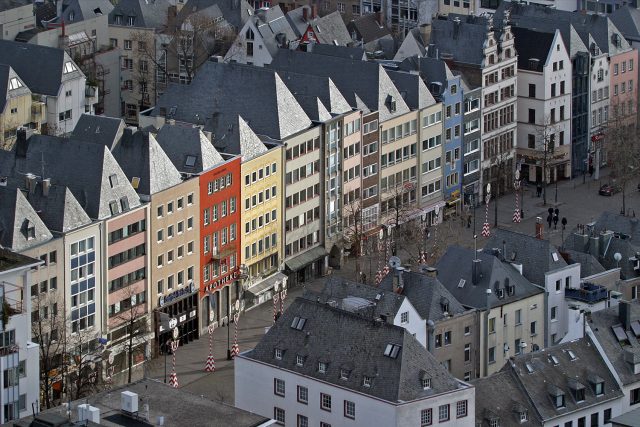
Photo: Thomas Wolf, www.foto-tw.de, CC BY-SA 3.0 de
Cologne is a city that needs no introduction, though it’s far more than the postcard image most people carry in their minds. For two thousand years, it has stood on the banks of the Rhine, evolving from a Roman colony into a medieval trading hub, an industrial powerhouse, and now a vibrant cultural capital. Its skyline is instantly recognizable, dominated by the towering spires of Cologne Cathedral, but the city’s true character lies beyond that iconic silhouette. Here, history and modernity coexist in an easy, unforced way—where centuries-old traditions brush up against bold experiments, and the unhurried pace of the Rhineland meets the energy of urban life.
The cathedral, of course, is the first thing that draws the eye. Construction stretched over six hundred years, and every stone seems to hum with the weight of time. Inside, the Gothic arches loom overhead, their stained glass casting a kaleidoscope of light even on the grayest days. Climbing the tower rewards you with a sweeping view of the city and the Rhine’s gentle curve, but Cologne isn’t a place that lingers in the past. Just outside, the square buzzes with life—street musicians tuning their instruments, tourists snapping photos, locals darting between cafés and offices. A short walk away, medieval half-timbered houses stand shoulder to shoulder with sleek galleries and boutique shops, as if the city can’t decide which era it prefers.
What truly defines Cologne, though, is its spirit. The locals will tell you that everything here revolves around Carnival, Germany’s liveliest and most chaotic festival. For months, the city builds toward it, and when February arrives, work grinds to a halt. The streets overflow with costumed revelers, music spills from every corner, and the air is thick with the scent of Rhine wine. But even outside of Carnival season, Cologne retains its warmth. It’s a place where you can wander the labyrinthine alleys of the Old Town, duck into a brewery for a glass of Kölsch—the local beer, served in slender glasses meant to be drained in one go—or spend an evening by the river, watching barges glide past under the glow of the setting sun.
Culture here isn’t confined to museums and concert halls. The Museum Ludwig houses an impressive collection of modern art, including works by Picasso and Warhol, while smaller galleries showcase everything from avant-garde performances to underground exhibitions. Music lovers will find jazz clubs tucked into cellars, a grand opera house, and open-air festivals that draw crowds all summer. For those who crave quiet, the Rhine Park offers a green escape, and a stroll along the riverbanks reveals the city’s softer side, where urban life gradually gives way to leafy suburbs.
Cologne isn’t perfect—it’s loud in the center, windy in winter, and overrun with tourists in the summer. But that’s part of its charm. There’s no pretension here, no stiffness of a capital or the austerity of northern cities. Instead, there’s a sense of ease, as if the city itself is still catching its breath after centuries of history. It’s the kind of place you visit once and find yourself returning to, not because it’s flawless, but because it feels alive.
See & Do
10 places


Places on the map
Marker colour follows the categoryClimate and weather
Detailed weather: Cologne- Average temperature
- 12 °C
- Precipitation per year
- 792 mm
Average air temperature
°C
4
6
8
11
15
20
20
20
17
13
8
6
Jan
Feb
Mar
Apr
May
Jun
Jul
Aug
Sep
Oct
Nov
Dec


