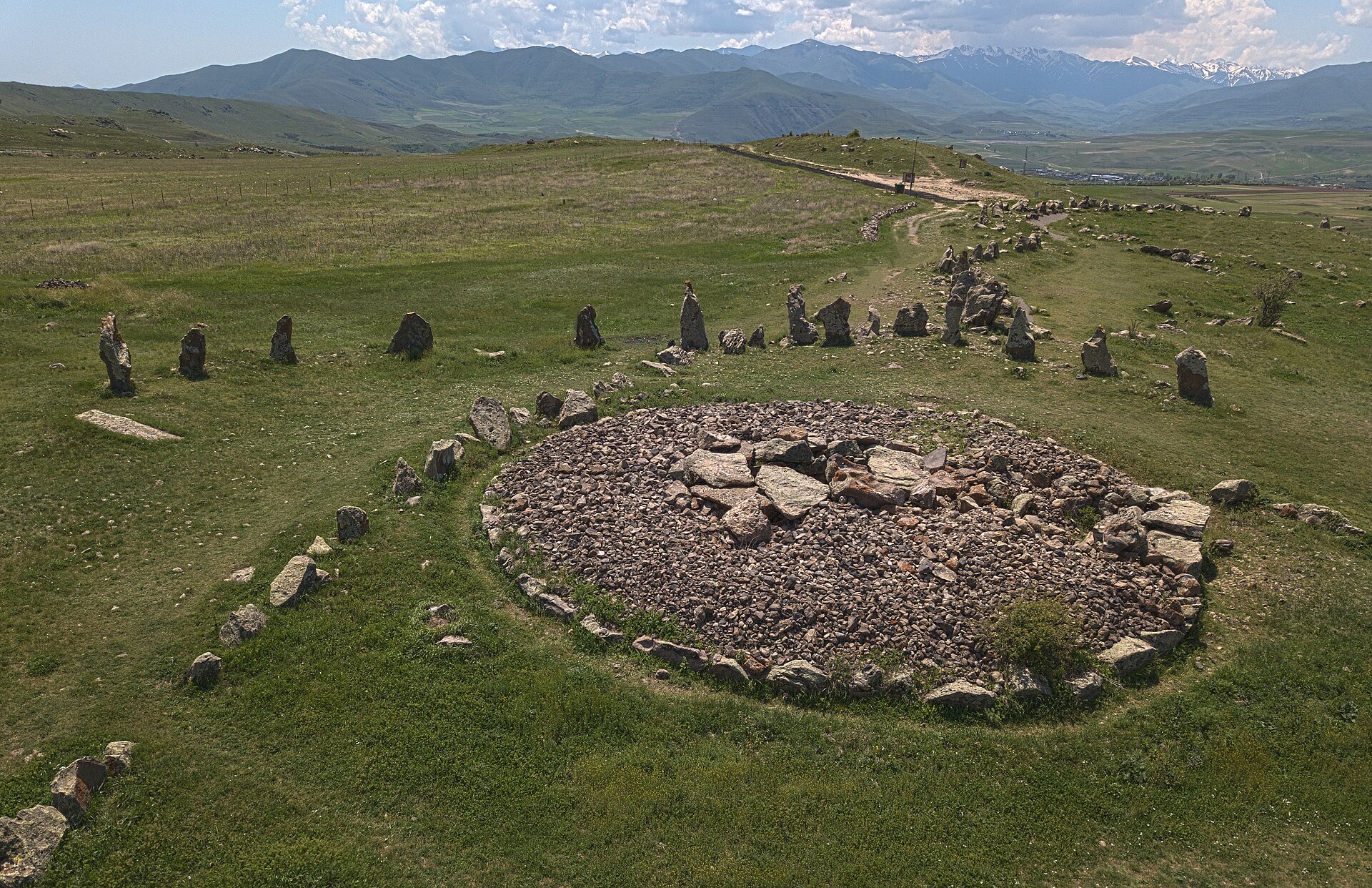
Perched on a windswept plateau in southern Armenia, Zorats Karer is one of those rare places where the past feels almost tangible. The site, a scattering of standing stones arranged in rough circles and lines, sits near the village of Tatev, overlooking the dramatic gorge of the Vorotan River. The stones themselves are simple—tall, weathered basalt slabs, some with small holes drilled through them—but their arrangement suggests something far more deliberate than a random scattering. For centuries, they’ve stood here, silent witnesses to rituals, gatherings, or perhaps even celestial observations that predate written history.
The origins of Zorats Karer remain shrouded in mystery, though archaeologists agree it was in use as early as the Bronze Age, if not earlier. The stones form patterns that echo other ancient sites across Europe, with alignments that seem to correspond to solstices or equinoxes. Some researchers believe the holes in the stones were used to track the movement of the sun or stars, turning the site into a kind of prehistoric observatory. Others argue it was a burial ground or a sacred space where communities gathered for ceremonies. The truth is, no one knows for certain, and that ambiguity only adds to the site’s allure.
The plateau itself is a place of stark beauty. The wind here is constant, bending the wild grasses and carrying the scent of earth and distant pines. On clear days, the view stretches across the gorge to the silhouette of Tatev Monastery, a 9th-century complex that later became the spiritual heart of the region. It’s easy to imagine Zorats Karer as an earlier version of that same sacred space—a place where people came together long before Christianity took root in Armenia. The stones, some still standing in their original positions, others tilted by time, seem to hum with the weight of those ancient gatherings.
What’s fascinating is that the site didn’t fade into obscurity with the rise of Christianity. In the Middle Ages, when Armenia was already a Christian nation, the stones were repurposed as part of a defensive system. Some were moved or incorporated into low walls, creating a refuge for villagers during raids. This adaptation shows how deeply the site was woven into the fabric of local life, even as its original purpose was forgotten. The stones became something new, yet their presence endured, a testament to the layers of history that accumulate in a place over millennia.
Today, Zorats Karer feels like a secret tucked away from the more crowded tourist routes. There are no reconstructed temples or polished exhibits here—just the stones, the wind, and the vast sky. The lack of modern interventions makes it easier to imagine the site as it once was: a place of significance, where people marked the passage of time or sought answers in the patterns of the stars. The absence of crowds only enhances the sense of connection to the past, as if the stones are waiting to share their stories with anyone willing to listen.
Most visitors combine a trip to Zorats Karer with a visit to Tatev Monastery, which lies a few kilometers to the south. The monastery is accessible via the Wings of Tatev cable car, one of the longest in the world, offering breathtaking views of the gorge below. But while the monastery is undeniably impressive, Zorats Karer has a quiet power all its own. There’s no need for grand explanations or guided tours—just the stones, the land, and the sense that this place has been a witness to human curiosity for thousands of years.
What makes Zorats Karer special is its unassuming authenticity. It doesn’t try to impress or entertain; it simply exists, as it has for centuries. The stones stand where they always have, their purpose still debated, their meaning still open to interpretation. In a way, that’s the essence of Armenia itself—a land where history runs deep, where every valley and plateau holds echoes of the past. Zorats Karer is just one of those echoes, a reminder that some questions about the past may never be fully answered, and perhaps that’s the point. The mystery is part of what makes it worth visiting.