
Tatev
Armenia · 9 places
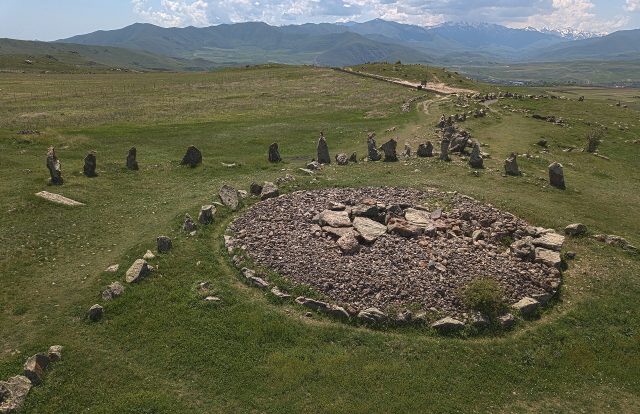
Photo: Well-read MountainMan, CC BY-SA 4.0
Nestled in the rugged south of Armenia, Tatev feels like a place where time has quietly settled into the folds of the mountains. Perched on the edge of a deep gorge, the village seems to hover above the world, its stone houses clinging to the slopes as if carved from the same rock as the cliffs below. There are no bustling streets or neon signs here, just narrow paths winding between centuries-old walls and the ever-present silhouette of the monastery, standing guard over the valley for more than a thousand years. The journey itself is part of the experience—the road twists through the highlands, dipping into shadowed ravines before emerging onto sunlit plateaus where the wind carries the scent of dry grass and earth.
The monastery is the heart of Tatev, not just for its size but for the way it seems to grow from the landscape rather than dominate it. Built from dark volcanic tuff, its walls blend seamlessly with the cliffs, as if nature and human hands worked in harmony. Inside, the air is cool and still, broken only by the occasional creak of a door or the soft footsteps of visitors. The faded frescoes on the walls retain a quiet power, their saints’ faces stern yet serene, as though they hold secrets meant only for those who pause long enough to listen. The tomb of Grigor Tatevatsi, the medieval scholar after whom the monastery is named, feels less like a relic and more like a bridge to the past—a reminder that some ideas endure far beyond their time.
Beyond the monastery, life in Tatev moves at its own unhurried pace. The surrounding villages are home to farmers and herders who tend vineyards and apricot orchards, their days shaped by the seasons rather than the clock. In the evenings, families gather around hearths to share stories or simply sit in companionable silence, watching the flames. Small guesthouses have begun to appear in recent years, offering travelers a chance to step into this rhythm. Hosts often welcome visitors with homemade wine, fresh lavash, and cheese, recounting tales of ancestors who have walked these same paths for generations. It’s easy to imagine that little has changed since the days when pilgrims and merchants passed through, their footsteps echoing along the same dusty trails.
The landscape here is as much a part of Tatev’s story as its history. The Vorotan Gorge, with its sheer cliffs and wild beauty, shifts dramatically with the seasons—scorching in summer, buried under snow in winter, when the village becomes nearly inaccessible. Yet this very harshness gives the place its character. Hiking trails wind along the ridges, leading to abandoned settlements, hidden springs, and viewpoints where the valley unfolds in layers of rock and sky. Sunrise is particularly magical, when the first light spills over the cliffs, turning the stone to gold and rose, and the mist slowly retreats to reveal the land below. In moments like these, it’s clear why people have been drawn here for centuries—not just for prayer, but for the quiet vastness that makes everyday worries feel small.
Tatev isn’t a place for those seeking luxury or convenience. There are no grand hotels or multilingual menus, no guided tours with fixed schedules. Instead, it offers something far simpler: the chance to live as people have here for hundreds of years. To wake with the sun, drink from a mountain spring, listen to the stories of elders, and wander paths that don’t appear on any map. It’s a destination for those who crave not entertainment, but something deeper—stillness, perspective, or just the space to breathe. Tatev doesn’t reveal itself all at once. But if you give it time, it might just leave you with the sense that you’ve touched something real, something that lasts.
See & Do
8 places


Places on the map
Marker colour follows the categoryClimate and weather
Detailed weather: Tatev- Average temperature
- 8 °C
- Precipitation per year
- 2781 mm
Average air temperature
°C
-3
-2
3
8
12
16
19
19
14
8
3
-0
Jan
Feb
Mar
Apr
May
Jun
Jul
Aug
Sep
Oct
Nov
Dec


