Perched on a gentle rise just outside the heart of Barnaul, the Zmeinogorsk Trakt overlook offers a quiet vantage point where the city reveals itself in layers. From here, the past and present of this Siberian town unfold like a living map. The older districts stretch out below, their low-slung wooden houses and weathered factory chimneys giving way to the sprawl of modern neighborhoods climbing the surrounding hills. The view is unhurried, almost intimate—no grand monuments or tourist crowds, just the everyday rhythm of a city that has grown around industry, trade, and the slow passage of time.
The overlook itself is little more than a patch of gravel and a few benches, but its simplicity is part of its charm. On clear days, the horizon blurs into the foothills of the Altai Mountains, their distant outlines hazy with distance. In summer, the air carries the scent of pine and dry grass, while evenings paint the sky in soft golds and pinks. Winter transforms the scene entirely—the city hunkers down under snow, its rooftops dusted white, chimneys puffing smoke into the cold air. Locals sometimes bring thermoses of tea, settling in to watch the lights flicker on below as dusk settles.
The road that gives this place its name has roots stretching back to the 18th century, when Barnaul was the beating heart of Siberia’s mining industry. The Zmeinogorsk Trakt was once a vital artery, connecting the city to the rich silver and lead mines of the Altai region. Wagons laden with ore, salt, and supplies trundled along its length, while waystations, blacksmiths, and small villages sprang up to serve travelers. Today, little remains of that era—just fragments of old stone bridges, the occasional crumbling milestone, and place names that hint at a busier past. Yet the road still carries a sense of purpose, even if its role has changed.
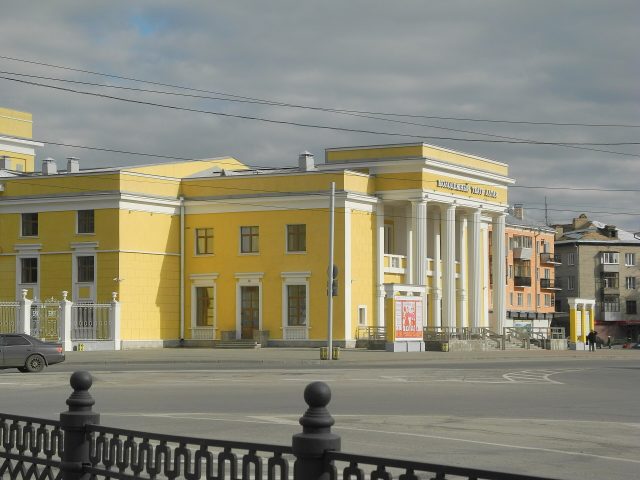
The architecture around the trakt is a patchwork of eras. Wooden houses with intricate window carvings stand shoulder to shoulder with Soviet-era apartment blocks and the occasional modern cottage. The most striking remnants of the past cluster around Polzunov Street, where 19th-century buildings recall Barnaul’s days as a bustling trade hub. These structures, with their arched doorways and faded facades, feel out of place amid the newer developments, yet they lend the area a distinct character. They speak of a time when goods from China and Central Asia passed through here, when the city was more than just a stop on the map.
This overlook isn’t a place for grand gestures or Instagram moments. There are no souvenir stalls, no guided tours, just a handful of benches and the open sky. Mornings bring joggers and dog walkers, afternoons see families with children, and evenings belong to those who come to sit in silence. On weekends, local photographers sometimes gather to capture the changing light—sunsets bleeding into the horizon or the first snowfall dusting the rooftops. The lack of fanfare makes it feel like a secret, a spot where the city’s pulse can be felt without distraction.
Winter turns the trakt into something almost magical. Snow blankets the landscape, muffling sounds and softening edges, while frost clings to the branches of trees. The cold sharpens the air, and the distant hills stand out in stark relief against the pale sky. In summer, the road becomes a green corridor, winding down toward the Ob River. Birch and pine trees line its edges, their leaves rustling in the breeze, while wildflowers peek through the grass. Locals occasionally picnic here, though it’s not an official recreation spot—just a place where people come to escape the city’s hustle for a little while.
The Zmeinogorsk Trakt is as much about Barnaul’s present as its past. From this vantage point, you can see the city evolving—new buildings rising, roads expanding, old neighborhoods slowly giving way to progress. Yet there’s something enduring about the place, a thread connecting the Barnaul of today to the one that once hummed with the activity of miners and merchants. It’s in the way the wind carries the faint scent of coal from distant factories, or how the evening light catches the steeples of old churches. This is where the city’s history feels tangible, not as something preserved in museums, but as a living, breathing part of its identity.
If you find yourself here, take a moment to linger. Sit on one of the benches, watch the city stretch out below, and listen to the wind moving through the trees. There’s no rush, no agenda—just the quiet understanding that some places reveal themselves slowly. The Zmeinogorsk Trakt won’t be the highlight of your trip, but it might be the part you remember most. Not for its grandeur, but for the way it offers a glimpse of Barnaul as it truly is: a city of contrasts, where the past and present coexist in the most unassuming of ways.