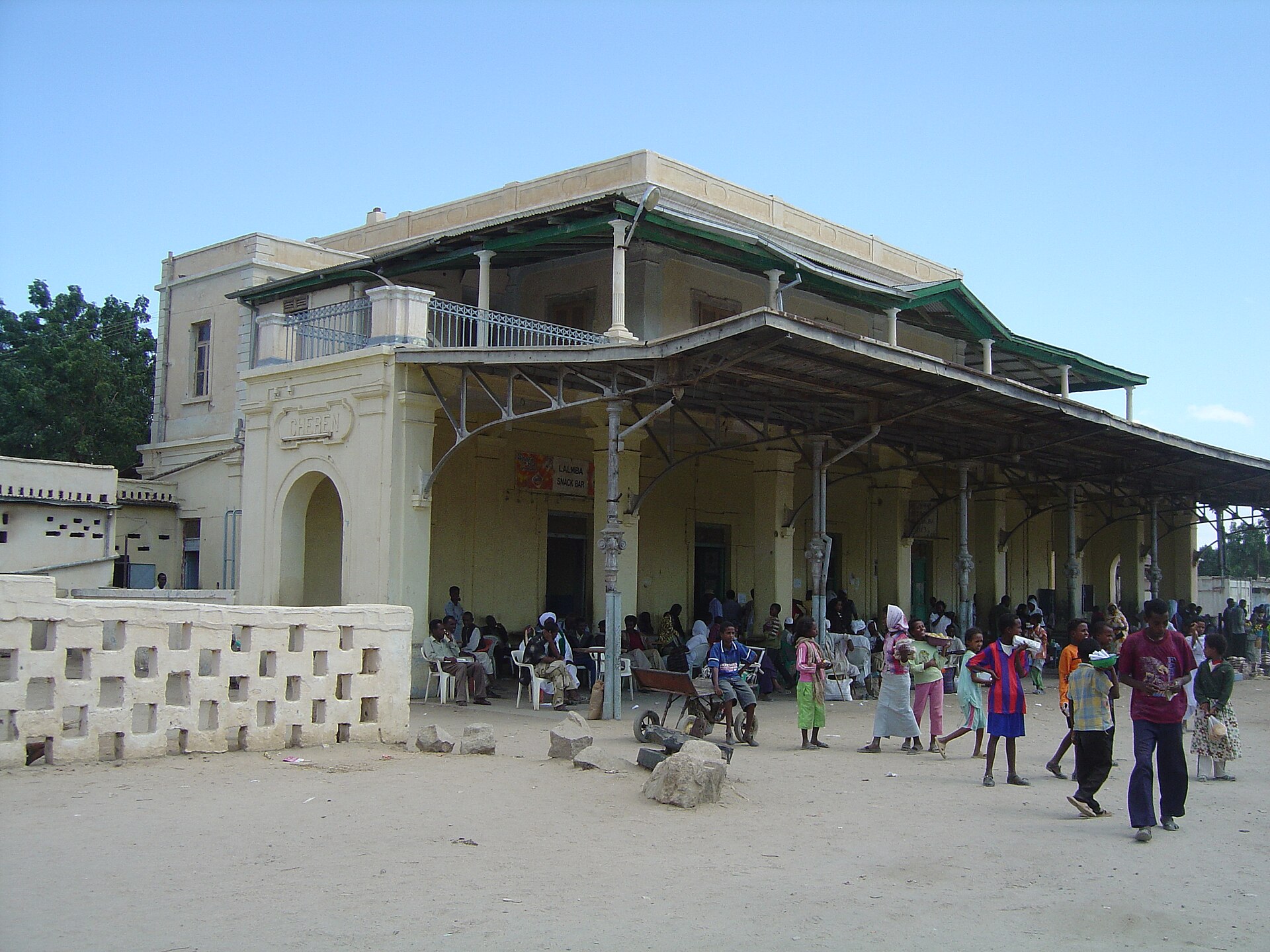
Keren’s railway station is one of those rare places that feels untouched by time, as if the past has settled here like dust on an old ledger. Built in the early 20th century when Eritrea was under Italian rule, it was once a vital stop on the line connecting the port city of Massawa to the highlands. The station still looks much as it did a hundred years ago—a low, sturdy building of stone and timber, its wide arches and wooden shutters designed to shield against the fierce sun. There are no digital departure boards, no hurried crowds, just the quiet hum of a place that has seen generations come and go. If you’re lucky, the distant whistle of a steam locomotive might break the stillness, a fleeting reminder of the days when this was a lifeline for the region.
The station’s history is woven into Eritrea’s colonial past. The Italians didn’t just build the railway for trade; it was a tool of control, a way to tighten their grip on the territory. The Massawa-Asmara-Keren line was an engineering feat of its time, winding through mountain passes and deep gorges. Keren, perched at around 1,500 meters above sea level, was a crucial stop along the way. The station itself reflects the practical elegance of Italian colonial architecture—unassuming yet well-crafted, blending imported design with local materials. The stone came from nearby quarries, while the timber and shutters were hauled in from elsewhere, each piece telling a story of labor and ambition.
When Eritrea gained independence in 1993, the railway fell into disrepair. Years of war and neglect took their toll, leaving tracks crumbling and trains idle. But in recent years, there have been efforts to revive parts of the line, and Keren’s station has begun to stir back to life. It’s no longer a bustling transport hub, though. Trains run sporadically, mostly for tourists, and the building now serves more as a historical curiosity than a functional terminal. Inside, you can still find faded Italian timetables, rusted luggage scales, and wooden benches where passengers once waited. The air carries the scent of old wood and metal, a quiet testament to the station’s enduring presence.
Keren is a city of contrasts, and its railway station mirrors that character. Unlike Asmara, where colonial architecture is grand and varied, Keren’s buildings are modest, their charm lying in their simplicity. The station sits at the edge of town, framed by rocky hills on one side and the narrow, winding streets of the old quarter on the other. The locals treat it with a kind of quiet reverence—some remember it from childhood, when trains still ran regularly, while others see it as a relic worth preserving. It’s not a place people linger in, but it’s part of the city’s fabric, a silent witness to its past.
For travelers, the station offers a glimpse into a different era. There are no crowds here, no guided tours with scripted stories. If you’re fortunate, you might see an old steam locomotive pulling into the platform, its engine hissing as it comes to a stop. Those moments feel like a step back in time, a reminder of when railways were more than just transportation—they were marvels of human ingenuity, stitching together distant corners of the country. Today, the marvel is faded, but its echoes remain in the creak of the station’s wooden floors and the occasional whistle carried on the wind.
Keren itself is a place worth exploring. The city has preserved its old mosques, bustling spice markets, and traditional houses with intricately carved doors. But the railway station adds something special—a sense of timelessness, as if the past hasn’t quite let go. It’s not a place of luxury or modern comforts. The building is plain, its walls worn, but that’s part of its appeal. There’s an authenticity here, from the chipped paint to the faint smell of oil that once kept the trains running. It’s the kind of place where you can sit on a bench and imagine what it must have been like a century ago, when the station was alive with the comings and goings of travelers.
The railway in Eritrea is more than just a relic; it’s a symbol of resilience. After decades of neglect, there are efforts to restore parts of the line, and Keren’s station is one of the few that still functions, however sporadically. Local authorities and enthusiasts have worked to keep it standing, and occasionally, tourist excursions run along the tracks. The schedule is unpredictable, though, so it’s best to ask around if you’re hoping for a ride. Even if you don’t catch a train, the station itself is worth the visit—a quiet monument to a time when railways were the heartbeat of the country.
What makes Keren’s railway station special is its ability to bridge past and present. It’s not just a building; it’s a living piece of history. It reminds us of an era when trains carried more than just goods—they carried dreams and connections. Today, it stands as a testament to that time, even as life in Keren moves on around it. Locals pass by it daily, tourists snap photos, and sometimes, in the early morning quiet, you can hear the distant whistle of a train. For a moment, the past feels close enough to touch. That’s the magic of this place—it doesn’t just tell a story; it lets you step inside it.