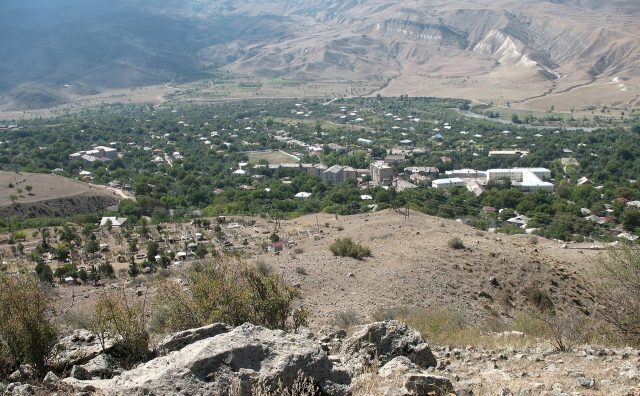
Keren
Eritrea · 8 places
Photo: Mheidegger, CC BY 4.0
Keren feels like a place where time has paused, not out of neglect, but as if it chose to linger here on purpose. Nestled in a valley between rocky hills, the city unfolds in layers of dust and sunlight, where the air carries the scent of spices and dry earth. The streets are quiet, not in the way of abandonment, but with the unhurried rhythm of a place that doesn’t need to prove itself. Locals—many from the Tigre or Bilen communities—go about their day without fanfare, greeting visitors with a quiet curiosity rather than suspicion. There’s no urgency here, no need to fill the silence with small talk. Life simply moves at its own pace, and after a while, you find yourself slowing down too.
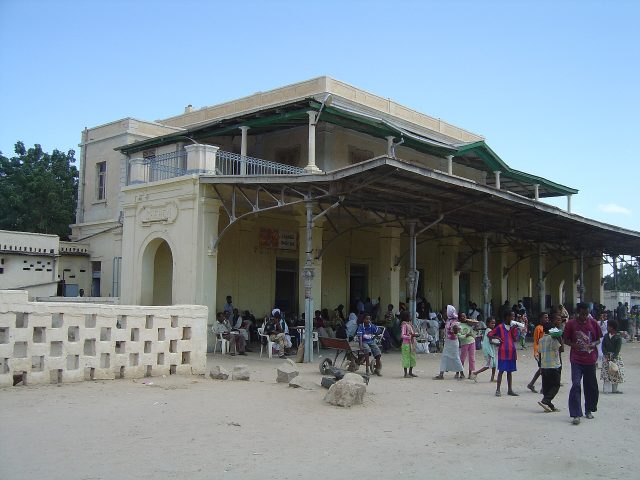
The architecture tells a story of overlapping histories. Italian colonial buildings stand alongside traditional structures, their faded pastel shutters and wooden balconies worn by decades of sun. Some houses are made of clay, their flat roofs blending into the landscape, while on the outskirts, circular stone huts recall a time before foreign influence. The Catholic cathedral, built in the early 1900s, rises above the rest—a striking contrast with its red brick and pointed arches, yet somehow fitting against the backdrop of the surrounding mountains. It’s as if the city absorbed everything that came its way and made it part of itself, without erasing what was already there.
Beyond the city limits, Keren serves as a gateway to some of Eritrea’s most intriguing landscapes. Ancient rock art dots the nearby cliffs, discovered by chance when shepherds lead their flocks through the gorges. The drawings are simple—figures of people and animals, hunting scenes—painted in ochre thousands of years ago. No one knows for certain who created them, but they’ve become part of local lore, passed down through generations. Not far from the city, hot springs bubble up from the earth, drawing visitors less for their healing properties and more for the quiet they offer. The view from the springs is one of endless hills, their colors shifting from gold to deep orange as the sun sets.
Daily life in Keren follows the rhythm of the land. Mornings begin with the hum of the market—vendors calling out prices, the smell of fresh bread and cardamom-spiced coffee filling the air. By midday, the city stills, as even the dogs retreat into the shade. But as evening falls, the streets come alive again. Children kick balls across dusty squares, elders sit outside their homes sharing stories, and somewhere in the distance, the slow, hypnotic beats of traditional music drift through the air. There’s no rush, no need to fill the hours with noise. The city breathes in its own time, and after a while, you start to breathe with it.
Most travelers who make it to Keren don’t leave unchanged. Some come for the architecture, others for the silence they can’t find elsewhere. But those who stay for more than a day or two notice something else—the way the city doesn’t try to impress. It doesn’t need to. The scars of history, the muted colors of the desert, the people who don’t offer their stories freely but don’t hide them either—all of it exists as it is. And perhaps that’s what makes Keren so compelling. It doesn’t ask for attention. It simply is.
See & Do
8 places

Places on the map
Marker colour follows the categoryClimate and weather
Detailed weather: Keren- Average temperature
- 22 °C
- Precipitation per year
- 315 mm
- Average humidity
- 61 %
- Sunshine hours per day
- 10.8 h
- Time zone
- UTC+3 (GMT+3)
Average air temperature
°C
19
20
22
24
26
26
23
21
22
22
20
19
Jan
Feb
Mar
Apr
May
Jun
Jul
Aug
Sep
Oct
Nov
Dec