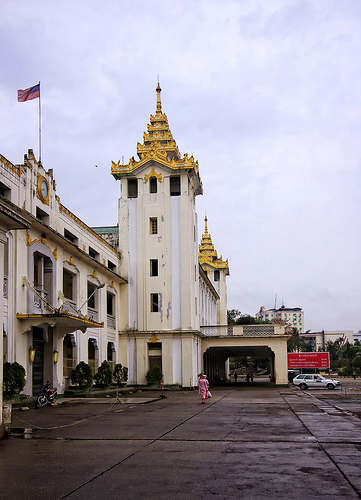
Yangon’s main railway station is one of those places that feels like a quiet witness to time. Built during the British colonial era, it stands at the heart of the city, not just as a transport hub but as a piece of living history. The station’s architecture is a mix of practicality and grandeur, with its red-brick facade and arched windows giving it a sturdy, almost timeless appearance. Unlike the sleek, modern terminals of today, this building carries the weight of decades—its walls seem to hold the stories of countless journeys, from the daily commutes of locals to the arrivals and departures of travelers exploring Myanmar’s vast landscapes.
The station was originally constructed in the late 19th century, though the current structure dates back to the 1950s, rebuilt after the Second World War. The British designed it to serve as a key node in their railway network, connecting Yangon to the rest of the country. Over the years, it has seen Myanmar’s political and social shifts, from colonial rule to independence and beyond. The building itself is unassuming in its scale, yet its role in the country’s development is undeniable. It’s not just a place where trains come and go; it’s a symbol of movement, change, and the slow, steady pulse of life in Myanmar.
Inside, the station is a world of its own. The main hall is spacious, with high ceilings that allow the air to circulate, a small mercy in Yangon’s humid climate. The ticket counters, wooden benches, and faded signs give it a sense of permanence, as if the station has always been this way and always will be. There’s a certain rhythm to the place—vendors selling snacks, porters carrying luggage, and passengers waiting with the quiet patience that seems to define travel in Myanmar. The trains themselves are a mix of old and new, some still bearing the marks of decades of use, others more modern but no less essential to the daily lives of those who rely on them.
What makes Yangon’s railway station unique is its role in the city’s daily life. For many locals, it’s not just a point of transit but a place of work, commerce, and even socializing. The station’s surroundings are just as lively, with markets, tea shops, and small businesses spilling out onto the streets. The area has a raw, unpolished energy, a contrast to the more tourist-oriented parts of Yangon. Here, life moves at its own pace, and the station is very much a part of that rhythm. It’s a place where you can sit on a bench, watch the world go by, and feel the pulse of the city in a way that’s hard to find elsewhere.
The trains that depart from here connect Yangon to some of Myanmar’s most remote and beautiful regions. The journey to Mandalay, for instance, is one of the most scenic in the country, winding through lush landscapes and small villages. The station itself doesn’t offer much in the way of luxury—there are no high-end lounges or flashy amenities—but that’s part of its charm. It’s a place for the practical, the patient, and those who understand that travel isn’t always about speed or comfort but about the experience itself. The station’s simplicity is its strength, a reminder that sometimes the most meaningful journeys begin in the most unassuming places.
For visitors, the station offers a glimpse into Myanmar’s railway culture, which is as much about the journey as the destination. The trains are slow, often delayed, and not always the most comfortable, but they provide a way to see the country that few other modes of transport can match. There’s something almost poetic about the way the railway connects Yangon to the rest of Myanmar, threading through mountains, rivers, and forests. The station, in its own quiet way, embodies that connection. It’s not a place that demands attention, but if you take the time to look, you’ll find that it has a story to tell—one that’s as much about the people who pass through it as the trains that carry them away.
The station’s architecture is worth a closer look, too. The red bricks, the arched doorways, and the occasional decorative flourish hint at its colonial past, though the building has been adapted over the years to suit Myanmar’s needs. It’s not a grand monument, but it has a certain dignity, a sense of purpose that goes beyond its function. The station has survived wars, political upheavals, and the slow march of progress, yet it remains a vital part of Yangon’s identity. It’s a place where the past and present coexist, where the old ways of travel meet the demands of a changing country.
If you find yourself in Yangon, the railway station is worth a visit, not just as a starting point for a journey but as a destination in its own right. It’s a place to observe, to reflect, and to appreciate the quiet beauty of everyday life. Whether you’re catching a train or simply passing through, the station offers a moment of stillness in a city that’s always on the move. It’s a reminder that sometimes the most interesting places aren’t the ones that shout for attention but the ones that quietly endure, carrying the stories of those who have come before and those who are yet to arrive.